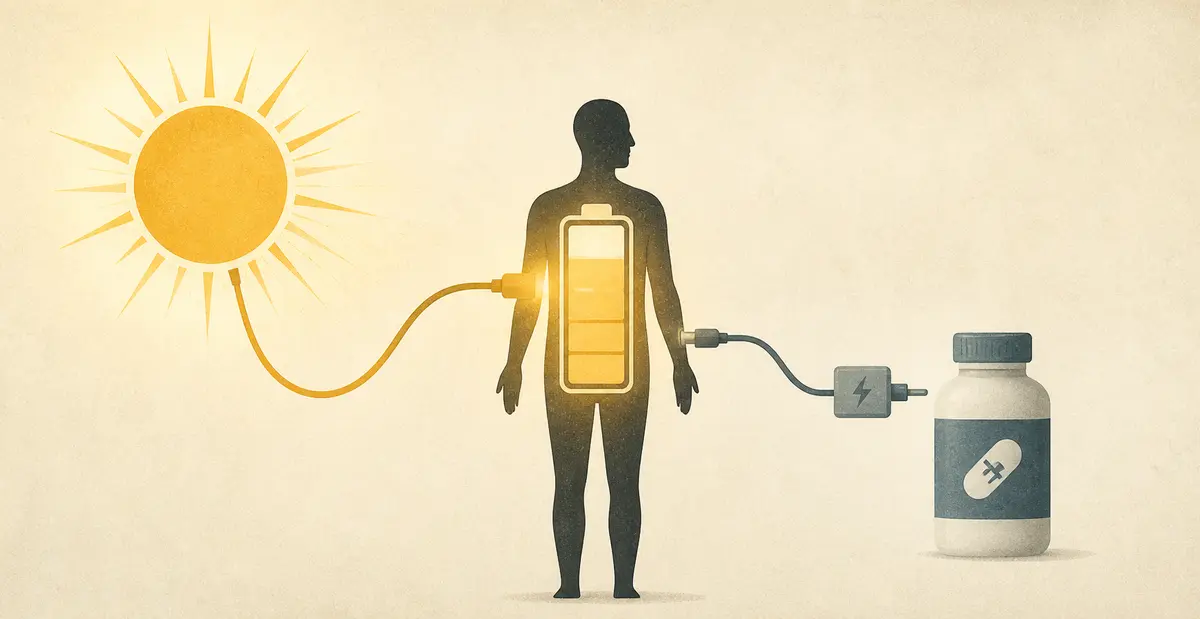
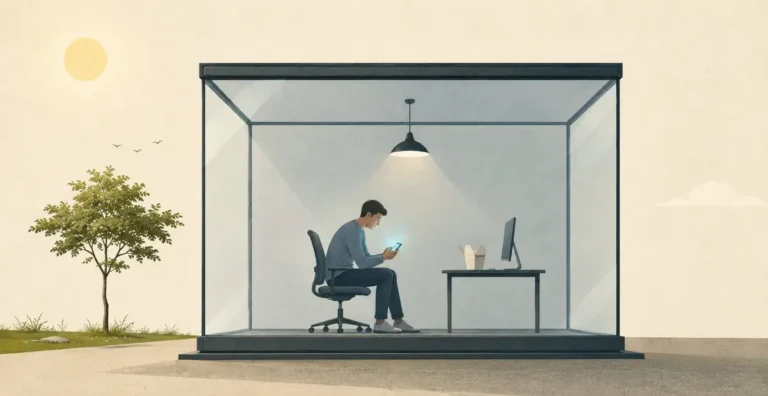
Your body is always reading your environment.
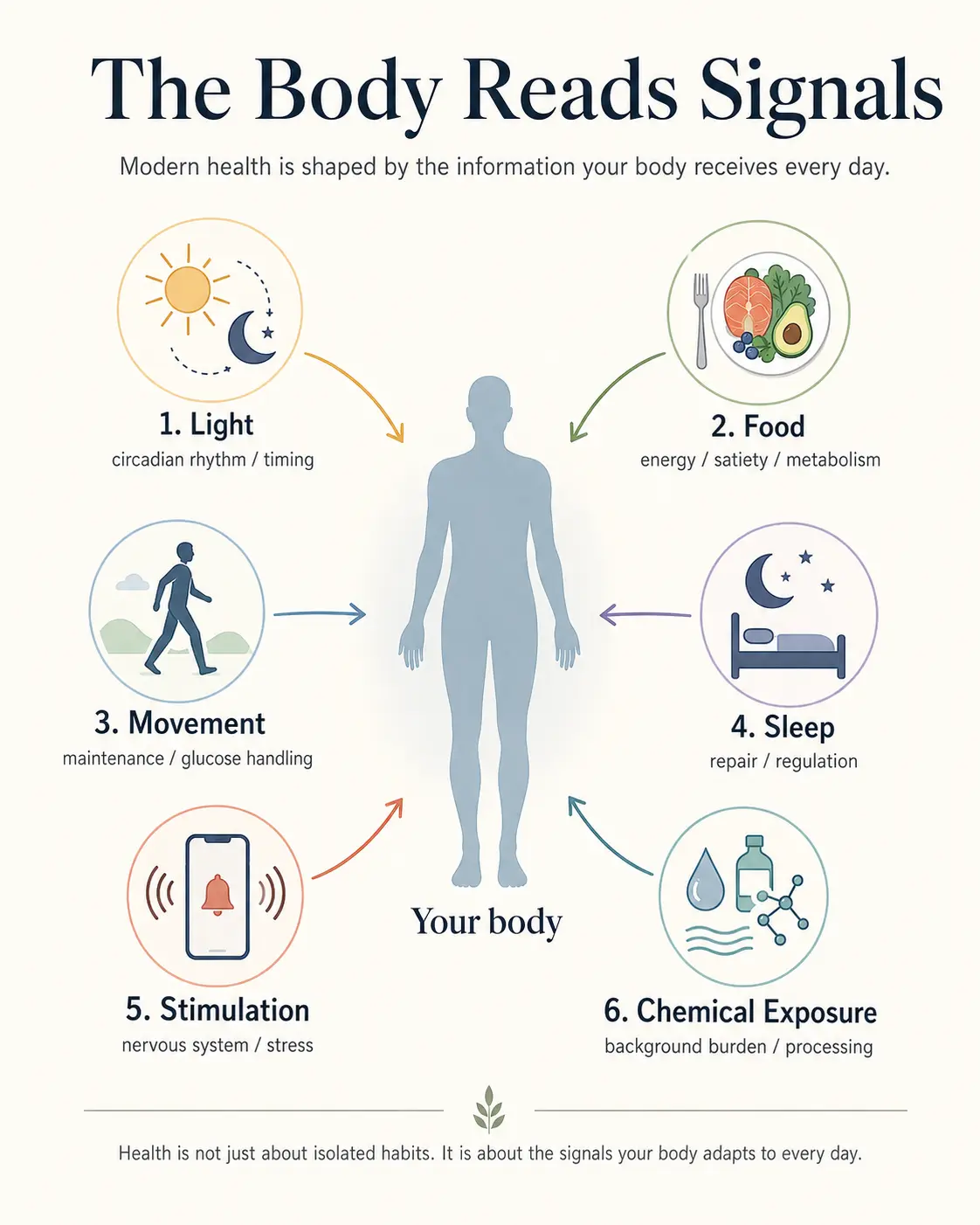
Light tells it what time it is. Food tells it what kind of energy world it lives in. Movement tells it what to maintain. Sleep tells it when to repair. Stress and stimulation tell the nervous system whether to stay alert or stand down. Even air, water, plastics, and household chemicals become part of the background your body has to process.
Modern life changed those signals.
We now spend our days indoors, sit for hours, eat food engineered for convenience, live under artificial light, carry stress without movement, fill silence with screens, and sleep in a world that keeps telling the body the day is not over.
None of this feels strange because everyone lives inside it. But biologically, it is strange.
This article explains how normal life became a confusing environment for human biology — and why so many modern health problems make more sense when you stop looking at isolated habits and start looking at the signals your body receives every day.
The goal is not to reject modern life. It is to understand what your body is adapting to, where the signals have gone wrong, and how to rebuild a daily environment that helps the body regulate itself again.
The Body Is Always Adapting to Its Environment
The body is not static. It changes with the conditions it lives under. Put it in a chair all day, hunched over a screen, and it will adapt to that position: muscles shorten, unused tissues weaken, joints lose range, and posture starts to reflect the shape it spends most time in.
Stop using muscle, and the body has little reason to keep spending energy maintaining it. Give the body poor sleep, processed food, weak daylight, constant stimulation, and little movement, and it will adapt to that pattern too.
While clever in the short-term, the body is not wise in the long-term. It does not know whether a strange environment is temporary or permanent. It does not ask whether today’s adaptation will serve you ten years from now. It simply responds to the pattern.
That is why the modern health environment matters. Normal life is full of signals the body was never meant to treat as normal: weak daylight, bright nights, processed food, constant stimulation, reduced movement, irregular sleep, and novel chemical exposures.
The body will adapt. The question is what those adaptations cost over time. But the same principle works in the other direction: give the body better signals, and it has something better to rebuild around.
Light Is the Body’s Main Time Signal
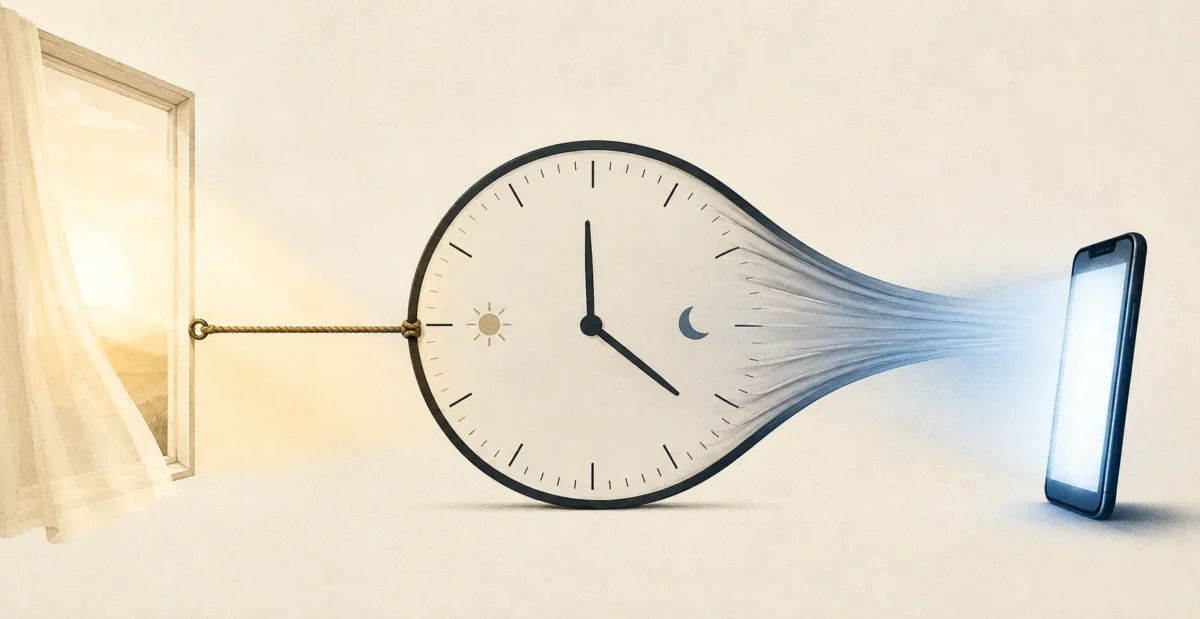
Light is not just something that helps you see. It is one of the main ways the body knows where it is in the day.
The human body has its own internal circadian clock, but that clock does not run in perfect isolation. In controlled conditions, the average intrinsic human circadian period is about 24.18 hours — close to a day, but not exactly one. So the body can keep time without normal daylight, but it still needs outside cues to stay aligned with the world around it. Light is the strongest of those cues.
Natural light does not create the circadian rhythm. The body already has one. But light helps set its timing: when the body expects wakefulness, when melatonin begins to rise, when body temperature shifts, when alertness peaks, and when sleep biology starts to unfold.
For most of human history, that signal was simple. Days were bright. Nights were dark. Modern life has made the signal much less clear.
Modern Life Weakens the Day and Extends the Night
The modern light environment often gives the body weak day signals and extended evening signals.
Many people spend most of the day indoors, where the light may feel bright enough to work under, but is usually weak compared with outdoor daylight. A typical office might be around 300–500 lux, while full daylight outside can reach 10,000–25,000 lux, and direct sunlight can be far higher.
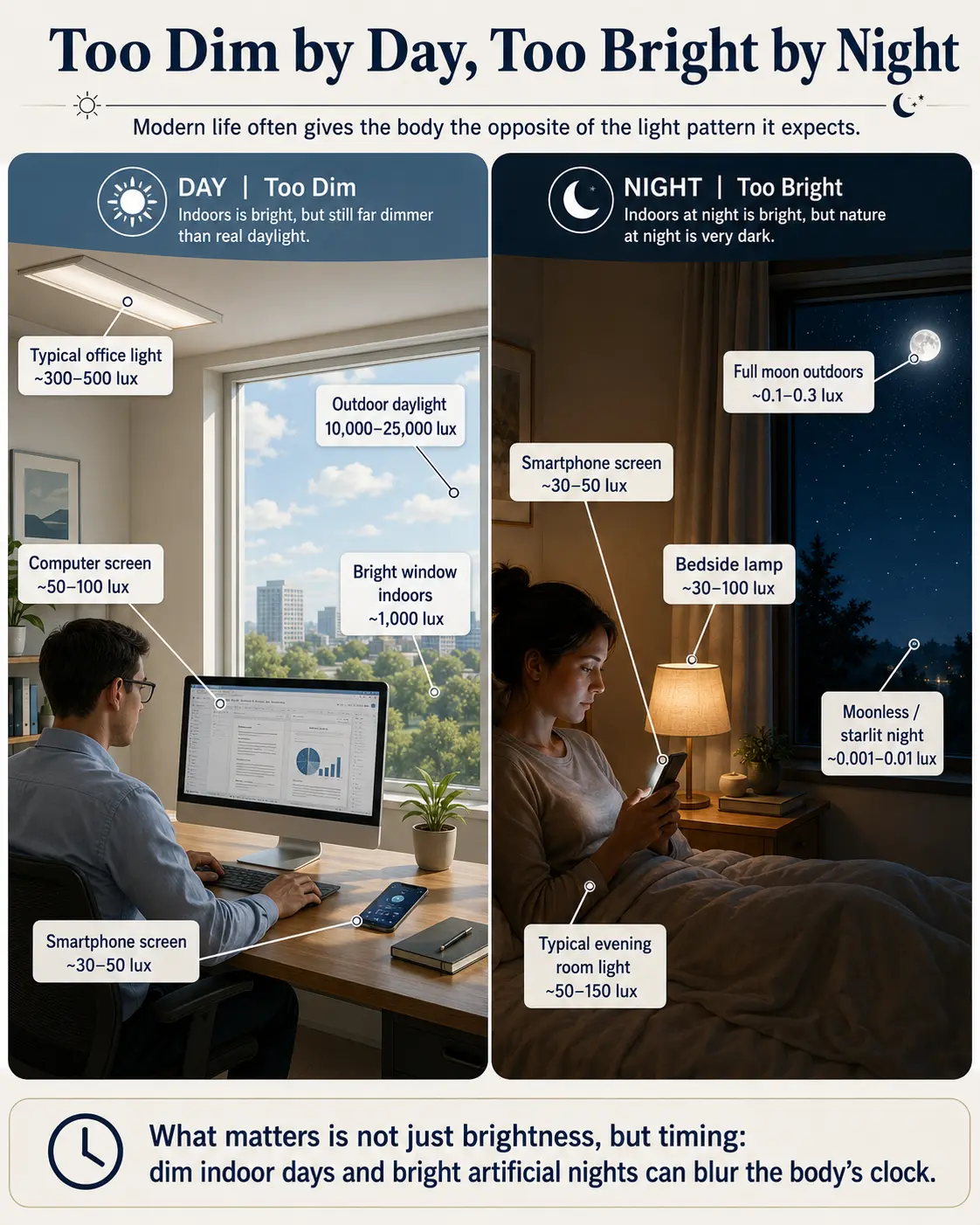
Then, after sunset, when we actually want lower lux levels, the body is exposed to lamps, overhead LEDs, televisions, laptops, tablets, and phones held close to the face. Biologically, this is a strange combination: too little strong light when the body expects day, and too much light when the body expects night.
We can see this in real studies, not just in theory. In a camping study, researchers found that returning people to a natural light-dark cycle shifted melatonin timing earlier; after a weekend of camping, melatonin onset moved about 1.4 hours earlier, and the melatonin midpoint moved about 1 hour earlier compared with the modern electrical-light environment.
Artificial evening light can push the other way. In one controlled study, exposure to room light before bedtime suppressed melatonin, delayed melatonin onset in 99% of participants, and shortened melatonin duration by about 90 minutes compared with dim light.
Screens can add to the same pattern too. A PNAS study found that evening use of light-emitting eReaders, compared with printed books, delayed the circadian clock, suppressed melatonin, reduced evening sleepiness, increased the time it took to fall asleep, and reduced next-morning alertness.
The point is not that one lamp or one night on a phone ruins your biology. The problem is the repeated pattern: dim indoor days, bright artificial evenings, late stimulation, and sleep schedules that drift later than the body would naturally choose.
A Blurred Light Rhythm Affects More Than Sleep
When the body’s light signal becomes blurred, bedtime is usually the first place people notice it. But sleep is only one part of the rhythm being affected.
Circadian timing helps coordinate alertness, mood, body temperature, melatonin, cortisol, appetite, glucose handling, immune activity, and repair. These systems are not all running randomly in the background. They are timed. They rise and fall across the day in patterns the body expects to be fairly predictable.
In a controlled forced-desynchrony study, participants lived on recurring 28-hour days, causing their sleep and eating schedule to become about 12 hours misaligned with their internal circadian rhythm at peak disruption.
During misalignment, leptin fell by 17%, glucose rose by 6% despite insulin rising by 22%, mean arterial pressure rose by 3%, sleep efficiency fell by 20%, and the normal cortisol rhythm was reversed. While this was a stronger disruption than ordinary evening light exposure, it still shows why circadian timing is not just about feeling sleepy.
The modern problem is not that the body loses its clock. It is that daily life often gives that clock a weaker, noisier signal: dim days, bright evenings, late screens, irregular sleep, and very little true darkness.
A strong day and a dark night are not just old-fashioned living conditions. They are part of the timing structure human biology still expects.
Get Your Free Book!
Enter your email to get the free book and occasional updates from The New Health Order.
Food: The Signal That Shapes Energy
Food does not just give the body calories. It gives the body information.
Every meal tells the body something about the energy world it is living in: how much fuel is available, what kind of fuel is available, whether nutrients are sufficient, whether hunger should continue, and whether energy should be burned, stored, repaired, or conserved.
Food Is Now Everywhere
It is good that food is no longer scarce for many people. Hunger, famine, and the daily struggle to find enough energy are not things to romanticize.
But abundance removed a natural boundary humans rarely had to think about before.
For most of human history, food was not something people could access casually all day. It had to be found, grown, hunted, gathered, prepared, cooked, stored, or earned through physical work. What people ate was limited by season, daylight, geography, cost, and availability. Modern food has removed much of that friction. Energy is now cheap, portable, shelf-stable, delivered, snackable, drinkable, and available almost every waking hour.
That creates a different biological problem. Too little energy is dangerous, but too much energy over time is dangerous too. In the United States, where about 40% of adults have obesity, this is no longer a fringe issue. Overconsumption is often quiet. It may not feel like a crisis meal by meal, but over years it can show up as fat gain, fatty liver, high blood pressure, poor glucose control, insulin resistance, and type 2 diabetes.
The scale of the problem is hard to ignore. One NHANES-based study found that only 12.2% of American adults met criteria for optimal metabolic health, using markers including waist circumference, blood glucose, blood pressure, triglycerides, HDL cholesterol, and medication use. CDC data also show how hidden the problem can be: more than 1 in 4 adults with diabetes do not know they have it, and about 8 in 10 adults with prediabetes are unaware.
The point is not that food abundance is bad. The point is that abundance requires awareness. In a world where food was harder to obtain, the environment did more of the regulating. In a world where food is everywhere, people have to be more conscious of whether energy intake still matches energy use.
Processed Food Can Outrun Satiety
The modern food environment is not only abundant. Much of it is processed in ways that make energy easier to consume and harder to regulate.
Processed food does not only mean candy, soda, and obvious junk food. Processing exists on a spectrum. Some processing is useful: cooking, fermenting, freezing, grinding, preserving, and making food safer or more convenient. The problem is when processing changes the structure of food so much that energy arrives faster than satiety.
Bread is a simple example. Wheat in its whole form has structure: bran, germ, endosperm, fiber, micronutrients, texture, and chewing resistance. Refined flour changes that structure. The food may still come from wheat, and the total calories may be the same, but the body receives it differently because the carbohydrate is delivered in a softer, faster, more accessible form.
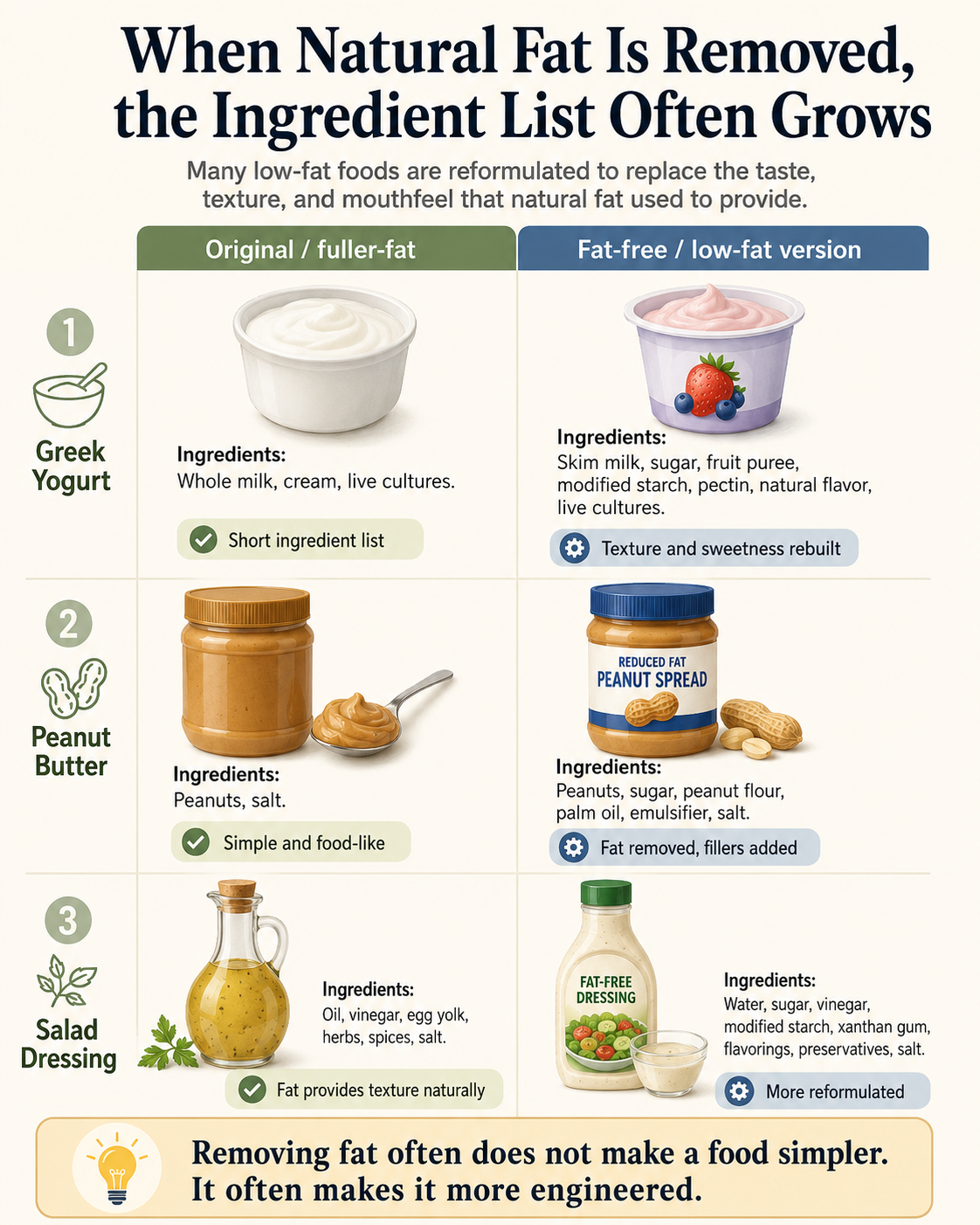
The same principle applies to many “healthier” packaged foods. A low-fat product may look better on the label, but if the fat has been replaced with starches, gums, stabilizers, sweeteners, flavors, or other additives, the trade-off is rarely healthier.
Ironically, many low-fat foods were marketed as healthier because the natural fat had been removed. But once that fat was gone, manufacturers often had to replace the taste, texture, and mouthfeel with starches, gums, stabilizers, sweeteners, flavors, or other additives. In many cases, the result was not a healthier food, but a more processed, less nutritious product that only looked better because “low fat” sounded virtuous.
Whole foods also usually come with built-in brakes: protein, fiber, water, volume, texture, chewing resistance, and micronutrients. Processing can weaken those brakes while concentrating energy and reward. Food becomes softer, faster to eat, more calorie-dense, more palatable, and easier to consume before the body has registered enough.
A controlled trial showed this clearly. Participants were offered ultra-processed or unprocessed diets that were matched for calories offered, sugar, fat, fiber, macronutrients, and sodium. But they were allowed to eat as much or as little as they wanted. On the ultra-processed diet, they naturally ate about 500 more calories per day, gained weight, and ate faster. On the unprocessed diet, they ate less and lost weight.
So the point was not that calories did not matter. It was that processing changed how many calories people consumed without consciously trying to eat more. Food structure, texture, palatability, and satiety all affected intake in ways the nutrition label did not fully explain.
That does not prove every processed food is harmful. But it does show that food structure matters. Processed food can deliver energy faster than satiety can catch up.
Metabolism Responds to the Whole Environment
Food does not land in the body in isolation.
Take carbohydrates as a simple example. A potato eaten after a walk, alongside protein and fat, by someone who slept well and has good muscle mass, is not the same biological event as refined cereal eaten late at night by someone who is sleep-deprived, stressed, sedentary, and already insulin resistant.
The carbohydrate itself matters, but so does the context it arrives in.
This is where modern nutrition advice often becomes too simplistic. It asks whether carbs are good or bad, whether fat is good or bad, or whether calories are all that matter. But the body is more dynamic than that. It responds to food through the condition of the whole system: sleep, movement, muscle, stress, circadian rhythm, meal timing, food structure, and overall energy balance.
That does not mean food quality is irrelevant. It means food quality is only one part of the signal. A whole-food carbohydrate with fiber, water, minerals, and chewing resistance sends a different message than a refined carbohydrate stripped of structure and eaten in a low-movement, high-stress, poor-sleep environment.
Modern life often combines the worst context: frequent food, processed food, late food, low movement, poor sleep, stress, and weak circadian rhythm. The body still tries to regulate appetite, glucose, insulin, and energy storage, but it is doing so in conditions that make regulation harder.
So instead of only asking, “Is this food good or bad?”, we should also ask, “What state is my body in when this food arrives?”
Movement: The Signal That Maintains the Body
Movement is not just a way to burn calories. It is a signal that tells the body what needs to be maintained.
Muscle, bone, joints, tendons, circulation, balance, coordination, mitochondrial capacity, and glucose handling all respond to use. The body is efficient. It does not waste resources maintaining expensive muscle, tissue, and capacity unless the environment gives it a reason to.
That makes modern life somewhat biologically strange. For much of human history, movement was built into the day. Walking, carrying, climbing, squatting, lifting, reaching, kneeling, bending, and working with the hands were not “exercise.” They were ordinary life.
Now movement has to be scheduled into what we know as exercise or workouts.
Sitting as the Default State
The modern body spends much of its life in a chair: sitting to work, sitting to drive, sitting to eat, sitting to relax, sitting to watch, sitting to scroll.
The problem is not that sitting is harmful in small doses. The problem is that sitting has become the default state. Large muscles stay inactive for long stretches. Joints remain in narrow ranges. Energy demand falls. Glucose disposal into working muscle drops. The body is given fewer reasons to maintain the physical capacities that once had to be used throughout the day.
This matters metabolically too. In one controlled study of overweight and obese adults, uninterrupted sitting was compared with sitting broken up by two minutes of light or moderate walking every 20 minutes. After a glucose-and-fat test drink, those short walking breaks reduced the 5-hour post-meal glucose response by about 24–30% and the insulin response by about 23%. While this does not mean a two-minute walk cancels out an unhealthy lifestyle, it shows something important: even small amounts of movement can change how the body handles energy after eating.
The chair did not make humans weak overnight. It simply replaced thousands of small movements the body used to receive without anyone thinking about them.
Movement Loss Beyond Exercise
Exercise matters. Strength training, walking, running, cycling, sport, and deliberate conditioning all provide useful signals.
But exercise is not the same as a movement-rich life.
A person can train for 45 minutes and still spend the rest of the day almost motionless. That does not make the workout useless. It means the body is still receiving many hours of low-use input. Where exercise is concentrated, natural movement used to be distributed.
This is important because the body responds not only to intensity, but also to frequency, variety, and repetition. Walking after meals, standing up regularly, climbing stairs, carrying groceries, working on the floor, squatting, stretching, doing manual tasks, and changing positions throughout the day all send small but repeated maintenance signals.
A large meta-analysis, for example, found that high levels of moderate physical activity can substantially reduce, and may even eliminate, the increased mortality risk associated with high sitting time — but that level was around 60–75 minutes per day, which is beyond what many people get from occasional workouts alone.
But the larger point is not to choose between exercise and daily movement, but that the body benefits from both.
The Body Keeps What It Uses
The body is incredibly efficient at adapting to demand.
Muscle contraction helps pull glucose from the blood, including through insulin-independent pathways. Skeletal muscle is therefore not just tissue for strength or appearance; it is a major part of glucose regulation and metabolic health.
Bone follows the same basic logic. It adapts to mechanical loading, strengthening when the body repeatedly has to bear force and weakening when loading is removed.
Disuse is not neutral either. It tells the body that certain capacities are less necessary. Less muscle is needed. Less mobility is needed. Less balance is needed. Less glucose disposal capacity is needed. Less tissue resilience is needed.
While it may seem like a design flaw, it is actually efficient biology. But in a low-movement environment, efficiency can become a long-term problem.
Modern life does not only make people “less active.” It changes the maintenance signal the body receives every day. The practical answer is not to punish the body with harder workouts while leaving the rest of life motionless. It is to put movement back into the day, often enough and varied enough that the body has a reason to keep what modern life no longer requires.
Sleep: The Signal for Repair and Regulation
Sleep is not just rest. It is a biological state for repair, regulation, memory, immune activity, hormonal rhythm, and nervous system recovery.
Modern life often treats sleep as something to fit in after everything else is done, almost as a luxury for those who have time. The body treats it differently, however. Sleep is one of the main ways it restores order after the demands of the day.
The problem is that the modern evening keeps telling the body the day is not over. Artificial light, screens, late work, notifications, caffeine, alcohol, late meals, stress, and constant entertainment can all extend wakefulness past the point where the body would otherwise begin shifting toward sleep. This does not mean one late night ruins your health. It means the repeated pattern matters.
Poor sleep then feeds back into the rest of the system. In one controlled study, healthy young men were limited to four hours in bed for two nights, then compared with a ten-hour sleep condition. After the short-sleep condition, leptin — a satiety-related hormone — fell by 18%, ghrelin — a hunger-related hormone — rose by 28%, hunger increased by 24%, and appetite increased by 23%, with the strongest increase for calorie-dense, high-carbohydrate foods. Although it was a small study, it still shows the direction clearly: poor sleep can make the next day’s food environment harder to resist.
This is why sleep belongs in the modern-environment story. It does not sit apart from light, food, movement, and stimulation. It is shaped by them, and then it shapes them in return.
A bad night of sleep can mean more hunger, poorer glucose control, lower motivation to move, more reliance on caffeine, weaker mood regulation, and a greater pull toward quick stimulation. The next day becomes biologically harder.
The modern mistake we are all guilty of making is treating sleep as the final task of the day. Biologically, sleep is built across the day.
Stimulation: The Signal That Trains the Nervous System
The nervous system also adapts to the environment it lives in.
Modern life does not only give the body different food, light, movement, and sleep patterns. It gives the brain a different pace of experience: notifications, messages, feeds, headlines, short videos, work pressure, social comparison, background noise, and constant availability.
The issue is not stimulation itself. Humans need novelty, challenge, learning, effort, and connection. The problem is stimulation without rhythm — too much input, too much switching, and too little recovery.
Constant Novelty Trains Attention to Switch
Much of digital life is now built around interruption and novelty.
A phone does not just provide information. Like any habit, it creates a loop: cue, routine, reward. The cue might be boredom, stress, loneliness, avoidance, or a notification. The routine is checking. The reward is a message, a like, a headline, a joke, a moment of escape, or the relief of not missing out. Over time, the nervous system learns the pattern: discomfort appears, the phone removes it, and the habit becomes easier to repeat.
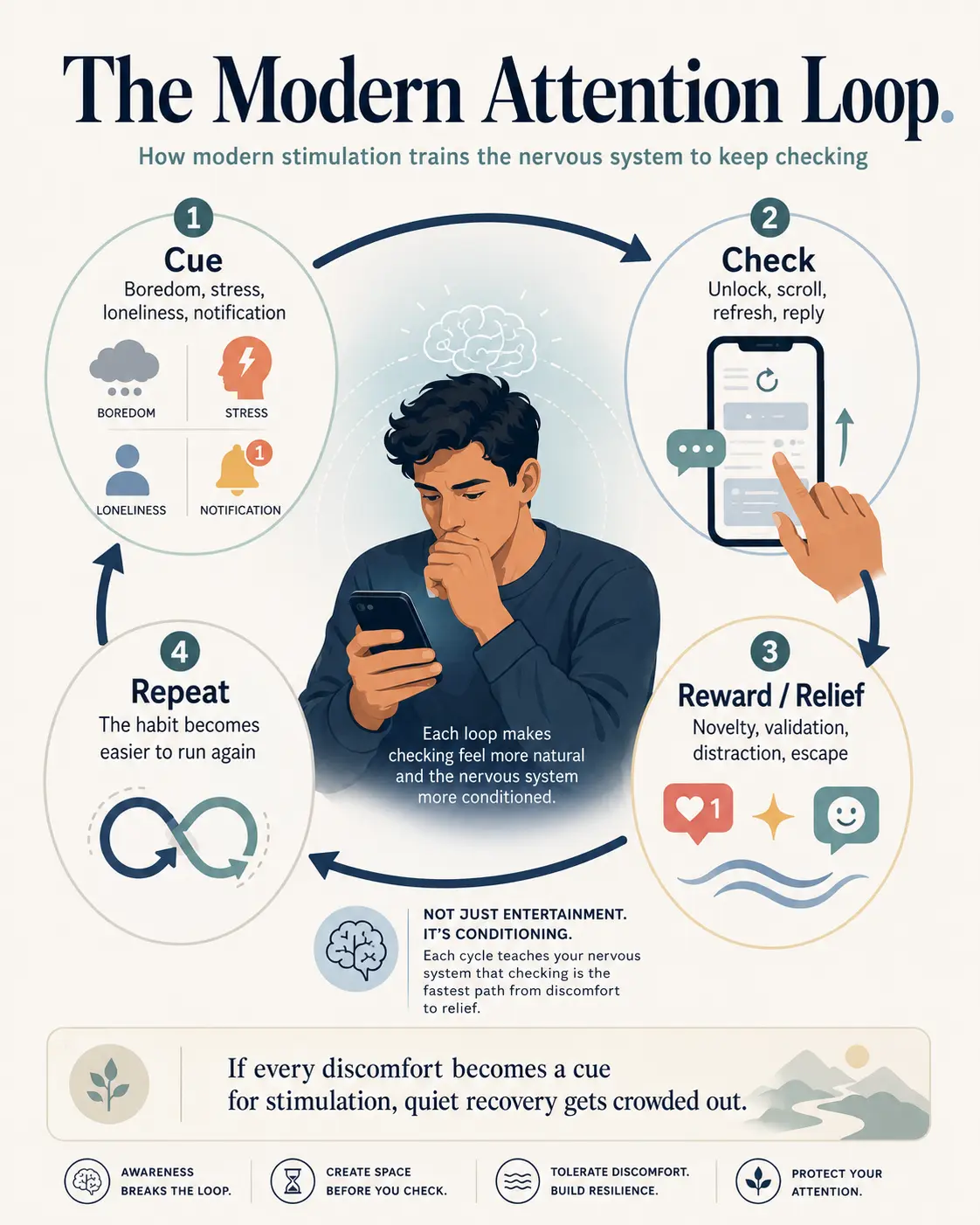
That is why people often scroll even when they are no longer enjoying it. The behavior is not always driven by pleasure. Sometimes it is driven by the hope of relief, validation, distraction, or the next interesting thing.
Social media makes this especially powerful because the rewards are social and unpredictable. Likes, comments, followers, notifications, infinite scroll, and comparison all turn attention into something that can be repeatedly pulled, measured, and redirected. The problem is not simply the technology itself, but how it interacts with validation, comparison, FOMO, and human psychology.
The result is not just too much screen time. It is trained attention. If the environment repeatedly rewards switching, checking, and scanning, deep focus begins to feel unusually slow.
Modern Stress Often Has No Physical Resolution
Stress is not just a mental state but a whole body state.
When the brain detects pressure, threat, uncertainty, or urgency, the body prepares to respond. Alertness rises. Muscles tense. Heart rate and blood pressure may shift. Glucose can be mobilized. In the right setting, this response is useful.
But modern stress is often abstract, sedentary, and unresolved. A person can sit motionless while dealing with emails, financial worry, social tension, bad news, online conflict, work pressure, or comparison with other people’s lives. The body prepares for action, but no action comes.
This is a strange pattern: stress without action.
Stress systems are meant to activate and then settle. When they are repeatedly activated, or when the body has fewer chances to downshift, the cost can accumulate. This is the basic idea behind allostatic load: the wear and tear that comes from repeated adaptation to stress.
Modern stress is not necessarily worse than older stress, but it is often less physical, less bounded, and less resolved.
Quiet Recovery Has Been Crowded Out
The nervous system does not only recover during sleep; it also needs waking periods where less is being asked of it.
Modern life has filled many of the empty spaces that used to happen naturally: waiting, walking, cooking, resting, sitting outside, lying in bed, or transitioning between tasks. Every gap can now be filled with a screen or some sort of distraction.
Although it might seem illogical, boredom, quiet, and low-input time are not useless. They give the nervous system a different message: nothing urgent is happening. Relax. You do not need to check, compare, respond, solve, consume, or prepare for the next thing.
This is where the habit-loop idea becomes practical. If stress, boredom, or loneliness become cues for stimulation, then recovery gets replaced by checking. Breaking that pattern usually requires changing the cue, replacing the routine, and finding a healthier reward because simply removing the behavior leaves the same need unmet.
The modern stimulation problem is not that people enjoy entertainment. It is that the nervous system is rarely allowed to complete the cycle: focus, effort, stress, resolution, recovery.
Without that rhythm, the body learns to live in a state of partial alertness, always ready for the next input.
Chemical Exposure: The Background Burden of Modern Life
Modern chemical exposure is not one thing. It comes through air, water, food packaging, plastics, cookware, cleaning products, personal care products, household dust, clothing, furniture, pesticides, and industrial pollution.
That does not mean every exposure is dangerous (dose, timing, route, frequency, vulnerability, and the specific substance all matter) but it also does not mean the modern chemical environment is biologically meaningless. The body still has to filter, metabolize, tolerate, store, or excrete what it is exposed to, but sometimes that isn’t enough.
Some exposures are well established. Air pollution is one of the clearest examples. Fine particulate matter and other pollutants are consistently linked with higher risk of stroke, ischemic heart disease, COPD, lung cancer, pneumonia, and other respiratory harms.
Drinking water is another example of modern trade-offs. Disinfection is one of the great public-health achievements because it protects against waterborne disease. But disinfectants can react with organic matter to form disinfection byproducts, including trihalomethanes and haloacetic acids, which are regulated because long-term exposure has frequently been linked with severe adverse health effects. For example, several epidemiological studies have linked trihalomethanes in water with bladder cancer risk.
Food contact is one of the quieter exposure routes. Food can touch plastics, coatings, inks, adhesives, can linings, cookware, processing equipment, storage containers, and packaging long before it reaches the plate. A 2024 review found evidence of human exposure to 3,601 food-contact chemicals — a reminder that modern food often passes through a large chemical-contact system before it enters the body.
Plastics add another layer. PFAS, otherwise known as “forever chemicals”, are widely used, long-lasting chemicals that break down very slowly. The EPA notes that many PFAS are found in the blood of people and animals worldwide and are present in water, air, fish, soil, food products, and the broader environment.
Some chemicals matter more than others because they can also interfere with signaling systems. Endocrine-disrupting chemicals, often found in plastics, food-contact materials, cosmetics, pesticides, and other manufactured products, can mimic hormones, block hormone action, alter hormone levels, or change tissue sensitivity to hormones.
Microplastics are also a modern concern. They have been found in drinking water and the wider environment, although the full extent of health impacts are still being clarified.
The Aim Is Lower Burden, Not Purity
After reading a list like that, it is easy to feel overwhelmed. Air, water, plastics, food packaging, cleaning products, clothing, cookware, household dust — it can start to sound as though ordinary life is impossible to navigate.
That is not the takeaway point here.
Modern life has also protected us from many old dangers. Clean water, sanitation, refrigeration, safer food storage, warm homes, and modern medicine have saved an enormous number of lives. The answer is not to become afraid of every product or every chemical name.
The better aim is to reduce the exposures that are repeated, unnecessary, and reasonably easy to change.
That might mean filtering your drinking water, improving ventilation, avoiding heating food in plastic, using glass or stainless steel for hot food and drinks, choosing simpler personal care or cleaning products, reducing heavily fragranced indoor products, dusting and vacuuming regularly, or being more selective with nonstick, stain-resistant, waterproof, or heavily treated materials.
None of this requires a perfect home. A perfectly pure environment does not exist.
The goal is simply to lower the background burden where it makes sense. Not every exposure becomes a problem, but the total pattern matters: air, water, food packaging, plastics, indoor products, textiles, and persistent pollutants are all part of the biological environment the body now has to process.
The Pattern: Modern Life Scrambles Biological Inputs
The problem is not just a few isolated bad habits. That is why modern health can feel so frustrating. You can improve one thing — eat better, walk more, go to bed earlier, spend less time on your phone — and still feel like the rest of your life is pulling in the opposite direction.
That is because the body is not responding to habits in isolation. It is responding to the whole pattern.
A dim indoor day tells the body one thing. Bright light at night tells it another. Caffeine says stay alert. Poor sleep increases hunger. Processed food makes that hunger easier to overfeed. Sitting reduces the need for glucose-hungry muscle. Stress mobilizes energy without giving the body a physical way to use it. Digital stimulation keeps the nervous system engaged when it should be downshifting.
By the time someone feels tired, hungry, wired, distracted, stiff, unmotivated, or metabolically out of rhythm, the problem may not be a single failure of discipline. It may be the predictable result of many small signals stacking in the same direction.
This is the part modern health advice often misses. It tells people to make better choices, but it rarely asks why better choices have become so hard to make.
The body is always trying to adapt. If the repeated pattern is weak daylight, bright evenings, constant food, low movement, poor sleep, high stimulation, and environmental burden, the body will adapt to that world, because adaptation is what it does – for better or worse.
The goal, then, is not to fix everything at once. It is to stop treating health as a collection of isolated hacks and start asking a better question:
What signals is my body receiving every day?
The Practical Aim: Rebuild Stronger Signals
Fixing these issues does not mean escaping modern life. Modern life has made us safer, increased life span, and improved quality of life in many ways . Our concern, therefore, is to make modern life less biologically confusing.
You do not need a perfect routine, a perfect diet, a toxin-free home, or a life built around health optimization. The body is more forgiving than that. But it does need clearer signals often enough to organize itself around them.
That is the practical aim: rebuild the signals modern life has weakened.
Get Real Light During the Day
Daylight is one of the simplest ways to remind the body that it is daytime.
This does not need to be complicated. Getting outside in the morning, taking walks during daylight, working near a window when possible, and spending more time outdoors all help strengthen the day signal. The point is not only vitamin D. It is timing, alertness, mood, and circadian rhythm.
A stronger day makes it easier to have a clearer night.
Make Evenings Darker and Quieter
Modern evenings often keep the body in daytime mode.
Bright overhead lights, screens, work messages, late entertainment, and constant input can all tell the brain that the day is still active. The practical move is to reverse that signal: dimmer lights, warmer lighting, less screen intensity, fewer notifications, and a slower transition toward bed.
The body does not fall asleep because we command it to. It falls asleep more easily when the environment stops conflicting with night.
Eat Food That Supports Satiety
In a world where food is everywhere, the question is not only “how many calories?” It is also “does this food help the body regulate itself?”
Protein, fiber, whole-food structure, chewing, volume, micronutrients, and natural fats all help food behave more like food. They make eating more satisfying and less easy to overrun.
This does not mean every meal must be perfect. It means the daily pattern should make satiety easier, not harder. A body surrounded by processed, soft, hyper-palatable, energy-dense food has to work harder to know when enough is enough.
Put Movement Back Into the Day
Exercise is valuable, but the body also needs regular proof that it still has to move.
Walking, carrying, climbing stairs, standing up, changing positions, working with the hands, stretching, squatting, and moving after meals all send maintenance signals. None of them need to feel dramatic. That is the point.
Modern life removed ordinary movement and then told people to replace it with workouts. Workouts help, but the deeper task is to make the day less motionless.
Reduce Avoidable Chemical Burden
The aim is not purity. It is lower burden.
Some exposures are difficult to control. Others are surprisingly easy to reduce. Filtering water, improving ventilation, not heating food in plastic, using glass or stainless steel for hot food and drinks, reducing heavily fragranced indoor products, dusting regularly, and choosing simpler household or personal care products can all lower unnecessary exposure without it turningyour life strict and rigid.
The body can handle a lot. That does not mean it should be asked to process everything modern life throws at it.
Protect Recovery From Constant Input
Recovery is not just sleep. It is also the space between demands.
The nervous system needs times when nothing is being sold, compared, checked, answered, watched, optimized, or refreshed. This can be a walk without headphones, a quiet drive, a few minutes outside, cooking without a screen, reading, stretching, or simply letting boredom exist without immediately filling it.
That may sound small, but it changes the signal. It tells the body that not every moment requires vigilance.
Modern life makes stimulation effortless. Recovery has to be protected.
The point of all this is not to create another impossible health checklist. It is to see health differently. The body is always adapting to the world it lives in. When that world sends clearer signals — real light, real food, regular movement, darker nights, cleaner inputs, and quieter recovery — the body has a better pattern to adapt to.
FAQs
Why does the modern environment affect health?
The body constantly adapts to the signals it receives. Light affects circadian rhythm, food affects energy regulation, movement affects tissue maintenance, sleep supports repair, stimulation trains the nervous system, and chemical exposures add background burden. Modern life changes many of those signals at once.
Is modern life bad for human health?
Not entirely. Modern life has improved safety, sanitation, food access, medicine, and comfort. The problem is that many normal parts of modern life — weak daylight, bright nights, constant food, sitting, screens, poor sleep, and chemical exposure — can conflict with the biological rhythms the body still depends on.
What is the simplest way to make modern life healthier?
Start by rebuilding stronger daily signals: get real daylight, move more often, eat foods that support satiety, make evenings darker and quieter, protect sleep, reduce unnecessary chemical exposure, and create more space away from constant stimulation.