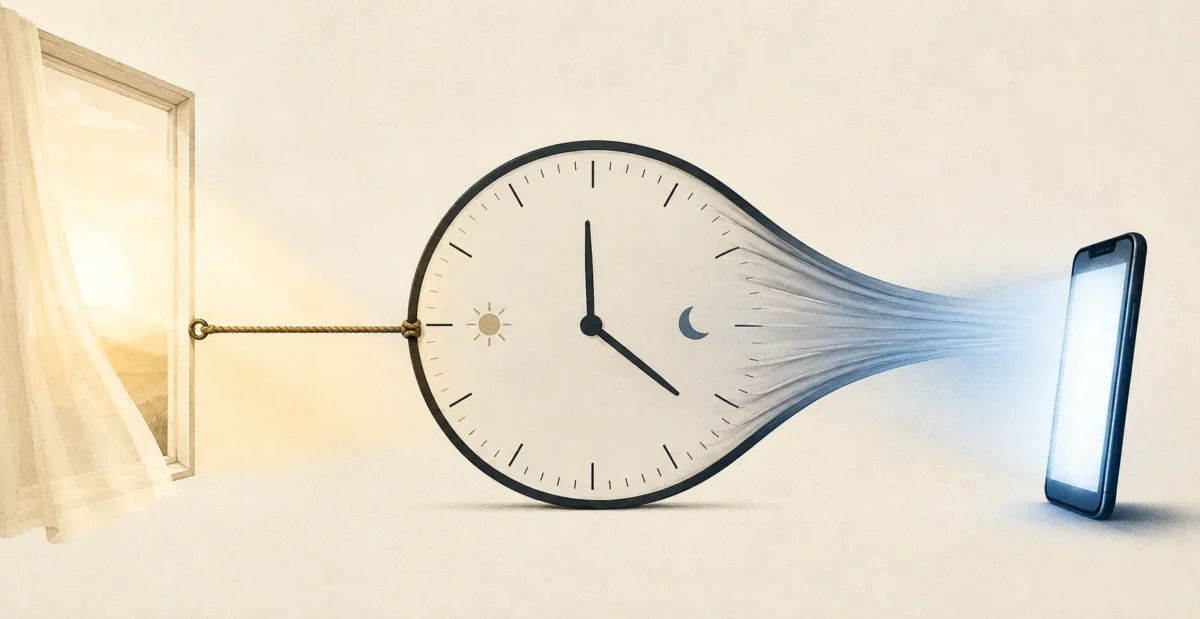
For several months of the year, millions of Americans can stand outside in bright sunlight and still make little to no vitamin D from the sun.
That may sound strange, but vitamin D production depends on UVB light, not just visible brightness or warmth. When the sun sits too low in the sky, especially during winter at higher latitudes, much of that UVB is filtered out before it reaches your skin. You may feel the sun on your face and still be getting almost none of the wavelength your body needs to make vitamin D.
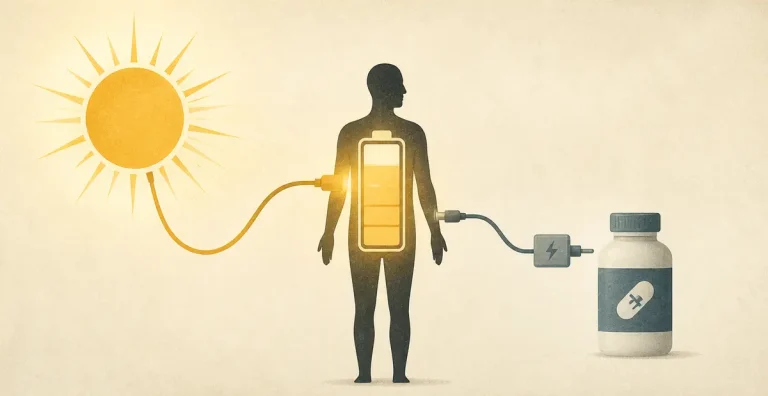
This is why the sunlight-versus-supplements question is more complicated than it first appears. Vitamin D did not begin as something we were meant to get from a bottle. It began as a sunlight-driven hormone system, shaped by outdoor light, exposed skin, season, latitude, food, and time.
But modern life has made that system unreliable. We work indoors, live behind glass, avoid midday sun, cover our skin, move through long winters, and often eat very little vitamin-D-rich food. For some people, sunlight may be enough for part of the year. For others, supplements may be a useful or necessary backup.
So the real question is not simply whether sunlight or supplements are better. It is whether your actual environment gives your body what it needs to maintain healthy vitamin D levels.
In this article, we’ll look at how your body makes vitamin D from sunlight, how supplements compare, when sunlight may be enough, when supplementation makes sense, why testing matters, and why vitamin D works best when it is understood as part of a wider biological system rather than a standalone pill.
Sunlight vs Vitamin D Supplements: The Short Answer
Sunlight, food, and supplements can all help support vitamin D levels, but they do not work in the same way.
Sunlight is the original source. When strong enough UVB light reaches the skin, your body makes vitamin D3 through a process that naturally slows once enough has been produced. Food can add smaller amounts, especially from fatty fish, egg yolks, liver, cod liver oil, and fortified foods. Supplements provide the most controlled dose, which makes them useful when sunlight and diet are not enough.
So the question is not whether sunlight or supplements are good or bad. It is whether each source fits your context: your season, latitude, lifestyle, skin tone, diet, blood levels, and sun exposure.
| Question | Sunlight | Food | Supplements |
|---|---|---|---|
| Raises vitamin D? | Yes, when UVB is strong enough | Usually modestly | Yes, depending on dose |
| Self-regulating? | Yes, production is limited by UV exposure | Naturally limited by intake | No, dose must be managed |
| Works in winter? | Often limited at higher latitudes | Yes, if diet provides enough | Yes |
| Other benefits? | Light/circadian/nitric oxide effects | Comes with nutrients and cofactors | Vitamin D only |
| Main risk | Burning/UV damage | Usually low | Excess intake without testing |
| Best use | Regular safe exposure | Nutrient-rich backup | Practical backup when sun/food are insufficient |
Are Vitamin D Supplements the Same as Sunlight?
Vitamin D3 made in the skin and vitamin D3 taken in supplement form are chemically the same molecule. In that narrow sense, your body can use both.
But the source changes the biological context.
Sunlight starts a process in the skin. That process depends on UVB exposure, which changes with season, latitude, time of day, cloud cover, air pollution, skin tone, age, clothing, sunscreen use, and how much skin is exposed. This is why sunlight can be powerful in summer but almost useless for vitamin D production in winter in many northern locations.
Supplements bypass that entire sunlight-driven pathway. They deliver a fixed dose of vitamin D3 directly, usually through a capsule, tablet, drop, or spray. That makes them more predictable, but also more dependent on judgment. With sunlight, your skin helps regulate production. With supplements, you have to regulate the input yourself.
This is why supplements are useful but narrower. They can help correct low vitamin D status, especially when sunlight is weak, unavailable, unsafe, or inconsistent. But they do not provide the broader signal of outdoor light: the bright daytime exposure that helps anchor circadian rhythm, mood, alertness, and the body’s sense of day and night.
That does not make supplements inferior, but it does makes them context-dependent. If your blood levels are low in winter, a supplement may be exactly what you need. If you already get regular safe sun exposure and have healthy levels, more supplementation may add little.
The word supplement is the clue. Vitamin D supplements are meant to supplement the natural sources modern life often takes away: regular outdoor light, exposed skin, seasonal sun, and nutrient-rich food. They can be extremely useful when those inputs are missing, but they should not become a thoughtless replacement for the biological context the body still expects.

Get Your Free Book!
Enter your email to get the free book and occasional updates from The New Health Order.
What Vitamin D Actually Is (and Isn’t)
One of the biggest misconceptions about vitamin D is that it isn’t really a vitamin at all. It’s a prohormone — a raw ingredient your body turns into a powerful hormone that regulates immunity, metabolism, and calcium balance.
It also doesn’t really behave like a vitamin either. In some ways, it acts more like testosterone or cortisol than other vitamins. The only reason we still call it a vitamin is because scientists misclassified it a century ago, and the name stuck.
The mechanism behind vitamin D in the body is surprisingly complex. When UV-B light (from sunlight) hits your skin, it reacts with a cholesterol compound called 7-dehydrocholesterol, producing vitamin D₃ (cholecalciferol) — the same molecule you’ll find in most supplements.
From there, the liver converts it into calcifediol (25-hydroxy-vitamin D), which is the storage form measured in blood tests. Finally, your kidneys (and even some immune cells) turn that into calcitriol, the active hormone that flips genetic switches throughout your body.
So when you take a vitamin D₃ capsule, you’re not taking the finished product — you’re just sending the raw material into the system. Whether it ever becomes the active hormone depends on how well your liver and kidneys are working, and whether you have enough magnesium, vitamin K₂, and vitamin A to support those conversions.
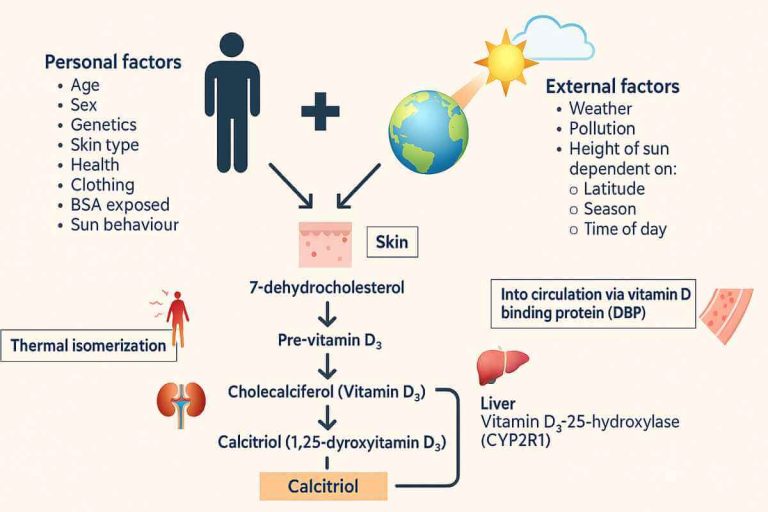
Whether vitamin D₃ comes from sunlight, food, or a supplement, the molecule itself is the same — cholecalciferol. What matters isn’t where it comes from, but what your body does with it. Every source feeds into the same pathway: first the liver, then the kidneys, then your cells.
But how efficiently you process it depends on your biology — your liver health, magnesium and K₂ levels, and even how inflamed or metabolically healthy you are. In other words, the pill and the sun give you the same raw material, but not always the same result.
Why Vitamin D Matters
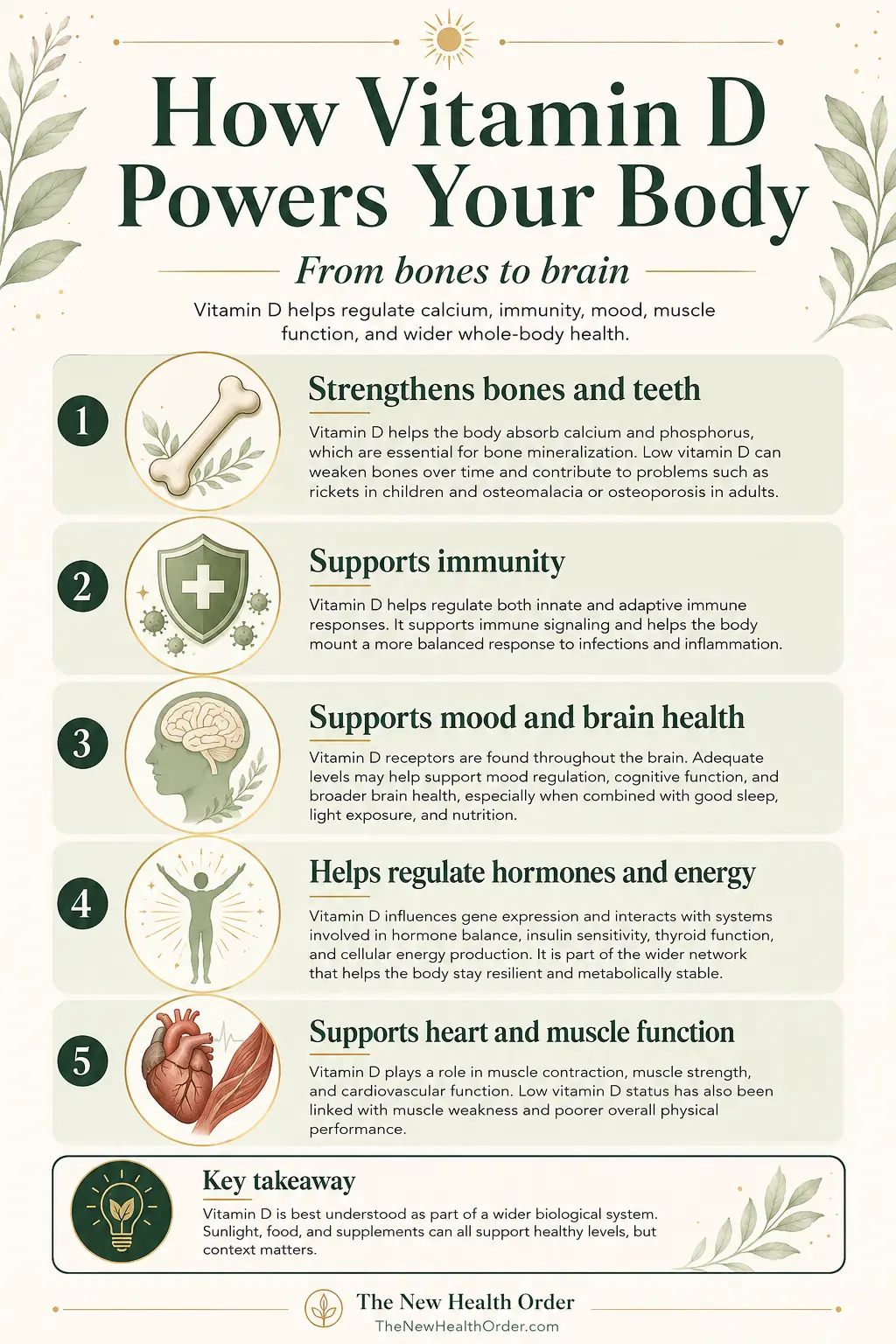
Once vitamin D is converted into its active form — calcitriol — it stops acting like a nutrient and starts behaving like a master regulator. Calcitriol binds to receptors inside your cells and directly influences the expression of hundreds of genes, touching nearly every system in the body.
Its most obvious job is in calcium and bone metabolism — helping your gut absorb calcium, keeping it in your bones, and preventing it from floating around in your bloodstream. But that’s only part of the story.
Vitamin D also plays a major role in immune regulation, helping your body strike the balance between defense and inflammation. It ramps up the production of antimicrobial peptides that fight off bacteria and viruses, while keeping your immune system from going into overdrive and attacking your own tissues.
This “immune intelligence” is one reason vitamin D sufficiency is linked to lower rates of respiratory infections, fewer autoimmune flares, and a more balanced inflammatory response overall.
Studies have shown that people with adequate vitamin D status tend to get fewer and less severe infections, while late supplementation (especially large one-time doses) often shows little benefit — simply because the timing is too late for the biology to catch up.
Beyond immunity, vitamin D is deeply tied to hormone balance, mood, and metabolic health. Low levels are linked with insulin resistance, low testosterone, depression, fatigue, and a sluggish metabolism. It doesn’t mean vitamin D cures those conditions — but it’s often the silent foundation beneath them.
Why Vitamin D Status Takes Time to Build
None of these benefits work if your fuel tank (calcifediol) is empty. The immune system draws on circulating vitamin D reserves when infection strikes. If those levels are low, your cells can’t make enough active hormone fast enough to mount an effective defense.
When you ingest vitamin D, whether through food or through supplementation, it first has to pass through your liver, where enzymes convert it into calcifediol (the storage form measured in blood tests). That conversion alone can take a week or two, depending on your metabolism, magnesium levels, and overall liver health. Only after that does your kidney and immune tissue transform it into calcitriol, the active hormone that actually empowers your immune cells.
That means taking vitamin D₃ when you’re already sick is often too late to make a difference. You can’t flood your system overnight and expect your immune army to be ready by morning. The real protection comes from consistency — keeping your vitamin D stores topped up long before infection strikes.
Studies show that infections peak during winter, precisely when calcifediol levels are at their lowest. Since it takes weeks for vitamin D₃ to convert into this usable form, the time to prepare isn’t when you get sick — it’s a month or two before winter, by increasing sunlight exposure or slightly raising your vitamin D intake ahead of time.
The Three Sources of Vitamin D: Sunlight, Food, and Supplements
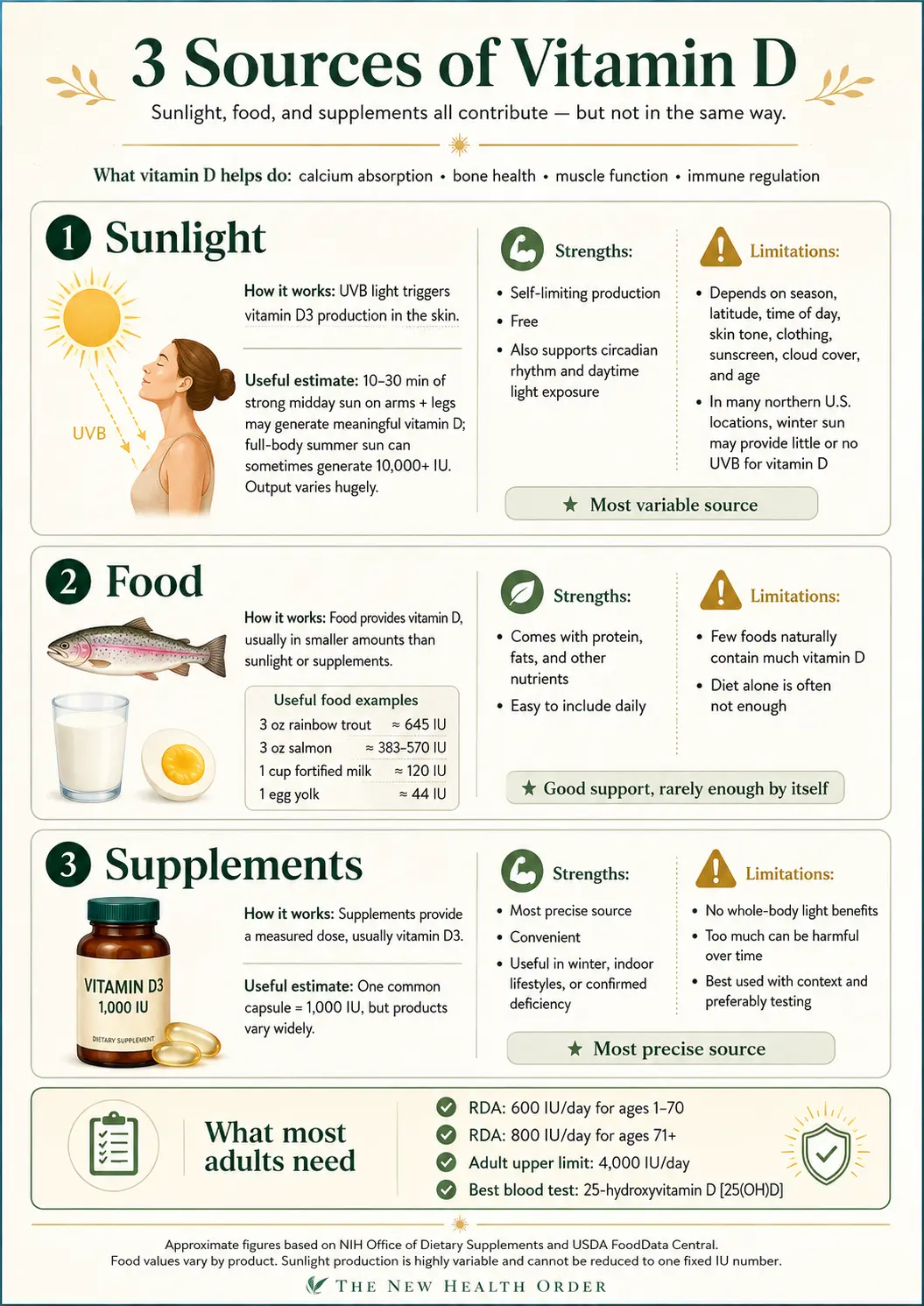
There are three main ways to support vitamin D status: sunlight, food, and supplements. Sunlight is the original source, food can help top up intake, and supplements become useful when modern life makes the first two unreliable.
Sunlight — The Preferred Source
For most of human history, we lived outdoors — hunting, gathering, building, walking, and sleeping under open skies. Our skin made vitamin D₃ daily, naturally, and in balance. The process was self-regulating: sunlight triggered production, but too much UV-B destroyed any excess before it entered the bloodstream. You couldn’t overdose, and you didn’t need to worry about cofactors — the body has built-in mechanisms that limit excess vitamin D production from sunlight.
Food — The Top-Up System
In parts of the world where sunlight was scarce, nature provided a Plan B. Traditional northern diets were rich in vitamin D–dense foods — oily fish, cod liver, egg yolks, wild game, animal fats, and organ meats. Indigenous populations in the Arctic, for instance, stayed healthy through long, sunless winters because their diets were packed with vitamin D and its cofactors like vitamin A and omega-3 fats. It wasn’t the climate that protected them — it was the food ecosystem that evolved alongside it.
Supplements — The Backup System
Supplements are the third and newest source — a synthetic stand-in for the sunlight and diets most of us have lost. They’re incredibly useful, especially if you live in high latitudes, work indoors, or rarely see the sun. But they’re not a perfect substitute.
Supplements deliver the raw material (cholecalciferol), but not the context — no light cues, no circadian benefits, and no built-in self-regulation. And unlike natural sources, they can unbalance calcium metabolism if you’re low in magnesium or vitamin K₂, nutrients that used to come bundled in ancestral diets.
Evolution didn’t make a mistake by misjudging our vitamin D needs. Humans were perfectly adapted to make and store vitamin D through regular sun exposure and nutrient-rich foods. The “deficiency epidemic” only began when we built lives that cut us off from both, such as working in an office all day or avoiding meats and animal fats. Supplements exist not because nature failed, but because we stopped living in nature’s design.
Why Deficiency Is So Common
If vitamin D is so essential, why are so many of us still running on empty? Geography, skin tone, diet, and lifestyle all play a part. Above about 37° latitude, winter sunlight is too weak to trigger vitamin D production at all.
People with darker skin need much more sun exposure to make the same amount, putting them at greater risk in northern climates. Add to that modern diets low in seafood and animal fats, aging skin that produces less 7-dehydrocholesterol, and body fat that traps vitamin D, and it’s easy to see why deficiency has become the rule, not the exception. The body hasn’t failed — the environment has changed.
How Much Sun You Need Depends on Context
You can stand next to someone in the same sunshine and walk away with totally different amounts of vitamin D. That’s because sunlight isn’t a fixed dose — it’s a constantly shifting mix of geography, season, and biology.
The biggest factor is latitude. Above about 37 degrees north or south, the sun sits too low in the sky during winter for its UV-B rays to reach the ground in strength. You could sunbathe all day in London or Toronto in January and still make almost no vitamin D. Closer to the equator, UV-B remains strong year-round, which is why traditional equatorial diets and darker skin evolved as protective balances rather than compensations.
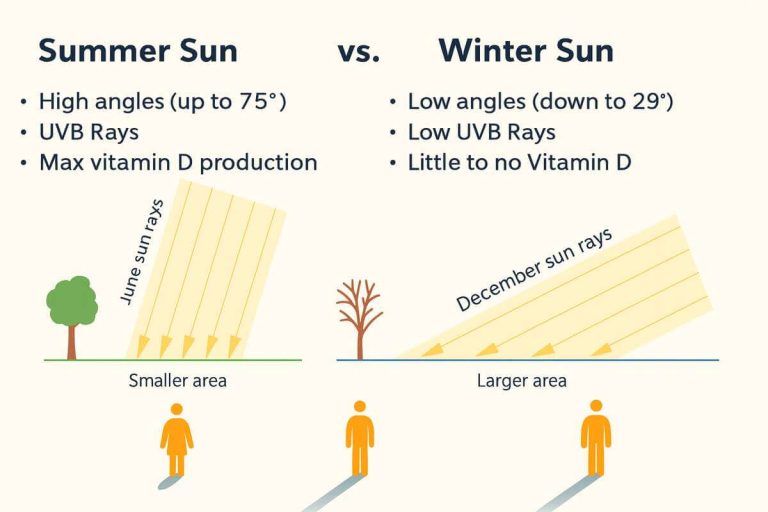
Season and time of day matter just as much. Vitamin D synthesis peaks when the sun is high — roughly between 10 a.m. and 2 p.m. Morning and late-afternoon light is rich in UV-A (the kind that tans and ages the skin) but low in UV-B, which is the only wavelength that triggers vitamin D production.
Then there’s skin tone. Melanin acts like natural sunscreen: the darker your skin, the longer you need in the sun to make the same amount of vitamin D as someone with lighter skin. That’s protective in the tropics, but it makes deficiency far more common for darker-skinned people living in northern climates.
Cloud cover, pollution, altitude, and surface area all add to the equation. Thick clouds or smog can block most UV-B. Higher altitudes, where the air is thinner, increase it. And the more skin you expose, the more vitamin D you make — ten minutes in a T-shirt isn’t the same as ten minutes in a bathing suit.
Even age plays a role: older skin contains less 7-dehydrocholesterol, the raw material used to create vitamin D₃, meaning production naturally slows with time.
So “getting some sun” isn’t a one-size-fits-all prescription. It’s a moving target shaped by who you are, where you live, and how you live. The key is finding your own sweet spot — enough sunlight to keep your biology humming, but not enough to burn.
Can You Take Too Much Vitamin D?
Yes, you can take too much vitamin D, but toxicity is uncommon and usually comes from excessive supplementation rather than sunlight.
That is one of the key differences between getting vitamin D from the sun and taking it from a bottle. When UVB light reaches the skin, the body can make vitamin D3, but that process is not unlimited. Once enough has been produced, additional UV exposure does not keep creating more and more vitamin D indefinitely. The skin has built-in mechanisms that help limit excess vitamin D production.
Supplements work differently. A capsule, drop, or spray gives you a set dose. That can be useful, especially when sunlight is weak or unavailable, but it also means the dose is no longer being regulated by the skin. You are deciding the input.
This does not mean vitamin D supplements are dangerous—for many people, they are a practical and sensible tool. The risk comes from treating vitamin D as if more is automatically better, especially over long periods without testing.
Vitamin D helps regulate calcium absorption. When vitamin D intake becomes excessive, calcium levels can rise too high, which may stress the kidneys and contribute to problems such as hypercalcemia or soft-tissue calcification. This is why high-dose supplementation should be treated differently from ordinary food intake or sensible sunlight exposure.
The official recommended intake for most adults remains around 600–800 IU per day, depending on age. Some researchers and clinicians argue that this may be too low for many people, especially those with little sun exposure, higher body weight, darker skin in low-UV climates, or low measured blood levels. I have discussed that debate in more detail in this article here.
But for this article, the practical point is simpler: vitamin D needs context.
A low daily dose may be inadequate for someone who is deficient. A high daily dose may be unnecessary for someone who already has good levels. The only way to know where you stand is to test, ideally using 25-hydroxyvitamin D, often written as 25(OH)D.
This is also where co-nutrients come in. Vitamin D does not work in isolation. Magnesium is involved in vitamin D metabolism, and vitamin K2 helps regulate calcium handling in the body. These nutrients do not make careless high-dose supplementation automatically safe, but they do remind us that vitamin D belongs to a wider nutritional system.
If you spend plenty of time outdoors, eat vitamin-D-rich foods, and have healthy blood levels, you may not need much supplementation at all. If you work indoors, live through long winters, rarely expose your skin to strong sunlight, or have confirmed low levels, supplementation may be useful. But the dose should match the problem.
So yes, you can take too much vitamin D. But that should not distract from the larger issue: many people now live in an environment where natural vitamin D production is unreliable.
The goal is not to avoid supplements, but to use each source properly. Sunlight is the original source when it is available and safe. Food can help top up. Supplements can fill the gap when modern life, season, latitude, skin tone, age, or blood tests show that more support is needed.
Vitamin D is powerful because it is part of a regulated biological system. Use it with that system in mind, and it becomes a useful tool. Use it blindly, and you lose the context that makes it work.
When Vitamin D Supplements Make Sense — and When They Don’t
Vitamin D supplements make sense when they solve a real problem: your body is not getting enough vitamin D from sunlight and food.
That can happen for several reasons. You may live far from the equator, go through long winters, work indoors, cover most of your skin, have darker skin in a low-UV climate, eat very little vitamin-D-rich food, or have already tested low. In those situations, a vitamin D3 supplement can be a practical way to fill the gap.
The clearest sign is a blood test. The usual marker is 25-hydroxyvitamin D, written as 25(OH)D. If your level is low, supplementation becomes less of a guess and more of a targeted correction.
But without testing, you can still think in terms of likelihood.
Supplementation is more likely to make sense if you:
- spend most of the day indoors
- live through long, low-UV winters
- rarely expose bare skin to midday sun
- have darker skin in a northern climate
- are older
- eat little fatty fish, egg yolks, liver, or cod liver oil
- have previously tested low
Supplementation may be less necessary if you:
- regularly get safe midday sun exposure
- live in a sunny climate year-round
- eat vitamin-D-rich foods often
- already have healthy blood levels
- are not in a higher-risk group for deficiency
The point is not to take vitamin D forever just because it is “healthy.” The point is to use it when your environment leaves a gap.
That is what supplements are supposed to be: supplemental. They are not meant to replace sunlight, food, and the wider light environment by default. They are meant to help fill the gap when modern indoor life, long winters, low-UV climates, poor diet, or confirmed deficiency leave the body short of what it would normally receive from nature.
They also need restraint. More vitamin D is not automatically better, especially if you are taking high doses for long periods without testing. Vitamin D affects calcium handling, and it works alongside nutrients such as magnesium, vitamin K2, and vitamin A.
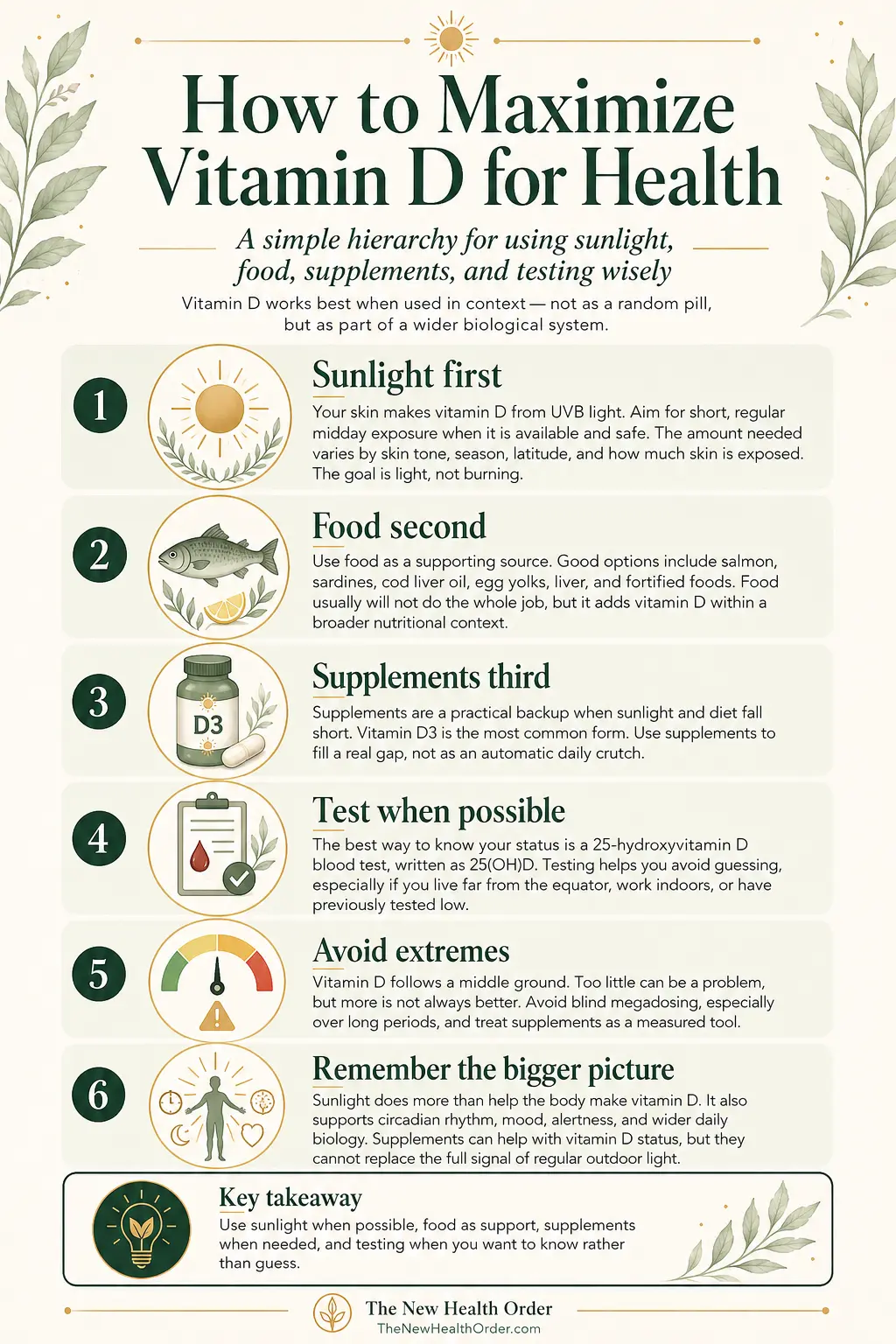
The best approach is to use supplements when they solve a real deficiency or likely gap, not as a mindless daily habit. Sunlight is the original source. Food supports the system. Supplements are the modern backup when those first two are not enough.
FAQs
Is sunlight better than vitamin D supplements?
Sunlight is usually the preferred natural source because your body makes vitamin D through the skin and regulates the process more naturally. But supplements can be useful when sunlight is weak, inconsistent, or unavailable.
Can vitamin D supplements replace sunlight?
Supplements can help replace the vitamin D you might be missing, but they cannot replace sunlight itself. Outdoor light also supports circadian rhythm, mood, alertness, and other biological signals that a capsule cannot provide.
How long do you need to be in the sun to get vitamin D?
It depends on skin tone, season, latitude, time of day, age, clothing, and how much skin is exposed. For many people, short regular exposure to midday sun may help, but the goal is never to burn. A 25(OH)D blood test is the best way to know your status.