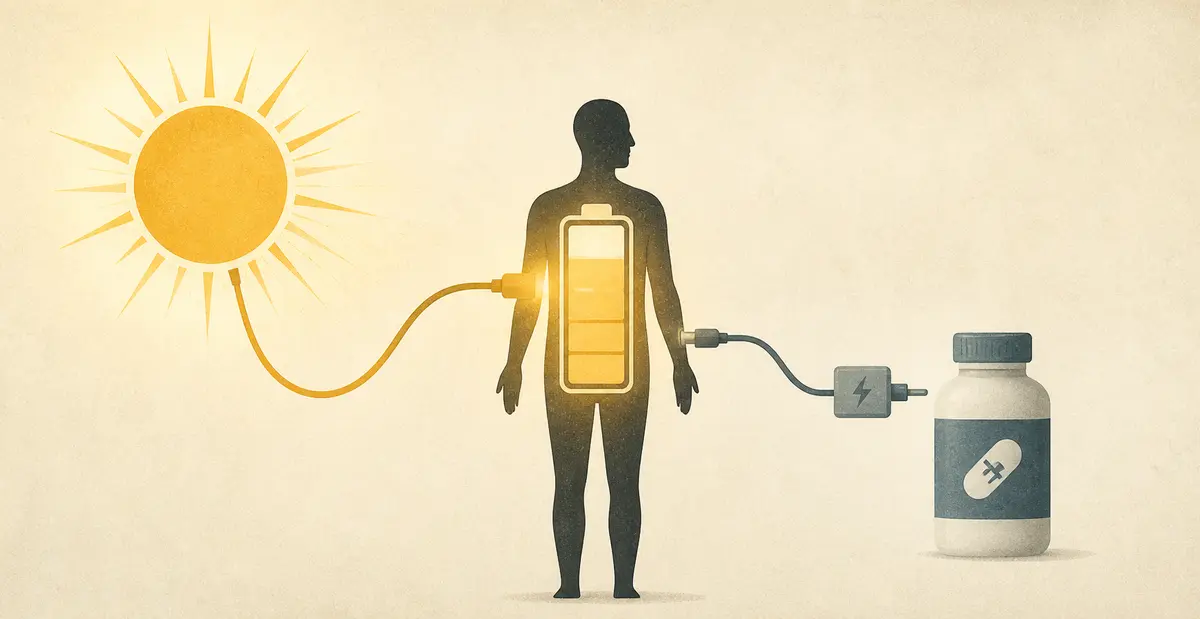

You do not build health from isolated habits. You build it from the signals your body receives every day.
The three pillars of health — sleep, nutrition, and movement — are usually treated as separate boxes: sleep to feel rested, diet to manage weight, and exercise to burn calories or stay fit. But the body does not experience them separately. It reads them together, as repeated biological inputs that shape repair, appetite, glucose control, hormones, immune function, muscle, metabolism, mood, and physical capacity.
This article explains why these three foundations matter so much: sleep as the repair and regulation signal, nutrition as the material, energy, and metabolic signal, and movement as the capacity and adaptation signal. It also shows how they affect each other, why modern life disrupts them so easily, and how to rebuild the basics in a way that makes the body easier to regulate, fuel, move, and recover.
The Body Adapts to the Signals You Send It
Most already know that sleep, nutrition, and movement matter. The problem is that they are usually treated as separate lifestyle habits, as if sleep is about feeling rested, diet is about managing weight, and exercise is about burning calories or staying fit.
But the body does not experience them that way. It experiences them as repeated biological signals.
Every day, your body is reading information from the way you live. How much light you get in the morning. How late you stay awake. How often you eat. What nutrients are available. Whether your muscles are being used. Whether your heart and lungs are being challenged. Whether stress is followed by recovery, or simply replaced by more stress.
Over time, the body adapts to those signals. It builds what is repeatedly needed, downregulates what is unused, stores energy when excess keeps arriving, releases energy when conditions allow, repairs tissue when recovery is protected, and shifts toward stress physiology when sleep, food, and movement are repeatedly disrupted.
This is the simplest way to understand why sleep, nutrition, and movement sit underneath so many other health topics.
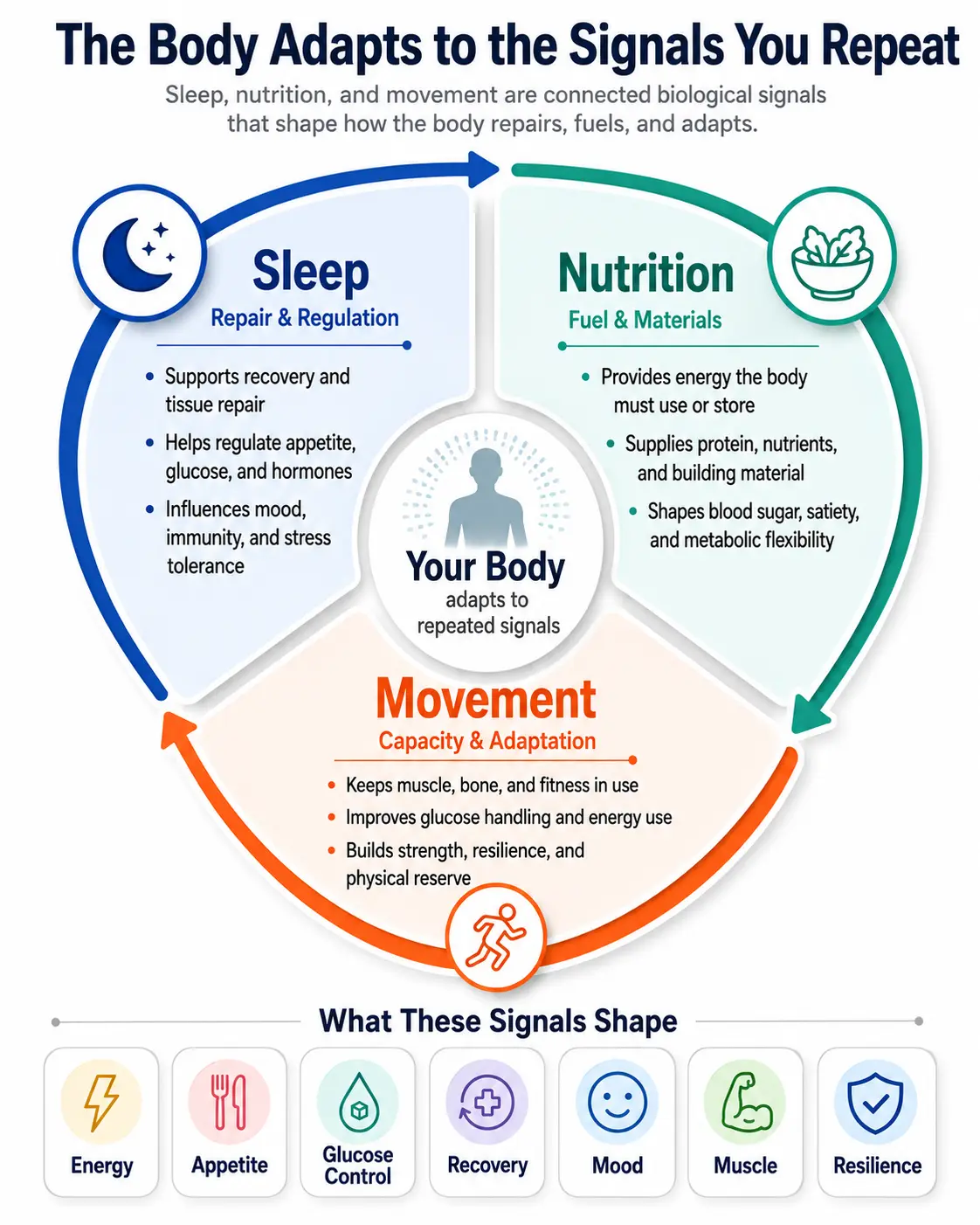
Sleep is the repair and regulation signal. It gives the body time to restore order across the brain, hormones, immune system, appetite, glucose control, mood, and recovery.
Nutrition is the material, energy, and metabolic signal. It supplies the fuel and building blocks the body uses to produce energy, repair tissue, maintain muscle, regulate appetite, and manage blood sugar.
Movement is the capacity and adaptation signal. It tells the body that muscle, bone, cardiovascular fitness, glucose disposal, mobility, coordination, and physical reserve are still needed.
These are not three separate boxes. They are overlapping inputs into the same living system. When they are repeatedly disrupted, the body adapts in one direction. When they are protected and restored, the body receives a very different message.
That is why the foundations matter—they are the daily signals the body uses to decide what kind of body it needs to become.
Sleep: The Repair and Regulation Foundation
During the day, the body is built for action. The brain is taking in information, muscles are using fuel, stress hormones are rising and falling, glucose is moving through the bloodstream, the immune system is monitoring for threat, and the nervous system is tuned toward the outside world.
That waking state is necessary, but it is not free. By the end of the day, the body has accumulated work: memories to process, tissues to repair, metabolic signals to rebalance, immune activity to coordinate, and stress chemistry to settle.
Sleep is the daily counterweight to that state.
It does not repair one isolated part of the body, because waking life does not affect one isolated part of the body. The cost of being awake is spread across the brain, hormones, metabolism, immune system, muscles, and nervous system. Sleep helps bring those systems back into rhythm.
That is why poor sleep rarely feels like one clean symptom. It can show up as hunger, cravings, irritability, brain fog, unstable energy, weaker recovery, poorer glucose control, lower stress tolerance, or the sense that healthy choices require more effort than they should.
Note that this is vastly different from rest, which many relate sleep to. Rest reduces effort. Sleep helps restore regulation.
Sleep Is Not the Body Switching Off
Sleep can look like a shutdown from the outside. The body becomes still, the eyes close, and awareness fades from the room. But the body is far from switched off. Instead, it has shifted into a different biological mode.
During sleep, the brain remains active, but its priorities change. It is no longer focused on scanning the outside world, planning movement, managing attention, and reacting to immediate demands. It becomes more inward-facing. Sensory input is reduced, muscles relax, nervous-system tone changes, and the body moves into a state more suited to repair, regulation, memory processing, and recovery.
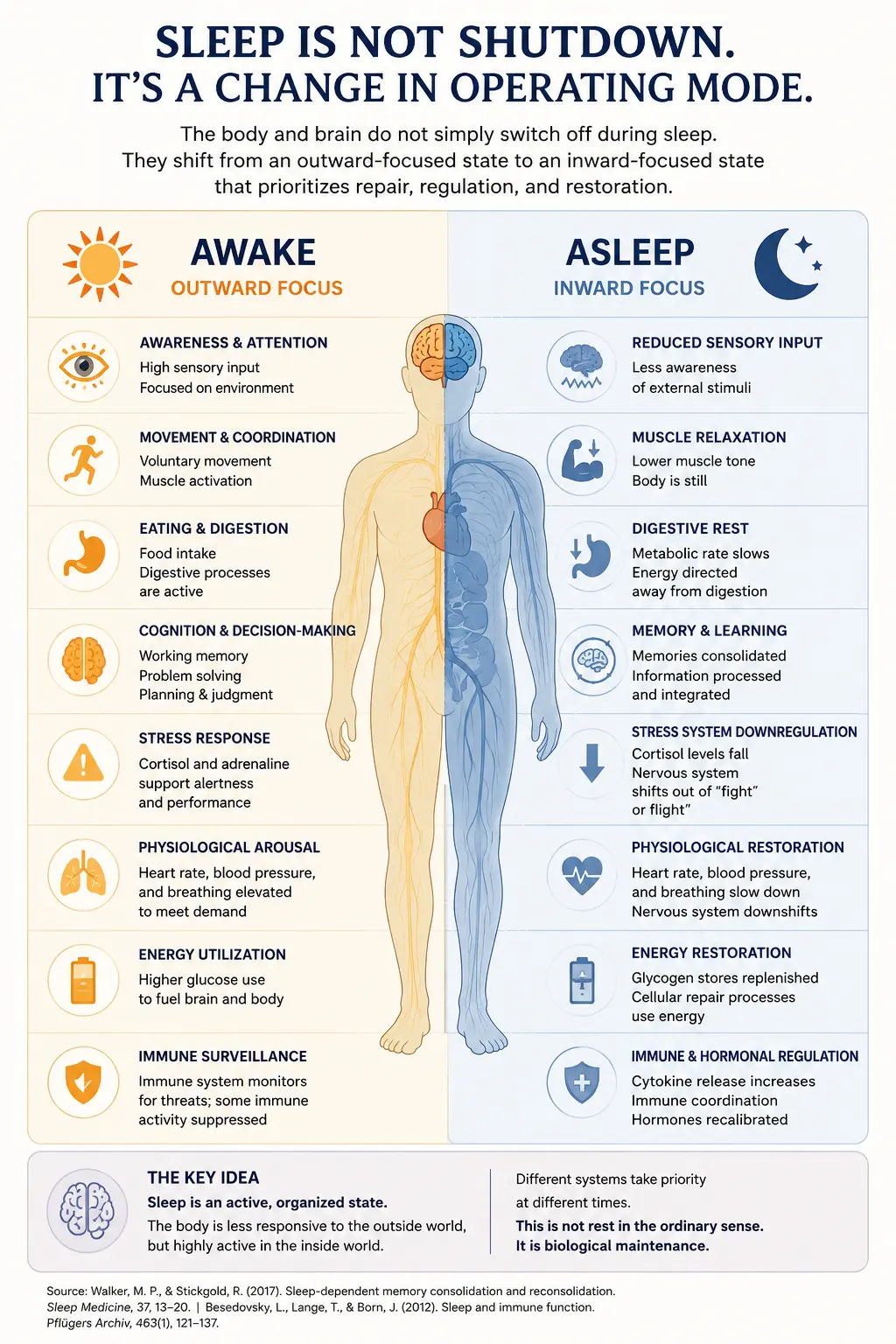
That state is structured. The brain moves through different stages of sleep, including deeper non-REM sleep and REM sleep. Deep sleep is closely tied to physical restoration, nervous-system downshifting, growth hormone release, tissue repair, and metabolic regulation. REM sleep is more active, often associated with dreaming, memory, learning, emotional processing, and the way the brain integrates experience.
But sleep is too integrated to divide neatly into “body repair” and “mind repair.” Hormones, metabolism, immunity, memory, mood, and recovery overlap. Different stages appear to support different parts of that system, but the point is simple: sleep changes the state of the brain and body in a way waking rest cannot fully copy.
You can sit down, close your eyes, breathe slowly, and reduce stimulation. That can help. But sleep goes way further. It is one of the ways the body absorbs the cost of the day and prepares itself to function again tomorrow, but just a little bit better.
Sleep Helps Reset Appetite and Glucose Control
One of the clearest ways sleep affects health is through appetite and glucose control.
After poor sleep, many people do not simply feel tired. They feel hungrier, less satisfied, more reactive to stress, and more drawn toward quick energy like candy and snacks. This does not mean every poor food choice is caused by sleep loss, but it does mean tired people are often making decisions from a different biological state. Hunger may be louder, cravings may be sharper, and the same meal may be handled by a body that is more stressed and less metabolically steady.
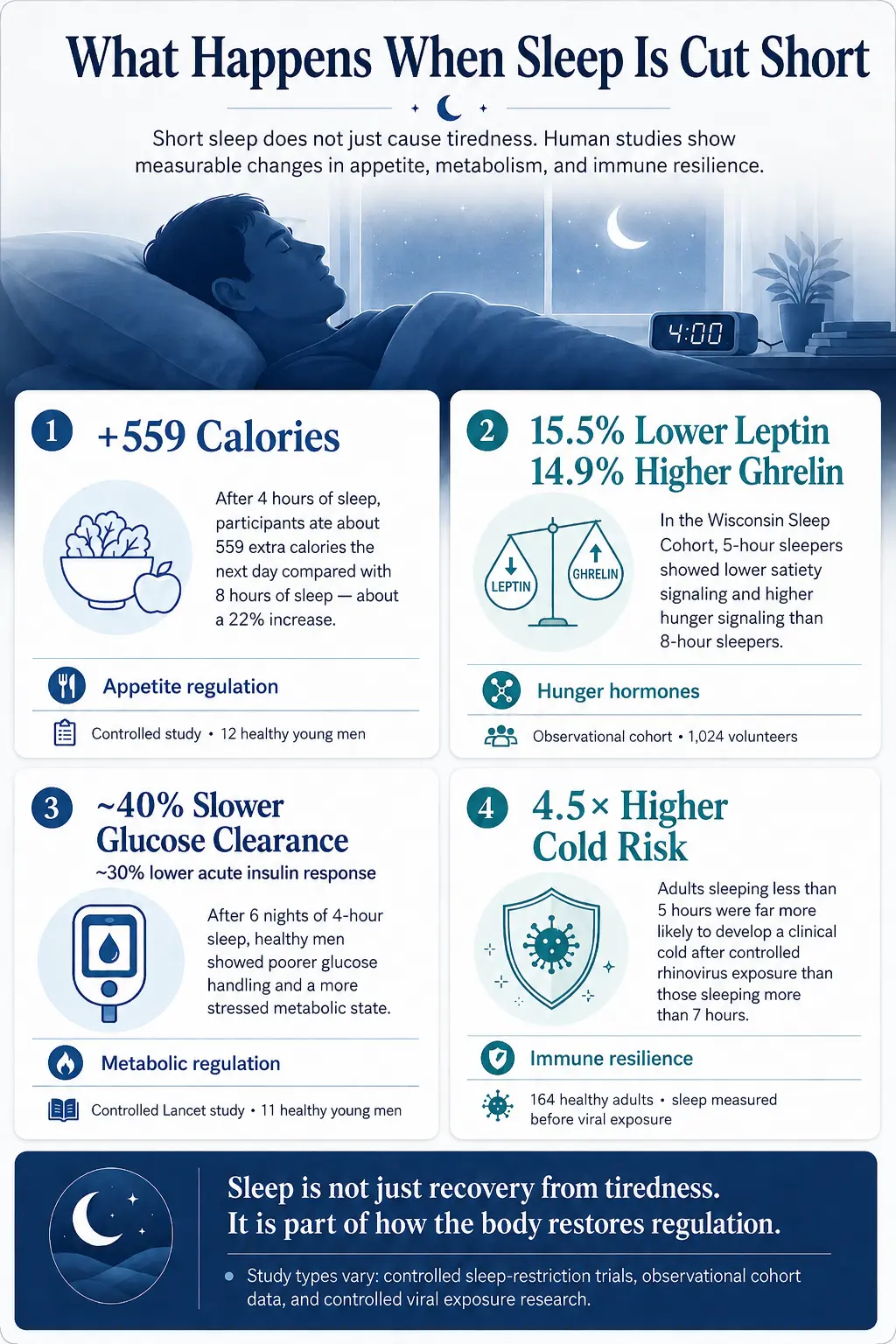
For example, in one controlled study, healthy young men slept for either eight hours or four hours. After the shorter night, they ate an average of 559 extra calories the next day, about a 22% increase in energy intake. Hunger was also higher before breakfast and dinner.
That does not mean one bad night automatically causes overeating (the body is more flexible than that). But it does show the direction of the problem. Poor sleep can push appetite upward, especially in a modern food environment where calorie-dense, highly rewarding food is always available.
Part of this may involve appetite hormones such as leptin and ghrelin. Leptin helps signal energy sufficiency, while ghrelin tends to increase hunger. In the Wisconsin Sleep Cohort, people sleeping five hours had lower leptin and higher ghrelin than those sleeping eight hours, alongside a higher BMI. The hormone picture is debated by some, but the wider pattern is clear enough: poor sleep can make appetite harder to regulate.
Sleep Helps Glucose Control
Sleep even affects metabolic issues, such as how the body handles glucose after you eat.
In a controlled Lancet study, healthy young men were restricted to four hours in bed for six nights. After that short period of sleep restriction, glucose clearance was about 40% slower, acute insulin response was about 30% lower, evening cortisol was higher, and sympathetic nervous system activity increased.
In plain English, a few nights of poor sleep pushed healthy people toward a more stressed and less metabolically steady state.
That matters because the body’s response to food is not fixed. The same meal can be handled very differently depending on the state of the person eating it. Sleep, stress, circadian timing, recent movement, muscle mass, liver glycogen, insulin sensitivity, and overall metabolic health all influence how well the body moves glucose out of the bloodstream and into storage or use.
This is why sleep changes the context of nutrition. A meal is not handled in isolation; it is handled by the body that receives it. After a good night’s sleep, that body may be calmer, more insulin-sensitive, and better able to regulate appetite. After several short nights, the same meal may meet a more stressed system, with poorer glucose handling, louder hunger, and less metabolic stability. The food has not changed, but the internal state has.
Sleep Coordinates Immunity, Mood, and Recovery
Sleep also helps coordinate the systems that decide how well the body defends itself, responds to stress, and repairs from the day.
A healthy immune system is not one that stays on high alert all the time. It needs to respond when there is a real threat, such as infection, injury, or tissue damage, but it also needs to stand down once that threat has passed. Inflammation is useful in the right context, but if the response stays elevated for too long, it can become part of the problem. Sleep appears to help the immune system keep that rhythm.
This is one reason poor sleep can leave people feeling run down in a way that is hard to describe. It is not just tiredness. In one study, healthy adults had their sleep measured for a week before being exposed to a cold virus under controlled conditions. Those sleeping less than five hours per night were about 4.5 times more likely to develop a clinical cold than those sleeping more than seven hours. While poor sleep does not automatically make someone vulnerable to illness, it does seem to change the internal conditions the immune system is working from.
The same idea applies to mood and stress tolerance. After poor sleep, small problems often feel larger, patience runs thinner, and cravings become harder to ignore. Part of that is simple fatigue, but part of it appears to be regulation. In one brain-imaging study, adults kept awake for roughly 35 hours showed more than a 60% stronger amygdala response to negative images, along with weaker connection to prefrontal regions involved in emotional control. That helps explain why, after poor sleep, ordinary problems can feel larger and self-control can take more effort.
Recovery belongs here too. Training is not just the workout; it is the full process of stress, repair, and adaptation. The body has to restore energy, repair tissue, regulate inflammation, and adapt to the signal it received. If sleep is consistently poor, the stress still arrives, but the recovery window is smaller.
This is why sleep sits underneath both nutrition and movement. It helps set the state in which appetite, glucose control, immune defense, mood, stress tolerance, and physical recovery are managed. Better sleep does not replace good food or intelligent training, but it can make both of them easier to use.

Get Your Free Book!
Enter your email to get the free book and occasional updates from The New Health Order.
Nutrition: The Energy and Metabolic Foundation
While sleep helps regulate the system, and movement tells the body what capacity it needs to maintain, food supplies much of the energy and raw material needed to thrive.
Every meal brings in glucose, fatty acids, amino acids, minerals, vitamins, and other compounds the body has to use, store, convert, or clear. Some of that food becomes immediate fuel. Some is stored for later. Some is used to build muscle, repair tissue, produce enzymes, support hormones, maintain immune function, and keep cells working properly.
This is why nutrition cannot be reduced to weight loss or calorie counting, even though calories still matter. Food enters a regulated biological system. It affects blood sugar, insulin, appetite, satiety, liver function, stored fuel, muscle maintenance, micronutrient status, and the body’s ability to move between using incoming energy and stored energy.
A good diet is not simply one that helps someone weigh less. It is one that helps the body handle energy with less friction.
Metabolism Is More Than Calorie Burning
Metabolism is often described as if it is just a speed: fast metabolism, slow metabolism, more calories burned, fewer calories burned. But the body is not a simple furnace. It is an adaptive energy system, constantly deciding how to use, store, convert, or release energy depending on what is coming in, what is being demanded, and what state the body is already in.
Most of that work is happening before exercise even enters the picture. Basal metabolic rate accounts for roughly 60–70% of daily energy expenditure, because the body is always spending energy on breathing, circulation, temperature regulation, cellular repair, immune activity, brain function, and basic maintenance. A workout adds demand, but metabolism is already running all day.
Food supplies that system, but different foods do not arrive with the same job. Glucose has to be managed tightly because blood sugar cannot stay elevated for long. Glycogen gives the body a limited short-term reserve. Fat is the larger long-term energy store. Protein can be used for energy if necessary, but its more important role is structural and regulatory: maintaining muscle, connective tissue, enzymes, hormones, immune function, and cellular repair.
This is why calories matter, but they are not the whole story. Energy balance is the governing principle behind metabolic health because excess energy has to go somewhere, and repeated surplus can drive fat gain and worsen metabolic health. But a calorie total does not tell you whether a diet provides enough protein, enough micronutrients, enough satiety, or the right conditions for stable blood sugar and access to stored fuel.
Nutrition is fundamental because every meal enters this adaptive system. The question is not only how much energy came in, but what the body can do with it. Does the diet support muscle, repair, appetite control, glucose regulation, and metabolic flexibility — or does it keep the body stuck in a cycle of excess energy, unstable hunger, and poor fuel handling?
Nutrition Helps the Body Switch Between Fuels
One of the best ways to understand nutrition and the significance of energy balance is through metabolic flexibility.
A metabolically flexible body can handle incoming energy after a meal, then shift back toward stored energy when food is no longer coming in. In the fed state, glucose, amino acids, and dietary fat are entering the bloodstream, insulin rises, and the body has to use what it needs, store what it can, and keep blood sugar within a safe range. A few hours later, as incoming fuel slows, insulin should fall, the liver helps keep blood glucose steady, and fat tissue releases fatty acids so the body can run more on stored energy.
When that switch works well, it does not feel dramatic. You eat and feel steady rather than foggy, sleepy, or ravenous soon after. You can go several hours without food and still think clearly. Hunger rises gradually rather than arriving as an emergency. The body has options.
When metabolic flexibility is poor, food starts to control the day. Energy crashes a few hours after eating. Hunger feels urgent. Cravings become louder. A missed meal feels like a problem rather than a mild inconvenience. In that state, the body may be leaning too heavily on constant incoming fuel while struggling to shift smoothly toward stored fuel between meals.
This is where the modern food environment becomes so damaging. The problem is not simply carbohydrates, fat, or insulin in isolation. It is the way modern diets make excess energy easy to consume and hard to regulate.
Frequent snacks, refined starches, sugar, liquid calories, low protein density, and ultra-processed foods can keep the body repeatedly dealing with incoming energy while providing relatively little satiety or nourishment in return. Insulin is being asked to manage fuel again and again, while the body gets fewer clean opportunities to access stored energy between meals. Add poor sleep and low movement to that pattern, and the system becomes even less forgiving.
The goal is not to fear carbohydrates, fear insulin, or turn every meal into a metabolic calculation. Insulin is normal. Carbohydrates can be useful. Eating enough matters. But the body should not be so dependent on constant feeding that mood, focus, appetite, and energy collapse when food is delayed.
A better diet helps restore flexibility. It provides enough protein to protect lean tissue, enough micronutrients to support metabolism, enough energy to recover, and enough structure that appetite becomes easier to regulate. For some people, that may mean reducing carbohydrate pressure for a period. For others, it may simply mean replacing ultra-processed foods with whole foods, eating fewer snack-like meals, walking more after eating, and building more muscle so glucose has somewhere useful to go.
The Right Diet Depends on Metabolic Context
The same meal does not land in the same body twice.
A lean, active person with good sleep, high muscle mass, and good insulin sensitivity may handle a higher-carbohydrate meal perfectly well. Glucose is cleared efficiently, the energy is used or stored appropriately, and the body moves on. The same meal can create a very different response in someone who is sedentary, sleep-deprived, carrying more abdominal fat, insulin resistant, and hungry again a few hours later.
That does not mean one person is disciplined and the other is failing. It means the same food is landing in two very different metabolic situations.
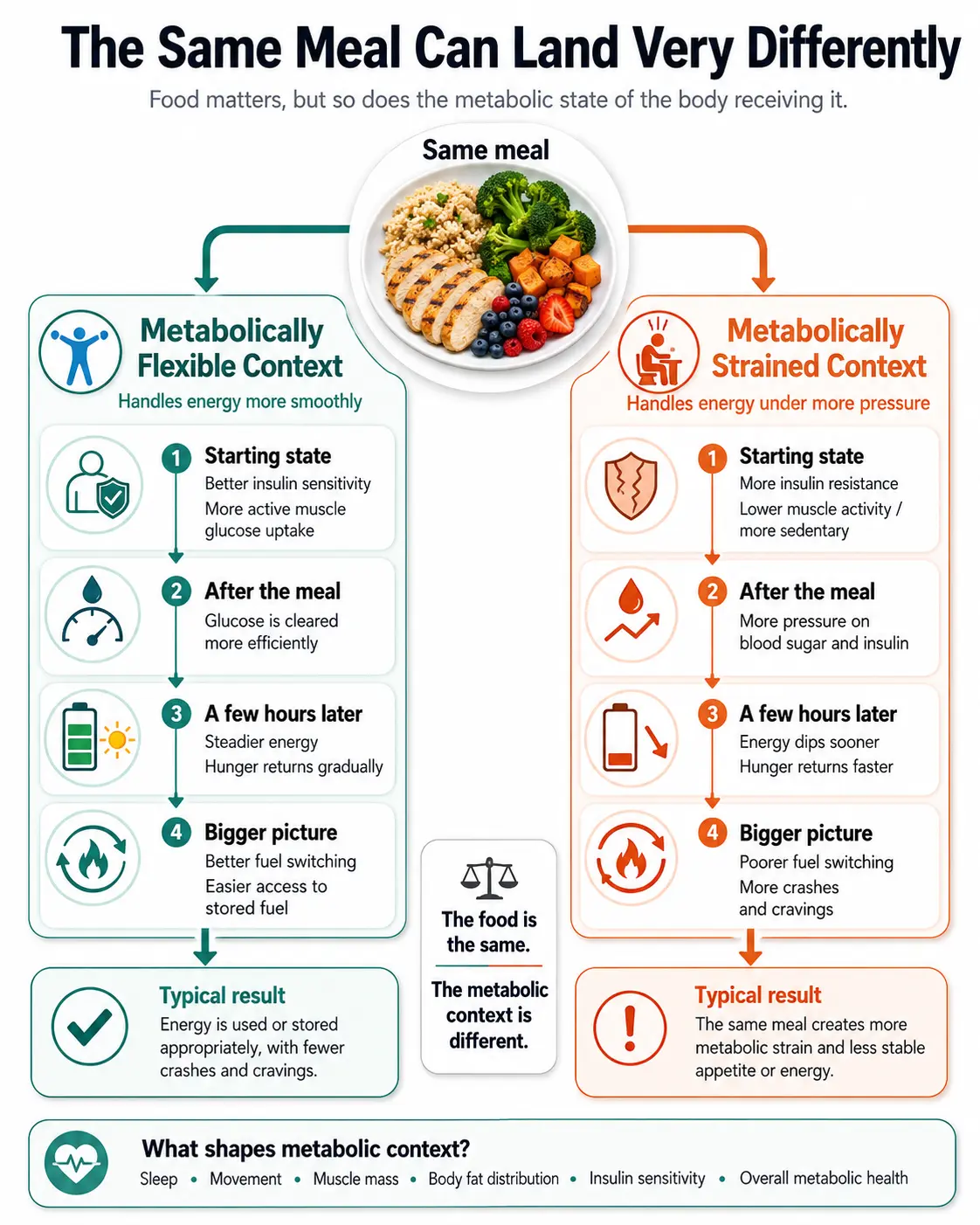
This is why body weight alone is not enough. Metabolic health is the health of the body’s energy-management system: how well it handles glucose, responds to insulin, stores and releases fat, moves fats through the blood, protects the liver, regulates blood pressure, and keeps energy steady through the day.
Poor metabolic health is also far more common than most people assume. Only about 12% of American adults meet the criteria for optimal metabolic health, and even among adults at a normal body weight, fewer than one-third are metabolically healthy by that definition.
That should make us careful with generic diet advice. Many people are not choosing food from a clean metabolic slate. They may already be dealing with fasting glucose creeping up, triglycerides rising, HDL falling, blood pressure increasing, waist size expanding, energy dipping after meals, or cravings becoming harder to control.
In that context, the right diet may need to reduce pressure on the system before it can expand flexibility again. That could mean fewer ultra-processed foods, fewer snacks, more protein, more nutrient-dense meals, better meal timing, less liquid energy, or a period of lower carbohydrate intake if glucose control and insulin resistance are already problems. For someone else, especially someone active and metabolically healthy, a higher-carbohydrate whole-food diet may work well.
The point is not that one diet is always best. The point is that diet should be judged by what it does to the person’s biology. Does appetite become calmer? Does energy become steadier? Does blood sugar improve? Are waist size, triglycerides, and other metabolic markers moving in the right direction? Can the person lose excess fat while preserving muscle and still function well in daily life?
Nutrition is the material, energy, and metabolic foundation because the body is built from, fueled by, and regulated through what it repeatedly receives. A good diet is not the one that wins an argument online. It is the one that helps the body handle energy better in the real world.
Movement: The Capacity and Adaptation Foundation
Movement is the signal that tells the body what capacity it needs to maintain.
The body is not designed to preserve unused function forever. If muscles are rarely challenged, strength declines. If joints are not moved through useful ranges, stiffness builds. If the heart and lungs are never pushed, fitness drops. If bones are not loaded, they receive less reason to stay strong. If the body spends most of the day sitting, it adapts to that low-demand environment too because its priority is energy efficiency. Why dedicate precious calories maintaining muscle mass when it’s rarely needed?
That is why movement belongs beside sleep and nutrition as a foundation of health. Sleep helps the body repair and regulate. Nutrition supplies the energy and materials. Movement tells the body what to keep, what to build, and what it needs to be capable of doing.
Movement Is More Than Calorie Burning
One of the weakest ways to think about movement is as a way to burn calories.
Of course movement uses energy, and that still matters, but calorie burn is only one small part of the story. Movement changes the state of the body while it is happening. Muscles contract, glucose is pulled toward working tissue, circulation increases, joints move, the nervous system coordinates action, and the body receives a clear signal that physical capacity is still needed.
Sitting sends the opposite signal. When muscles stay quiet for hours, meals tend to be handled less smoothly, circulation becomes more sluggish, and tissues spend too long held in the same positions. None of this feels dramatic in the moment, which is why it is easy to ignore. But over time, the body responds to the pattern it repeats most.
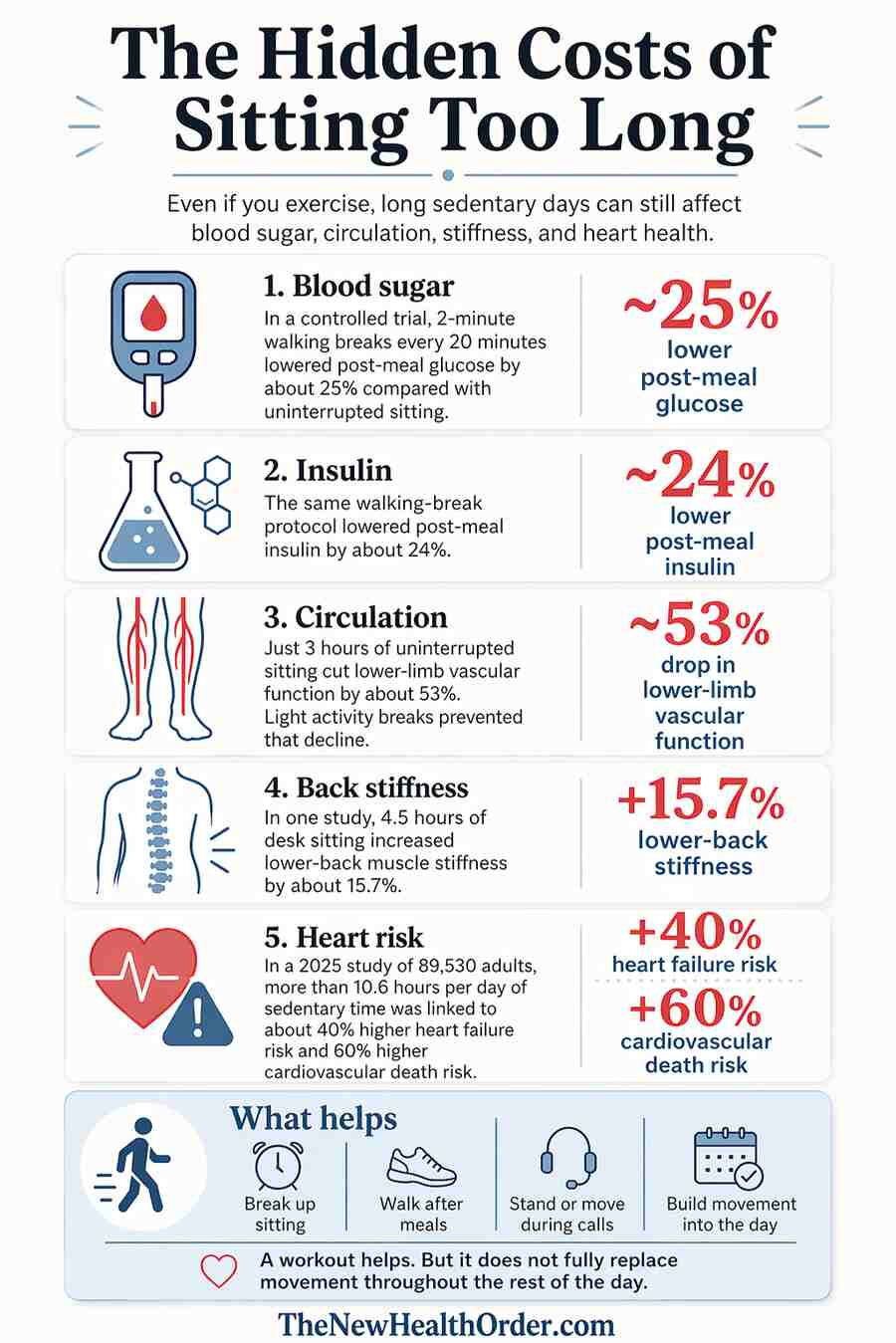
This is why exercise does not fully cancel out a sedentary day. In a 2025 JACC study of 89,530 adults wearing accelerometers, sedentary time above about 10.6 hours per day was linked with higher cardiovascular risk. Compared with the least sedentary group, the most sedentary group had roughly 40% higher risk of heart failure and 60% higher risk of cardiovascular death, and those associations remained even among people meeting the usual target of 150 minutes per week of moderate-to-vigorous activity.
That does not mean exercise is useless—resistance and cardiovascular training are essential for building a strong body and aerobic conditioning to power it. It just means we shouldn’t expect a 1-hour workout to carry the whole burden of an otherwise motionless life.
The metabolic effect of small movement breaks makes this even clearer. In one controlled trial, overweight and obese adults sat for five hours after a test drink, either uninterrupted or with two-minute walking breaks every 20 minutes. Compared with uninterrupted sitting, light walking breaks reduced post-meal glucose by about 25% and insulin by about 24%, with moderate walking breaks producing similar results.
That is not really a calorie story. It is a muscle-use story. Even light movement changes how the body handles incoming fuel.
Movement and Exercise Are Not the Same Thing
Exercise matters, but exercise and daily movement are not the same thing.
Exercise is structured and deliberate. It is the run, the lift, the bike session, the class, the workout you plan and make time for. It gives the body a stronger signal than ordinary movement usually can, which is why it is so useful for building strength, cardiovascular fitness, bone health, power, endurance, and resilience.
Daily movement is the background layer around it. Walking, standing, carrying, climbing stairs, changing position, pacing during a call, getting up after meals, and breaking up long sitting periods may not feel like training, but they keep the body from spending most of the day in a low-demand state.
The distinction matters because modern life has removed much of this background movement. For most of human history, movement was not something people had to schedule separately for health. It was built into life itself: walking, carrying, lifting, cleaning, climbing, working, and moving through the day. Now it is possible to exercise for an hour, then spend the rest of the day sitting at a desk, in a car, and on a sofa.
In that case, the workout still helps, but the day is still mostly telling the body to be inactive, and the body adapts accordingly.
This is why the goal should not be movement instead of exercise, or exercise instead of movement. It should be both. Current guidelines recommend adults aim for 150–300 minutes of moderate-intensity aerobic activity per week, or 75–150 minutes of vigorous activity, along with muscle-strengthening activity at least two days per week. But those targets sit best on top of a day that still includes regular low-level movement.
Daily movement keeps the body from going quiet. Exercise asks it to build more capacity. Both signals matter.
Muscle Is Metabolic Infrastructure
Muscle is often treated as something cosmetic, as if it only matters for athletes, bodybuilders, or people trying to look better. But muscle is one of the body’s most important pieces of metabolic infrastructure.
Muscle gives glucose somewhere to go. After a meal, the body has to move glucose out of the bloodstream and into tissues where it can be used or stored. Skeletal muscle is central to that process, with research describing it as responsible for over 80% of glucose uptake from an oral glucose load.
That makes muscle directly relevant to metabolic health. More active muscle means more tissue capable of taking up glucose, storing glycogen, using fatty acids, and responding to the energy demands of movement. Less muscle, less movement, and more sitting all push in the other direction: less glucose disposal capacity, lower physical reserve, and a body that has fewer places to put incoming energy.
This is also why resistance training belongs in a serious health foundation. Walking and daily movement are valuable, but they do not fully replace the signal of loading muscle against resistance. Strength training tells the body to preserve and build muscle. It also loads bones, tendons, and connective tissues, which matters for long-term physical function, especially with age.
Aerobic training adds a different kind of capacity. It challenges the heart, lungs, blood vessels, and mitochondria to deliver and use oxygen more effectively. Strength training helps keep the body robust; aerobic training helps keep the body efficient. Daily movement keeps both from being trapped inside an otherwise sedentary life.
So movement is not just about doing more. It is about sending the body the right demand signal often enough that capacity remains worth keeping. A healthy body needs regular movement in the background, deliberate training on top of that, and enough muscle to act as both physical reserve and metabolic machinery.
How Sleep, Nutrition, and Movement Affect Each Other
Sleep, nutrition, and movement are separate behaviors, but they are not separate biological events. Each one changes the state in which the others happen.
A person trying to eat well after several poor nights of sleep is not working with the same appetite, stress chemistry, or glucose control as the same person after better sleep. The food may be the same, but the body receiving it has changed.
Movement changes that body too. Muscles are not just there to move the skeleton; they are one of the places incoming energy can go. Even brief movement breaks can improve post-meal glucose and insulin responses compared with uninterrupted sitting, which means the same meal may be handled differently by a body that has been still for hours compared with one that is regularly using muscle.
Nutrition feeds back into both sleep and movement. A diet that leaves someone underfed, overfed, low in protein, or swinging between blood sugar highs and crashes will not support the same recovery, mood, appetite regulation, or training response as a diet built around appropriate energy, protein, nutrients, and satiety. Exercise is not just effort; it is stress followed by adaptation, and the body needs enough fuel and building material to come back stronger from the signal it received.
This is where many people get stuck. They diet while sleeping badly, train hard while under-recovered, or try to improve blood sugar while spending most of the day sitting. None of that means change is impossible, but it does mean the body is not starting from a neutral place.
The goal is not to perfect all three foundations overnight. It is to understand the system well enough to stop working against yourself. Better sleep makes appetite and recovery easier to manage. Better nutrition gives the body steadier fuel and better materials. More movement gives energy somewhere to go and tells the body that strength, mobility, and metabolic capacity are still needed.
Health is not built by optimizing one input while ignoring the others. It is built by creating a body that is easier to regulate, easier to fuel, easier to move, and easier to recover.
How to Strengthen the Foundations in Modern Life
If sleep, nutrition, and movement are biological signals, then rebuilding health starts by making those signals clearer and more consistent.
That does not mean chasing perfection, just reducing the obvious conflicts. The body struggles when the day sends mixed messages: bright light and stimulation late at night, constant snack-like food without real nourishment, long stretches of sitting followed by occasional bursts of exercise, stress without recovery, and energy intake that never quite matches what the body is being asked to do.
Modern life makes those patterns easy. The practical goal is to push back in a way that is simple enough to repeat.
Stabilize Sleep
Start by treating sleep as a rhythm, not just a number of hours.
The body needs clear cues for wakefulness and clear cues for sleep. Morning light, regular wake times, daytime movement, and a consistent evening routine all help anchor that rhythm. So does protecting the last part of the day from the things that keep the nervous system switched on: bright screens, late caffeine, heavy stimulation, and the habit of turning bedtime into another window for scrolling, working, or catching up.
This does not mean every night will be perfect. Life will interrupt sleep sometimes. But if sleep is the repair and regulation signal, then the aim is to make that signal reliable enough that the body can regularly enter a state of recovery, rather than constantly borrowing from tomorrow.
This article here goes over some of the most effective ways to build a solid sleep routine.
Build Meals Around Protein, Nutrients, and Satiety
Nutrition becomes easier to understand when the first question is not how little someone can eat, but whether the diet gives the body what it needs without repeatedly oversupplying energy.
Calories matter because energy has to go somewhere. Even a diet built from nutritious foods can become a problem if it consistently provides more energy than the body can use, especially if that surplus leads to increasing body fat around the waist and organs.
But energy balance is not separate from food quality. Protein, micronutrients, fiber, meal structure, sleep, movement, and food processing all influence appetite, satiety, cravings, and how easy it is to eat the right amount without feeling constantly hungry.
For most people, the best starting point is to build meals around enough protein to support muscle and repair, enough nutrient-dense food to support metabolism, and enough satiety that appetite becomes calmer rather than louder. That usually means prioritizing real foods, reducing ultra-processed foods, avoiding constant snack-like eating, and adjusting carbohydrate and fat intake to the person’s activity level, metabolic health, and goals.
The exact balance does not need to be identical for everyone. A highly active, insulin-sensitive person may do well with more carbohydrate and more total energy. Someone dealing with poor glucose control, constant hunger, or low metabolic flexibility may need a different approach for a while. But the principle is the same: food should help the body handle energy better, not keep it trapped in cycles of excess intake, cravings, crashes, and constant compensation.
Move More Often, Train With Purpose
Movement should exist in two layers.
The first layer is daily movement: walking, standing, climbing stairs, carrying things, changing position, getting outside, and breaking up long periods of sitting. This kind of movement may not feel impressive, but it keeps the body from spending most of the day in a low-demand state.
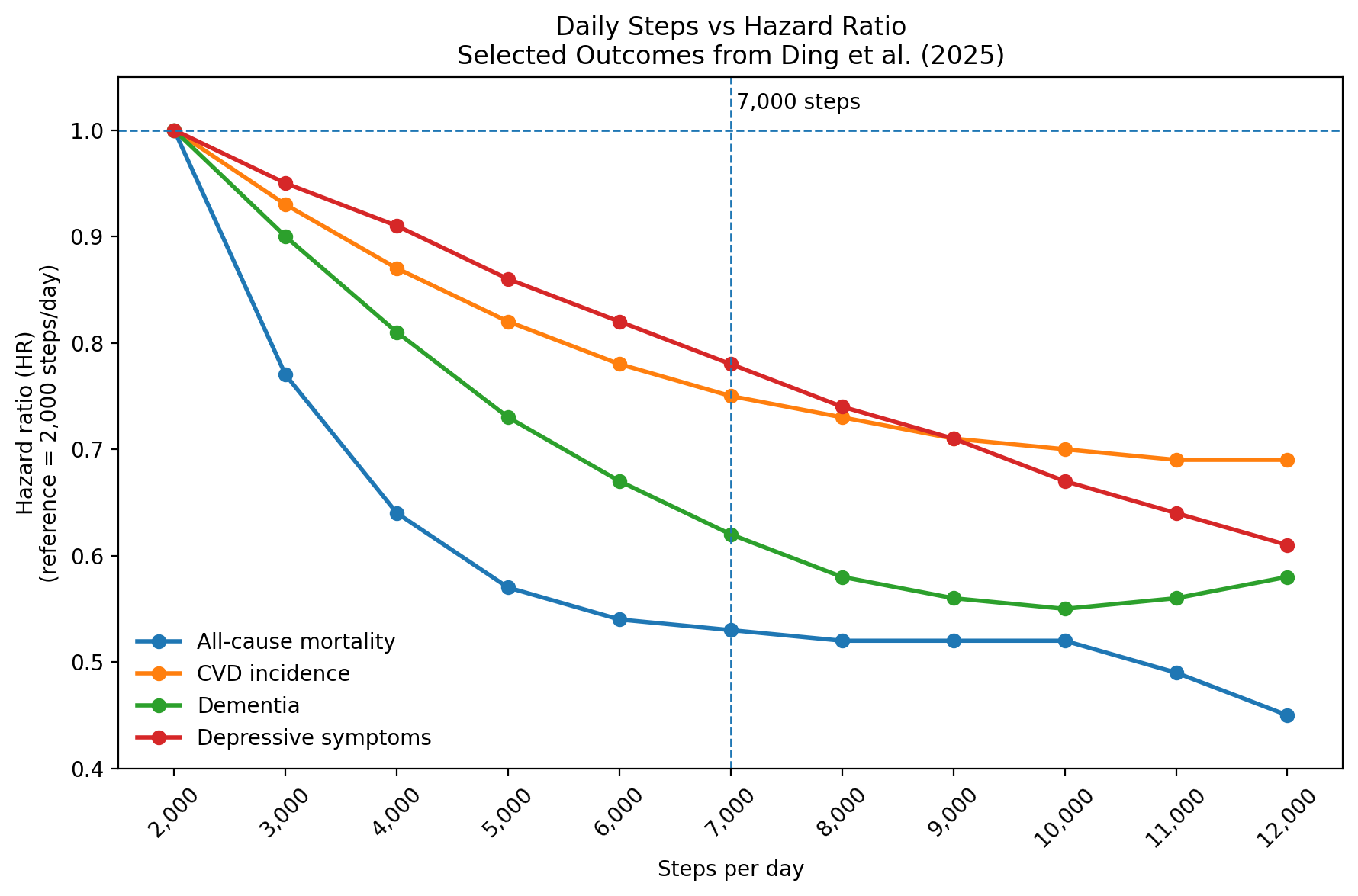
The second layer is deliberate training. Resistance training tells the body to keep and build muscle. Aerobic work challenges the heart, lungs, circulation, and mitochondria. Harder efforts, used intelligently, help preserve power and resilience. The goal is not to punish the body with exercise, but to give it a reason to maintain capacity.
For most people, the best starting point is simply a day that contains more movement than before, plus training that progresses gradually enough to recover from. Walk more. Sit less. Lift something. Build strength. Improve fitness. Then repeat it consistently enough that the body believes the signal.
FAQs
What are the three pillars of health?
The three pillars of health are sleep, nutrition, and movement. They are often treated as basic lifestyle habits, but they are more than that. Sleep helps the body repair and regulate, nutrition provides energy and building materials, and movement tells the body what capacity it needs to maintain. Together, they shape metabolism, appetite, glucose control, mood, muscle, recovery, and long-term resilience.
Why are sleep, nutrition, and movement so important?
Sleep, nutrition, and movement are important because they are repeated biological signals. The body adapts to what it experiences most often. Poor sleep can affect appetite, glucose control, mood, immunity, and recovery. Poor nutrition can overload the body with excess energy or leave it without enough protein and nutrients. Lack of movement can reduce muscle, fitness, glucose disposal, and physical capacity. These foundations influence many other areas of health because they affect the body’s basic operating state.
Which pillar of health should I focus on first?
The best place to start is usually the pillar that is most obviously disrupted. If sleep is poor, improving sleep can make appetite, mood, and recovery easier to manage. If diet is chaotic, building meals around energy balance, protein, nutrients, and satiety can improve metabolic health. If movement is low, walking more, breaking up sitting, and adding progressive training can rebuild capacity. The goal is not to perfect everything at once, but to improve the signals your body receives every day.