
If you’ve recently cut carbohydrates and suddenly feel exhausted, foggy, irritable, or generally off, you’re not alone. These symptoms are common enough that they’ve earned the name keto flu.
Keto flu is not an illness. It is a temporary cluster of symptoms that can appear when the body begins shifting its primary fuel source from glucose to fat. The discomfort can feel discouraging in the moment — especially if you were expecting to feel better, not worse.
This article explains what keto flu actually is, why it happens, how long it typically lasts, and the practical steps that most reliably reduce its intensity. The goal is to give you a clear understanding of the process so the transition can be managed with less discomfort and more confidence.
What Is Keto Flu?
Keto flu is a temporary cluster of symptoms that some people experience when they first reduce carbohydrate intake (often through a ketogenic diet) enough to shift their primary fuel source from glucose to fat. It is not an infection, not contagious, and not a sign that something has gone wrong.
When carbohydrate intake drops significantly, the body begins producing ketones and starts relying more heavily on fat for energy. This metabolic transition is normal, but it is not always seamless. In the early stages, the body may not yet be efficient at using ketones, and the rapid drop in insulin and stored glycogen triggers fluid and electrolyte shifts. These changes are what produce the familiar symptoms.
Not everyone experiences keto flu. People who are already metabolically flexible, physically active, or eating a relatively lower-carbohydrate diet often notice little or no disruption. Others — particularly those coming from a high-carbohydrate diet — can feel noticeably off for several days.
In short, keto flu is best understood as a short-lived adaptation response rather than an illness. It reflects the body adjusting to a different fuel system.
Keto Flu Symptoms
The symptoms of keto flu can feel similar to a mild viral illness, which is how the name arose. They usually appear within the first few days of significantly reducing carbohydrate intake and vary in both type and intensity from person to person.
Common symptoms include:
- Fatigue and low energy
- Brain fog or difficulty concentrating
- Headaches
- Irritability or mood changes
- Muscle cramps
- Dizziness or lightheadedness
- Trouble sleeping
- Nausea or digestive discomfort
- Heart palpitations
- Strong carbohydrate cravings
Some people experience only one or two of these. Others notice a broader cluster. Severity also differs — for some the symptoms are mild and easy to overlook, while for others they feel more disruptive in the early days of the transition.
These symptoms improve as the body adapts to using fat and ketones more efficiently.

Get Your Free Book!
Enter your email to get the free book and occasional updates from The New Health Order.
Why Keto Flu Happens (The Real Causes)
Keto flu is the result of several linked changes that occur when carbohydrate intake drops sharply.
Without regular carbohydrate intake, the body rapidly uses its stored glycogen. Glycogen is the storage form of glucose held in the liver and muscles. Once those stores run low, the body must rely more heavily on fat and the ketones produced from fat.
Glycogen is stored bound to water. As it is broken down, that water is released and excreted. This is not water locked only in the kidneys — it is fluid that had been held throughout the body’s glycogen stores. The sudden loss of this fluid reduces overall circulating volume and contributes to dehydration, which is why headaches, fatigue, and lightheadedness are so common in the early days.
At the same time, insulin levels fall. Insulin rises primarily in response to carbohydrate (and to a lesser extent protein). When little carbohydrate is coming in, insulin stays lower. One of insulin’s lesser-known roles is helping the kidneys retain sodium. With less insulin present, the kidneys excrete more sodium than usual. As sodium is lost, the balance of potassium and magnesium is also disturbed. These electrolyte shifts are a major driver of muscle cramps, heart palpitations, and further fatigue.
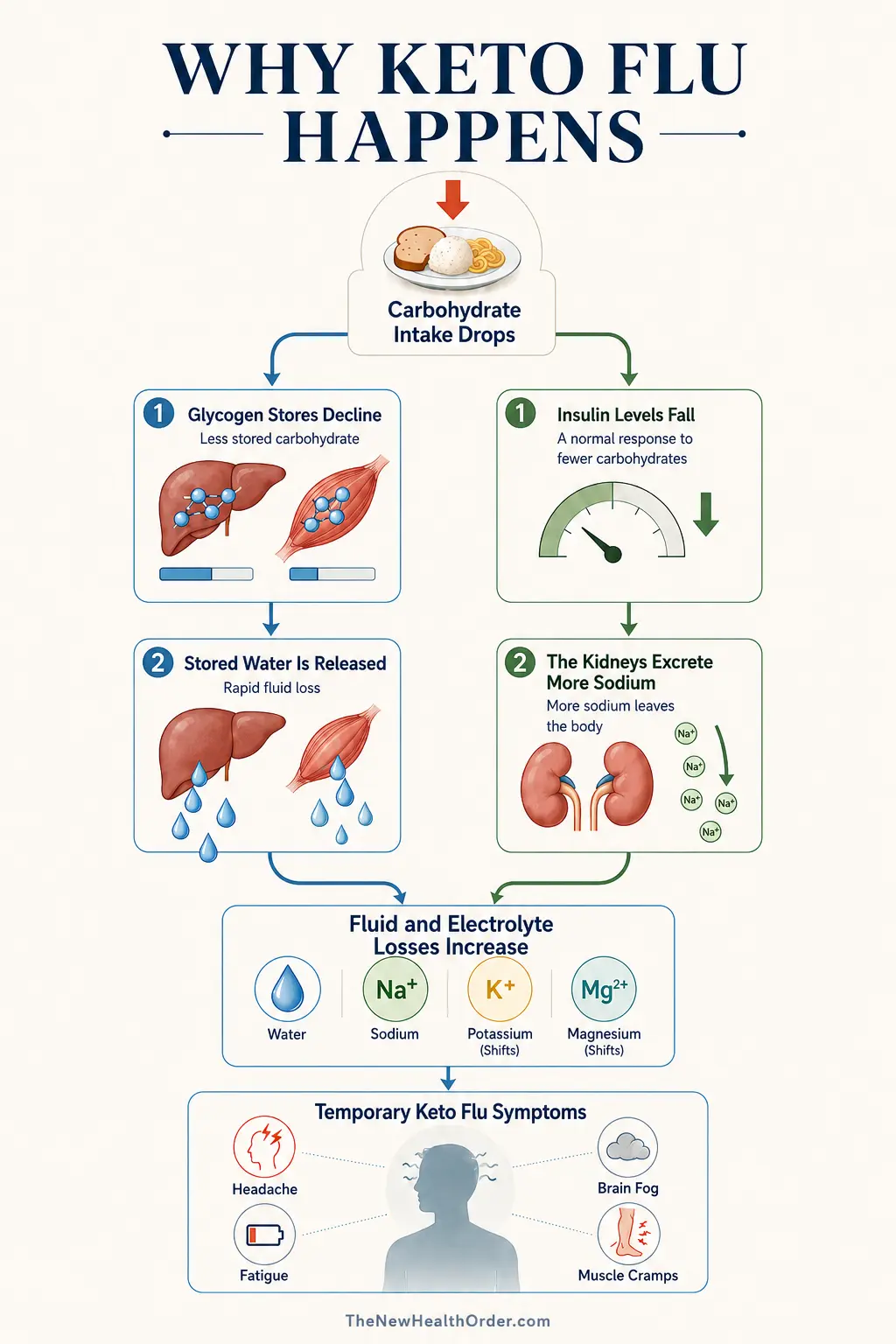
There is also a short lag in energy production. Even as ketone levels rise, the enzymes and transporters needed to use ketones efficiently are not always fully upregulated right away — especially in people who have been eating a high-carbohydrate diet for a long time. During this window, cells can experience a temporary shortfall in readily available energy, which shows up as brain fog, low energy, and sluggishness.
People who are already more metabolically flexible (able to switch between glucose and fat metabolism more readily) usually experience a milder version of these changes, or none at all. The same symptoms that feel disruptive at the beginning of the transition tend to become far less noticeable once the body has adapted.
In short, keto flu reflects the combined effects of glycogen and water loss, lower insulin leading to greater sodium excretion, electrolyte imbalance, and a temporary lag in ketone use. These are expected adaptation effects rather than signs of harm, and they settle as the metabolism becomes more efficient at running on fat.
How Long Does Keto Flu Last?
For most people, keto flu symptoms are strongest in the first few days and improve within one to two weeks as the body adapts.
A common pattern is that symptoms appear within the first 24–72 hours, peak early, and then steadily decline. Many notice a clear improvement by the end of the first week. Full resolution usually occurs within 10–14 days, though low energy can linger slightly longer in some cases.
Several factors influence both the intensity and the duration:F
- How abruptly carbohydrate intake is reduced
- Prior diet and degree of carbohydrate dependence
- Current metabolic flexibility
- Hydration and electrolyte status
- Overall fitness and metabolic health
People who transition more gradually, already eat a moderate-carbohydrate diet, or maintain good electrolyte intake often experience milder and shorter symptoms. Those coming from a high-carbohydrate diet and dropping intake very quickly tend to feel the effects more strongly and for a longer period.
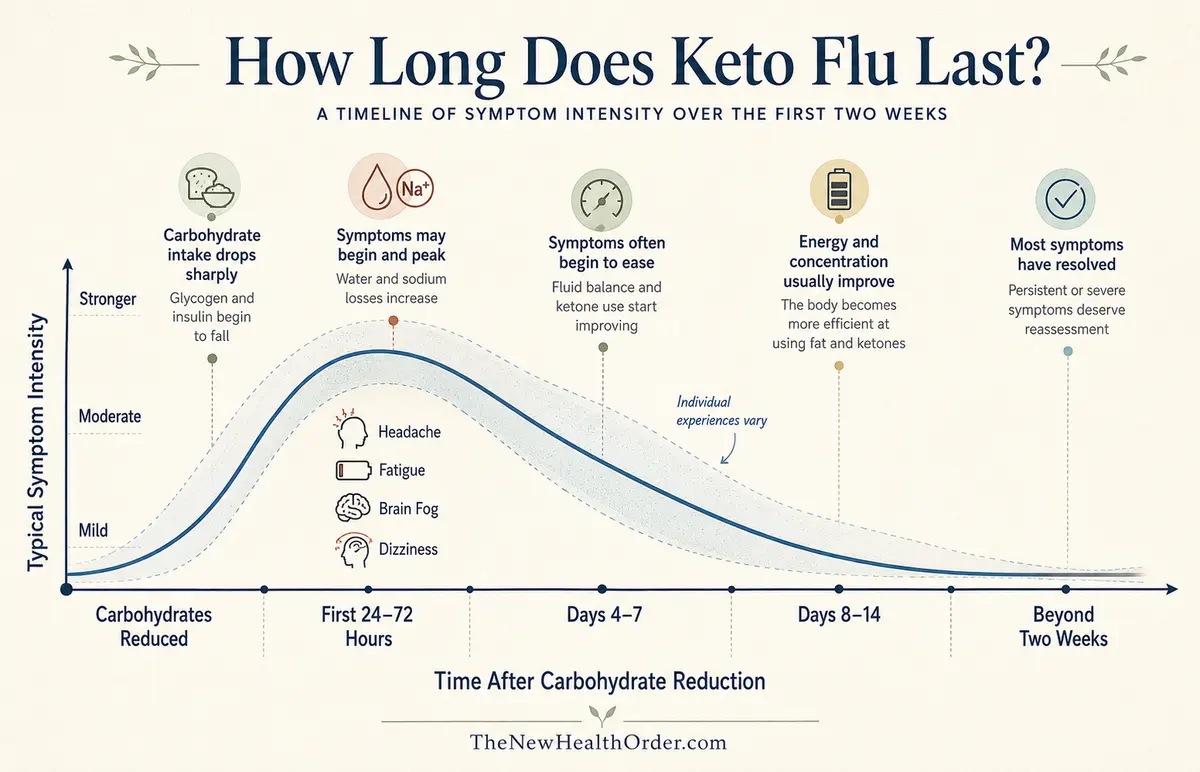
If symptoms remain intense beyond three to four weeks, it is worth reviewing electrolyte intake, overall food intake, sleep, and stress, or considering whether another factor is contributing. In the large majority of cases, however, the discomfort is temporary and resolves as the metabolism becomes more efficient at using fat and ketones.
How to Reduce (or Avoid) Keto Flu Symptoms
Most of the discomfort of keto flu can be reduced, and in many cases largely avoided, by supporting the body through the transition instead of forcing an abrupt change.
1. Prioritise electrolytes and hydration
Keto flu is often driven more by mineral loss than by the absence of carbohydrate itself. When insulin drops, the kidneys excrete more sodium and water. The adrenal glands attempt to compensate by retaining sodium, but this comes at the expense of potassium. The resulting imbalance in sodium, potassium, and magnesium produces many of the classic symptoms — muscle cramps, heart palpitations, fatigue, brain fog, and headaches.
During the first one to two weeks, deliberately replacing what is being lost makes a noticeable difference for most people. Practical starting points used in low-carbohydrate clinical practice are:
- Sodium: 3,000–5,000 mg per day (from salt, salted food, or broth). This is higher than general population advice because of the increased excretion that occurs when insulin is low. Adjust for blood pressure, climate, and activity level.
- Potassium: Often needs deliberate attention. On a standard ketogenic diet this can come from avocados, leafy greens, mushrooms, and salmon. On near-zero-carbohydrate or carnivore approaches, supplementation is usually required.
- Magnesium: Around 300–400 mg, preferably a well-absorbed form such as glycinate.
A simple homemade electrolyte drink (salt + a potassium source such as potassium chloride + magnesium) works well for many people and avoids reliance on commercial mixes. Consistency matters more than hitting exact numbers every day.
2. Consider a more gradual transition
Moving from a high-carbohydrate diet straight to very low carbohydrate is the most common reason symptoms feel intense. Spending two to four weeks on a lower-carbohydrate, whole-food approach first allows insulin, glycogen, and electrolyte balance to adjust more gradually. Many people who do this report little or no keto flu when they later reduce carbohydrates further.
3. Do not undereat
Appetite often falls as insulin stabilises, but combining this with aggressive calorie restriction increases fatigue. Eat enough protein and fat to feel satisfied. Early adaptation is not the ideal time for a large calorie deficit.
4. Adjust training intensity
Complete rest is rarely necessary. Light daily movement, especially walking, is usually beneficial and well tolerated. Light resistance training can also be continued if desired, provided intensity and volume stay moderate.
High-intensity or glycolytic training (heavy lifting, hard intervals, intense CrossFit-style work, and similar) is generally best reduced during the transition period. Glycogen stores are low at this stage, and the body is still becoming efficient at using fat and ketones for higher-power output. Pushing hard while this adaptation is incomplete often worsens fatigue, recovery, and symptoms. Once energy and sleep have stabilised, normal training can be resumed.
5. Use a small carbohydrate buffer if needed
If symptoms become severe enough that you are considering stopping, a small amount of whole-food carbohydrate can ease the worst of the discomfort. This may temporarily slow entry into deeper ketosis, but it is often preferable to abandoning the process. Once symptoms settle, carbohydrate intake can be reduced again.
The most consistent improvements come from addressing electrolytes and avoiding an overly abrupt drop in carbohydrates. The remaining steps act as useful supporting measures.
When to Be More Careful
For most moderately healthy people, keto flu is uncomfortable rather than dangerous. The situation can be different if you take certain medications or manage specific health conditions.
Medications that affect blood sugar, insulin sensitivity, mood, or fluid balance deserve particular attention. These include:
- Diabetes medications, especially insulin and sulfonylureas
- Psychiatric medications (antidepressants, mood stabilisers, antipsychotics)
- Steroids such as prednisone
- Some blood pressure and cholesterol medications
As the body shifts into ketosis and insulin levels fall, the concentration or effect of certain drugs can change. In some cases this means side effects become stronger even at the same dose. The combination of lower insulin, increased sodium excretion, and reduced fluid volume can also increase the risk of dehydration or electrolyte imbalance.
If you fall into any of these groups, it is sensible to approach the transition with medical supervision rather than making large dietary changes independently. The same applies if you have kidney issues, a history of disordered eating, or other significant medical conditions.
For the majority of people without these factors, keto flu remains a temporary and manageable adaptation response. The caution is simply to recognise when additional oversight is warranted.
Final Thoughts
Keto flu is a temporary adaptation response, not a sign that something has gone wrong. The symptoms reflect the body shifting its primary fuel source and adjusting fluid and electrolyte balance. For most people these changes settle when the transition is supported rather than forced — particularly by maintaining electrolyte intake and avoiding an overly abrupt drop in carbohydrates.
One of the longer-term aims of this shift is greater metabolic flexibility — the ability to move between fuel sources more efficiently — so that similar disruptions become less likely in future. With a few practical adjustments, the process is usually manageable, and the underlying change is one that many people ultimately find beneficial.
FAQs
How long does keto flu last?
For most people, symptoms are strongest in the first few days and improve within one to two weeks. Many notice a clear improvement by the end of the first week. Full resolution usually occurs within 10–14 days, though low energy can linger slightly longer in some cases. Duration varies depending on how abruptly carbohydrates were reduced, prior diet, electrolyte intake, and individual metabolic flexibility.
How can I reduce keto flu symptoms?
The most effective steps are maintaining higher electrolyte intake (especially sodium, potassium, and magnesium), avoiding an overly abrupt drop in carbohydrates, and not combining the transition with aggressive calorie restriction or intense training. Addressing electrolytes alone resolves the majority of symptoms for most people.
Is keto flu dangerous?
For most moderately healthy people, keto flu is uncomfortable rather than dangerous. Extra caution is warranted if you take medications that affect blood sugar, insulin, mood, or fluid balance (such as insulin, certain psychiatric medications, or steroids), or if you have significant pre-existing medical conditions. In those cases, medical supervision is recommended.