
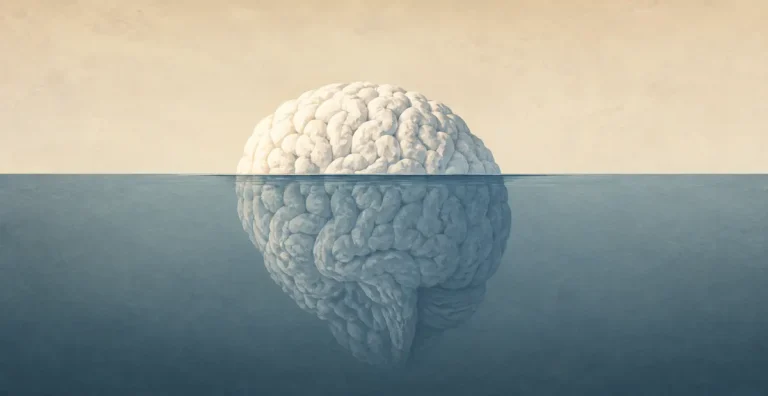
You decide to stay calm, stop a bad habit, or follow through on a plan — and then watch yourself do the opposite.
That gap between what you intend and what actually happens is one of the most common sources of quiet frustration. One part of the mind makes deliberate choices. Another operates automatically in the background, shaping habits, emotional reactions, and familiar patterns of behaviour.
These two aspects are usually called the conscious mind and the subconscious mind. The terms are widely used, yet often left vague. The result is confusion about what each one actually does, how much control we really have, and why conscious intentions so often lose out.
This article explains the difference clearly. It looks at what the conscious mind does, what the subconscious mind does, how the two interact, and what that means for the patterns you want to change.
What Is the Conscious Mind?
The conscious mind is the part of your mental life that you can actively notice and direct. It’s the thinking you’re aware of right now — the inner voice that weighs options, focuses on a task, or decides what to do next.
It isn’t a single physical structure in the brain. Rather, it’s a useful way of describing the mental processes you can observe and steer in the moment.
You use your conscious mind when you deliberately choose your words in a conversation, try to solve a problem step by step, or force yourself to get up when you’d rather stay on the couch. In these moments, you’re aware of the thinking as it happens and can influence its direction.
This part of the mind is good at reasoning, planning, and making intentional choices. It can only focus on a small amount of information at once, which is one reason so much of daily life runs automatically in the background.
What Is the Subconscious Mind?
The subconscious mind refers to the mental processes that operate outside your immediate awareness. These are the automatic patterns, habits, emotional reactions, and learned responses that influence how you think and behave without you actively directing them.
Like the conscious mind, it isn’t a single physical place in the brain. It’s a practical way of describing the many processes that run in the background.
You see the subconscious at work when you drive a familiar route without thinking about every turn, feel an instant emotional reaction before you’ve had time to reason about it, or find yourself repeating an old habit even though you consciously wanted to do something different. These responses happen quickly and with little sense of deliberate effort.
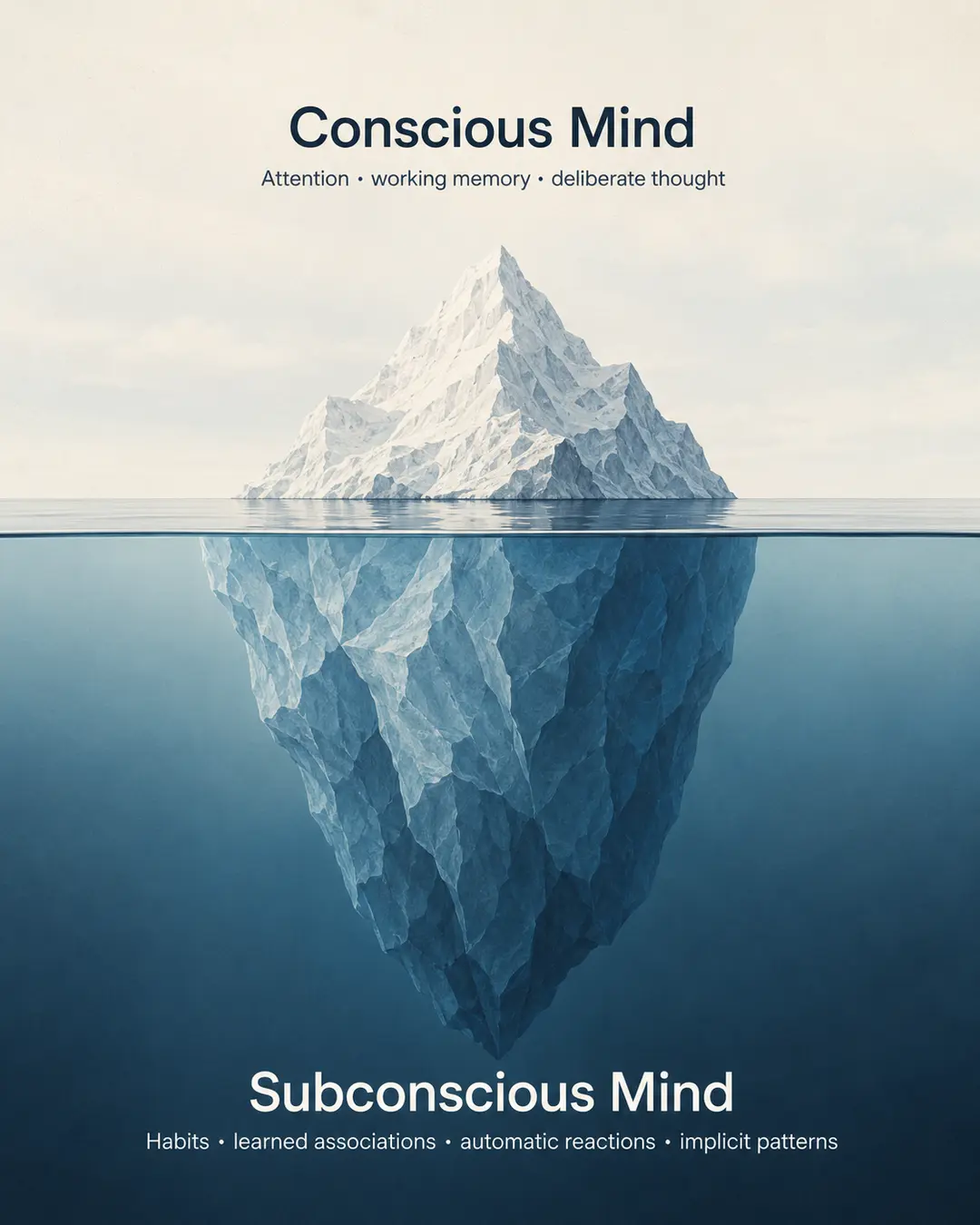
The subconscious handles a large amount of everyday mental activity. It stores skills once they’ve been well practised, shapes emotional associations, and keeps familiar patterns running so your conscious mind doesn’t have to manage everything at once. This makes daily life more efficient, but it also means some responses can feel automatic or hard to change in the moment.
Get Your Free Book!
Enter your email to get the free book and occasional updates from The New Health Order.
Conscious vs Subconscious Mind: The Key Differences
Although the two work together, they operate in quite different ways. Understanding these differences makes it easier to see why conscious intentions sometimes lose out to automatic patterns.
You can see the contrast clearly in everyday moments — for example, when you decide to respond calmly to a message but feel an immediate emotional reaction before you’ve had time to think.
Here are the main distinctions:
Awareness
The conscious mind is what you’re aware of in the moment. The subconscious operates outside immediate awareness — you usually notice its effects (a habit, an emotional reaction, a sudden urge) rather than the process itself.
Speed
Conscious thinking is relatively slow and deliberate. Subconscious processes are fast. Emotional reactions and well-practised habits can appear almost instantly, before you’ve had time to reason about them.
Control
You can direct the conscious mind with intention. The subconscious is far less open to direct control in the moment. You influence it more indirectly, through repetition, experience, and environment over time.
Capacity
The conscious mind has limited capacity — it can only focus on a small amount of information at once. The subconscious handles a much larger volume of routine activity without needing active attention.
Role
The conscious mind is well suited to reasoning, planning, and making deliberate choices. The subconscious is geared toward efficiency: running familiar patterns, storing skills, and generating quick responses based on past experience.
Conscious vs Subconscious Mind: Key Differences
| Aspect | Conscious Mind | Subconscious Mind |
| Awareness | What you are aware of in the moment | Operates outside immediate awareness |
| Speed | Relatively slow and deliberate | Fast — responses can appear almost instantly |
| Control | Can be directed with intention | Far less open to direct control in the moment |
| Capacity | Limited — can only focus on a small amount at once | Handles a large volume of routine activity |
| Role | Reasoning, planning, and deliberate choices | Efficiency, habits, skills, and automatic responses |
The easiest way to distinguish between the two is that the conscious mind is better suited to careful, intentional thought where the subconscious is better at speed and automatic responses.
Most of the time the two work together without friction. Problems tend to appear when a conscious goal runs up against a well-established automatic pattern — for instance, deciding you want to stop checking your phone in the evening, only to find yourself picking it up out of habit before you’ve even noticed. This results in the typical feeling of limbic friciton, where the two minds are fighting against each other.
How the Conscious and Subconscious Minds Interact
The two systems operate together rather than in isolation. Much of everyday life is handled by subconscious processes so the conscious mind does not have to manage every detail.
When you first learn a skill such as driving, it requires close attention. With practice, many of the actions become automatic and need far less conscious effort. This is efficient, as you can now free up conscious resources for other tasks while the subconscious mind takes care of driving in the background. The same process, however, can work against you. Once a pattern is well established, it tends to run even when you no longer want it to.
This is why you might decide to stop late-night snacking, yet still find yourself in the kitchen with food in hand, or intend to put your phone down only to keep scrolling. A conscious intention is competing with a well-practised automatic pattern.
These patterns are shaped by past experience and repetition. Because they operate quickly and outside immediate awareness, they can feel stronger than deliberate effort in the moment. Understanding this helps explain why knowing what you want to do and consistently doing it are not always the same thing.

Thoughts vs Actions
A useful distinction to keep in mind is the difference between having a thought and acting on it.
Unwanted or automatic thoughts can appear without deliberate intention. You might suddenly think “I’m going to fail at this,” feel an urge to check your phone during a conversation, or notice a flash of irritation toward someone you care about. Because many of these responses arise from subconscious patterns, they often show up quickly and without a sense of conscious choice.
Having the thought is not the same as agreeing with it or acting on it. Noticing the urge to interrupt someone is different from actually interrupting them. Feeling a pull toward a familiar distraction is different from following it. The conscious mind still has the capacity to pause, recognise what is happening, and choose a different response — even if that pause takes practice.
In practice, this means it is more useful to judge yourself by how you respond than by the automatic thoughts or reactions that first appear. The initial response is often not fully chosen. What follows it can be.
Treating every automatic thought as a true reflection of who you are tends to create unnecessary frustration. Separating the appearance of a thought from the decision to act on it makes the relationship between the two minds clearer and more workable.
Can You Influence the Subconscious?
Once you recognise that many unhelpful habits and automatic thought patterns operate below full awareness, the natural question is whether they can be changed.
The subconscious is not open to direct, immediate control in the same way the conscious mind is. Automatic responses tend to fire quickly — often before slower, deliberate thinking has time to step in. That is why an email can trigger an immediate surge of anger or defensiveness before you’ve had the chance to review it calmly and choose a more measured response.
Influence happens the same way these patterns were formed in the first place: through repetition. Consistent conscious input over time, paired with different actions, gradually weakens old habits and strengthens new ones. Each time you notice an automatic response and choose differently, you reduce the momentum of the old pattern and give the new one more weight. The environments and routines you repeatedly place yourself in also shape what becomes automatic.
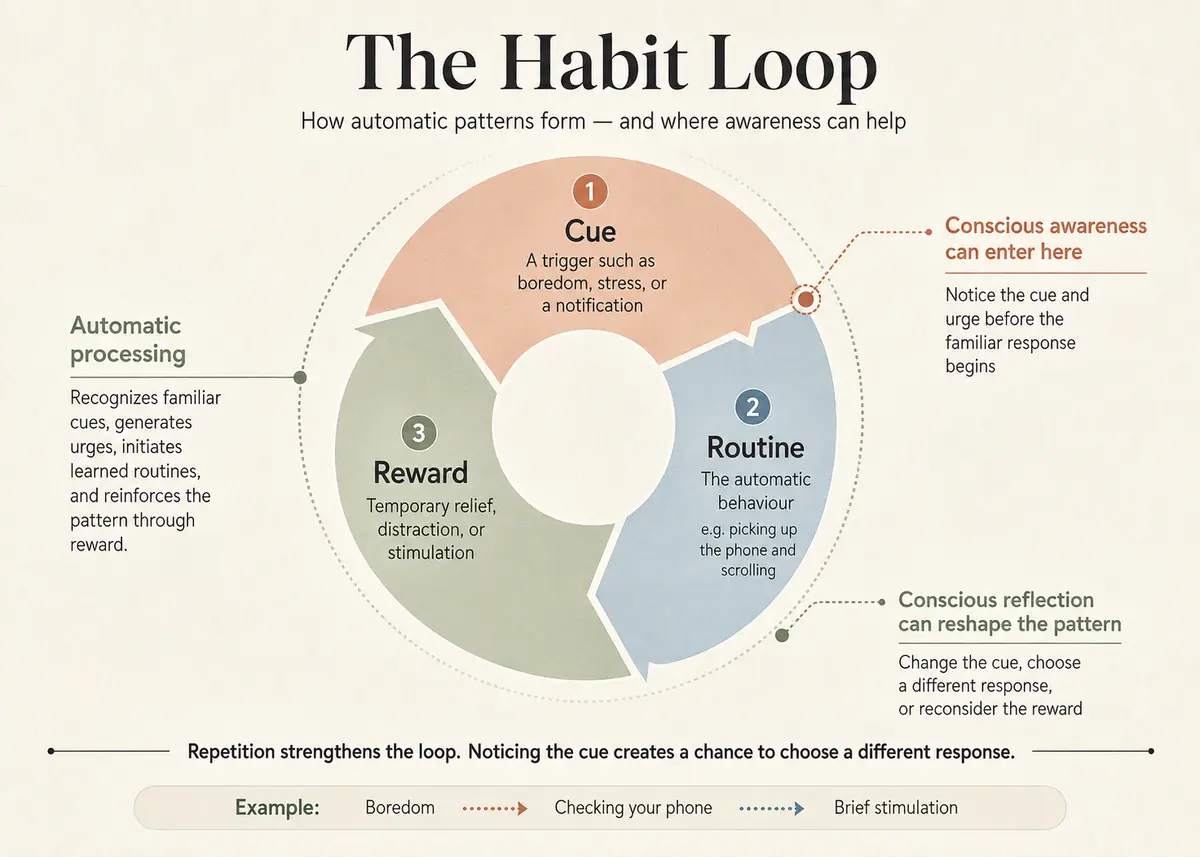
This process is rarely fast or dramatic. Progress comes from steady, repeated effort rather than a single decision. The aim is gradual influence through what you consistently do and pay attention to, not instant control.
Final Thoughts
The conscious mind and the subconscious mind are best understood as two different modes of mental activity rather than separate compartments. One is deliberate, limited in capacity, and available to awareness. The other is fast, automatic, and largely outside immediate notice.
Most of the time they work together efficiently. Friction appears when a conscious intention runs against a well-practised automatic pattern. Understanding this difference does not give instant control, but it does make the relationship clearer. It helps explain why change often requires repeated effort rather than a single decision, and why unwanted thoughts do not automatically define the person who has them.
FAQs
What is the difference between the conscious and subconscious mind?
The conscious mind is the part of your mental life you can actively notice and direct — deliberate thinking, focus, and intentional decisions. The subconscious mind refers to the automatic patterns, habits, and emotional reactions that operate outside immediate awareness.
Can you control the subconscious mind?
Not directly or immediately. Automatic patterns tend to run quickly, often before slower conscious thinking fully engages. Influence happens gradually through repetition, consistent conscious choices, and the environments you repeatedly place yourself in.
Are subconscious thoughts the same as unconscious thoughts?
The terms are often used loosely. In everyday language, “subconscious” usually refers to automatic mental processes that can still influence behaviour and occasionally surface into awareness. “Unconscious” is sometimes used more broadly or in a stricter psychological sense. For practical purposes, the key point is the difference between deliberate awareness and automatic patterns.


3 Responses
This was great.
thx it really helped me
i like it