Cheat Sheet
| Attribute | Saturated (SFA) | Monounsaturated (MUFA) | Polyunsaturated (PUFA) | Trans (TFA) |
| What it is | No double bonds (straighter chains) | One double bond (slight bend) | Two+ double bonds (more reactive) | Unsaturated fat with “trans” shape (straighter geometry) |
| Common sources | Beef & dairy, butter, coconut oil (also present in many whole foods as a mix) | Olive oil, avocados, macadamias, hazelnuts; also common in animal fats | Whole foods: fatty fish, walnuts, seeds, eggs (varies). Refined oils: many seed/vegetable oils in packaged foods & frying | Natural: small amounts in ruminant meat/dairy. Industrial: partially hydrogenated oils (historically common) |
| Heat / oxidation stability | Most stable of the main natural fats | Fairly stable; more stable than PUFA, less than SFA under extreme heat | Least stable; most oxidation-prone—especially with high heat and reuse | Industrial TFAs are the clear “avoid” category |
| Why it matters | Fewer oxidation-prone sites; context matters more than the label | Often a “middle ground” fat in foods and cooking | Essential in the right amounts; modern issue is often dose + processing + heat exposure | Industrial trans fats showed unusually consistent harm |
| Practical takeaway | Solid option for higher-heat cooking; prioritize food quality and overall diet context | Great everyday fat; avoid repeatedly overheating/reusing oils | Get PUFA mainly from whole foods; be cautious with refined PUFA oils used at high heat or repeatedly | Avoid “partially hydrogenated” in ingredients; don’t stress trace natural ruminant amounts |
What Makes One Fat Different From Another?
When people talk about fat, it may sound like one category, but chemically, it isn’t. Most dietary fats are made from fatty acids—long carbon chains—attached to a glycerol backbone. The reason one fat behaves differently from another comes down to a simple detail in those chains: whether the chain is fully “filled” with hydrogen or whether it contains one or more structural gaps.
Those gaps are crucial and what chemists call double bonds.
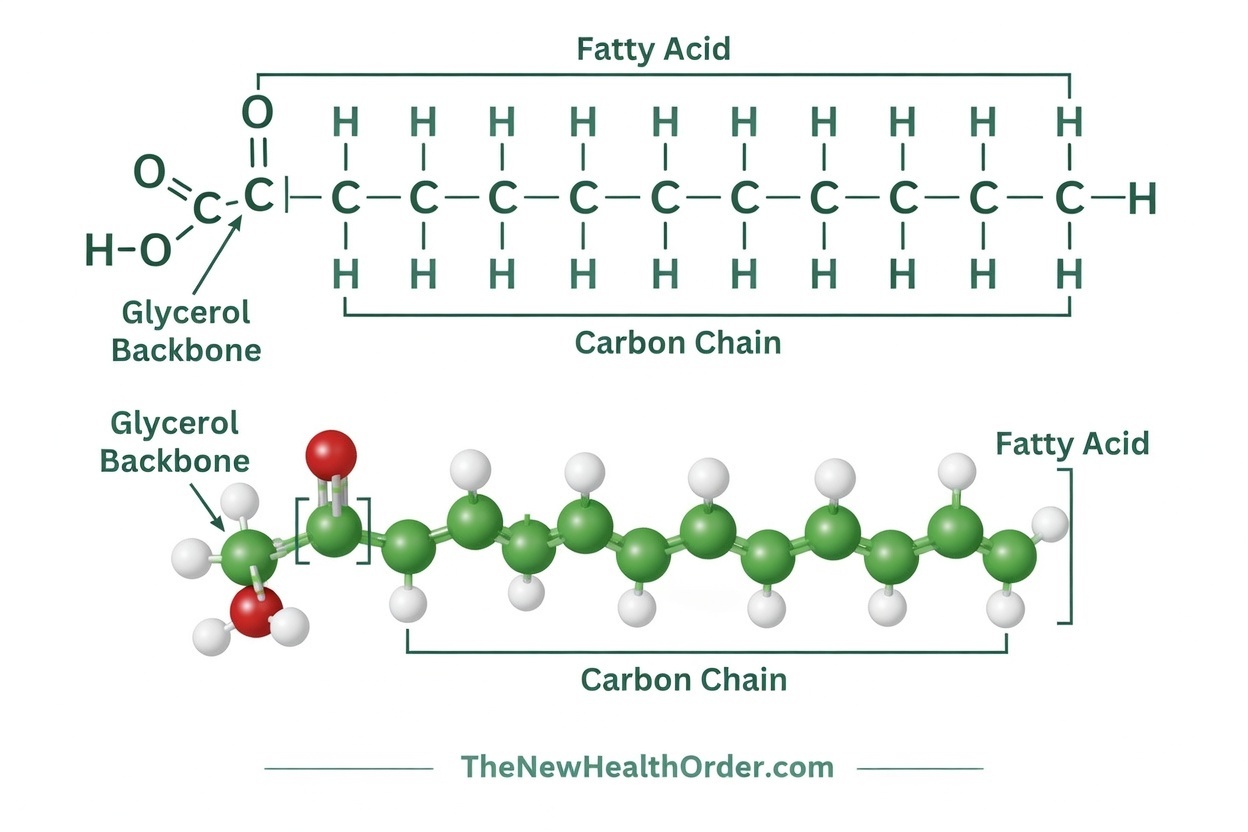
You don’t need to learn organic chemistry to understand fats, but you do need to understand what double bonds do, because this one feature explains most of the labels you see in nutrition: saturated vs unsaturated, solid vs liquid, and stable vs oxidation-prone.
A saturated fat has no double bonds. The chain is saturated with hydrogen, so it stays relatively straight and can pack tightly. That tight packing is one reason saturated fats tend to be more solid at room temperature.
An unsaturated fat, on the other hand, has at least one double bond. A double bond usually introduces a bend in the chain, which prevents tight packing. That’s one reason many unsaturated fats are liquid at room temperature.
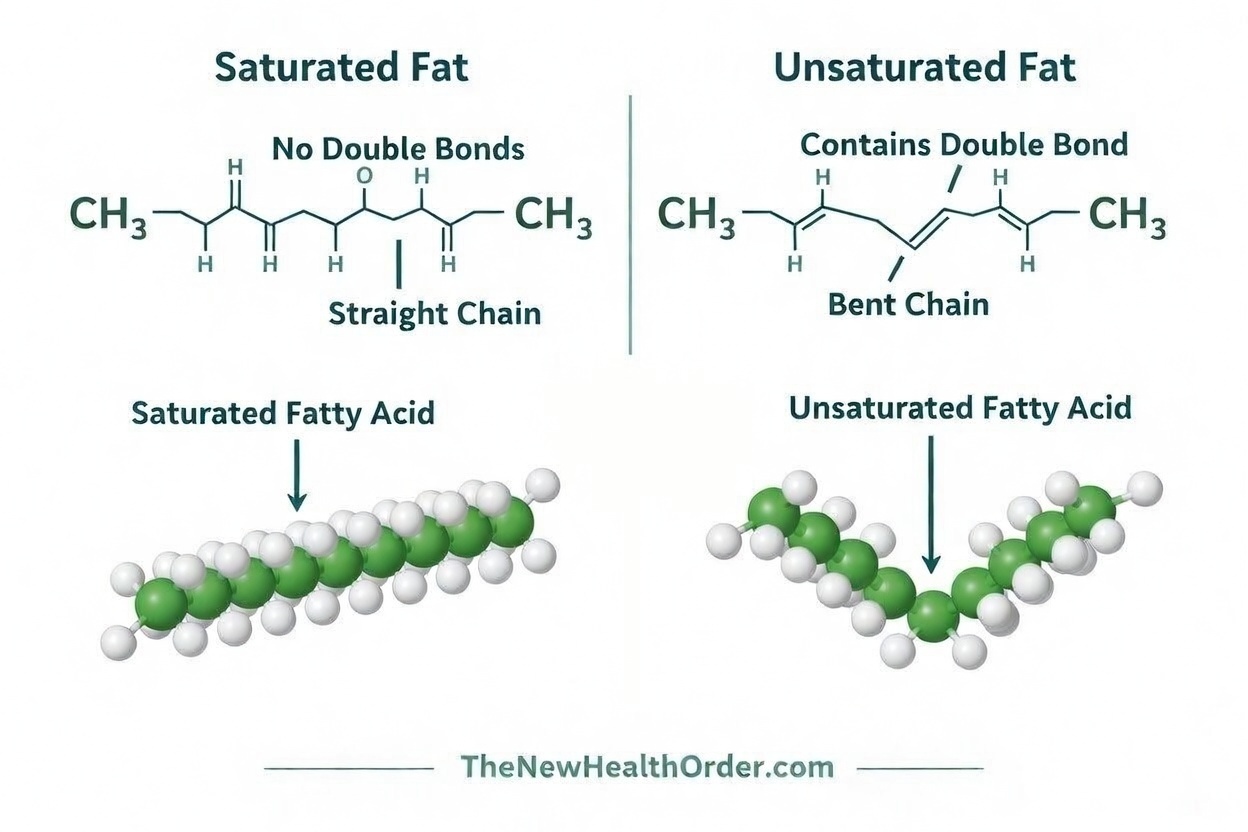
From there, the names become simple. Monounsaturated fat means one double bond. Polyunsaturated fat means more than one. The more double bonds a fat has, the more “flexible” and fluid it tends to be—but also the more chemically reactive it tends to be.
That reactivity matters since double bonds are the weak points that can react with heat, oxygen, and light, which is why fats with more double bonds are generally more vulnerable to oxidation, especially if they’re repeatedly heated. It doesn’t mean polyunsaturated fats are bad, but it does mean they behave differently in a frying pan and therefore differently inside the body.
There’s one more wrinkle that matters later: not all double bonds create the same shape. Most natural unsaturated fats have a bent shape (often called “cis”). Industrial processing can flip some of those bonds into a straighter shape (“trans”). Trans fats still count as unsaturated on paper, but their straightened shape changes how they behave in the body—which is part of why they became a special case in nutrition.
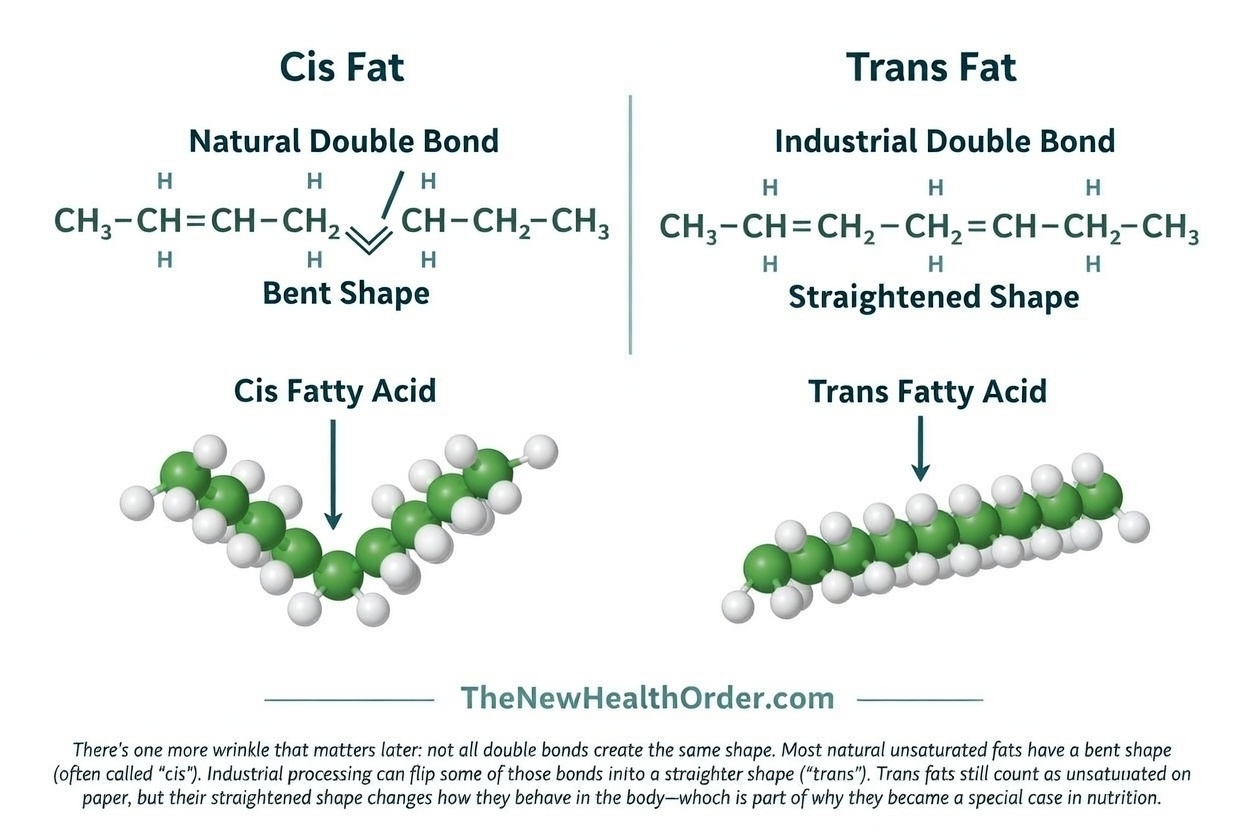
The key takeaway here is that the different fat categories aren’t arbitrary labels. They’re names for how many double bonds the fatty acids contain, and that single detail drives most of the differences people actually notice.
Get Your Free Book!
Enter your email to get the free book and occasional updates from The New Health Order.
Saturated Fat (SFAs)
What are Saturated Fats?
Saturated fats are fatty acids that have no double bonds, which gives them a more straight, stackable shape. That shape is the key property for why saturated fat behaves differently from other fats in everyday life: straight chains pack tightly, so saturated-heavy fats are more likely to be firmer at room temperature.
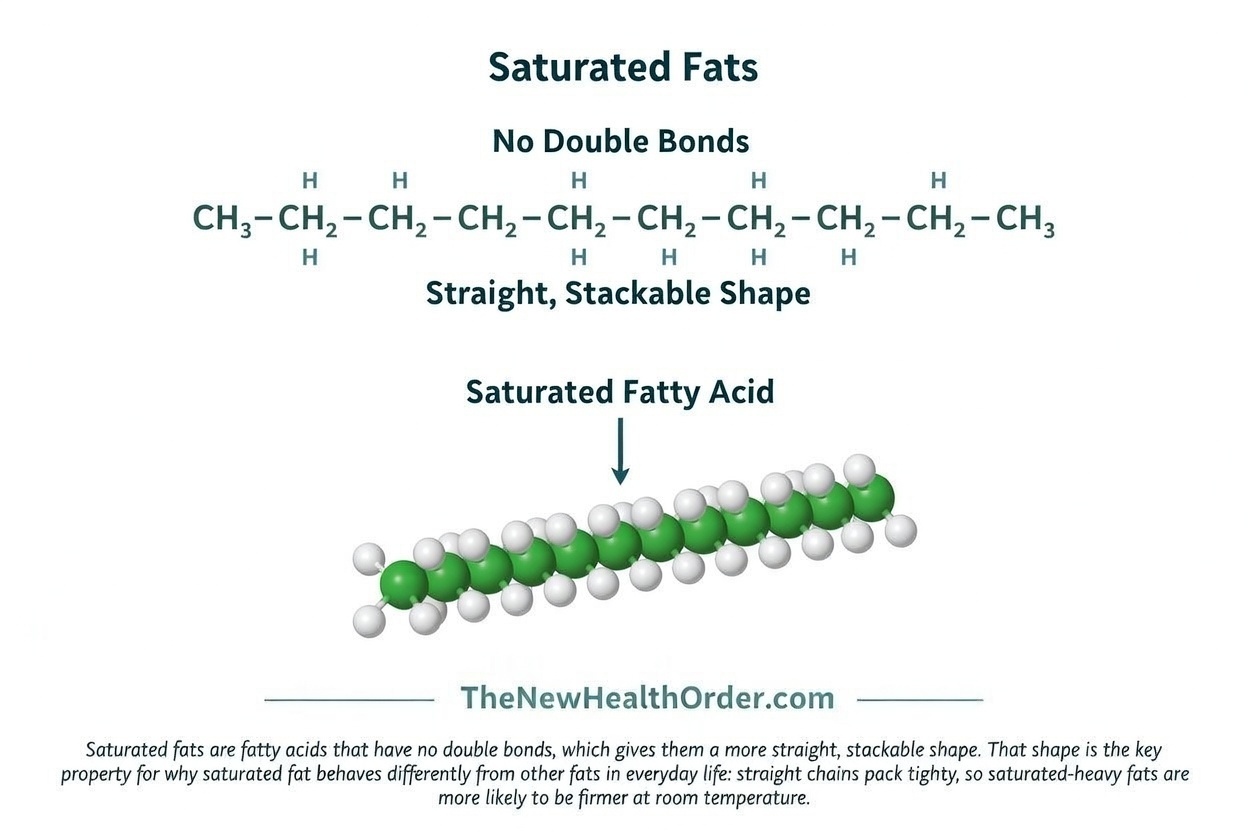
Where people get confused is thinking saturated fat is a single type of molecule. It isn’t. Saturated fat is a category that includes many different fatty acids, and foods in general also contain mixtures of saturated, monounsaturated, and polyunsaturated fats. That’s why two foods can both be high in saturated fat yet look and behave differently in the kitchen.
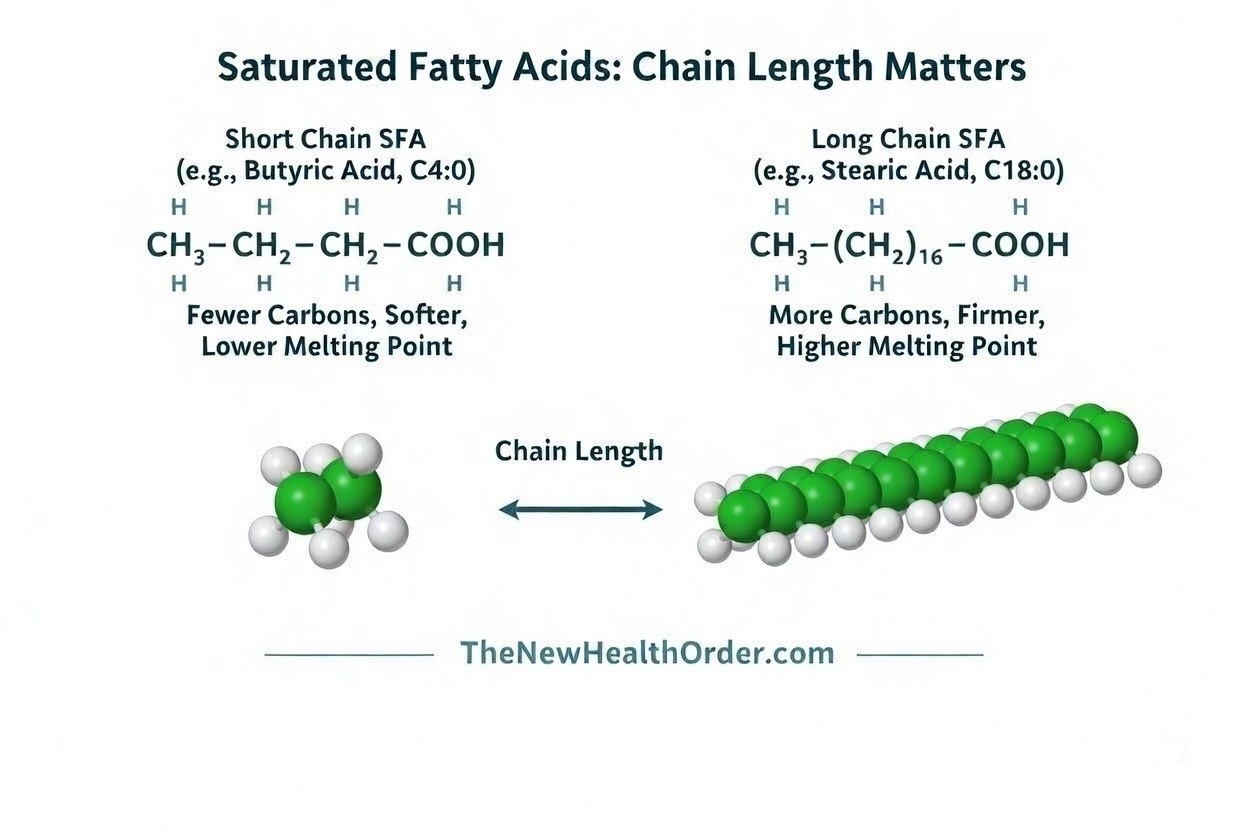
Chain length adds another layer. Saturated fatty acids come in shorter and longer forms, and longer chains generally pack more tightly and melt at higher temperatures. In practical terms, chain length helps explain why some saturated fats are harder, while others are softer—even before you account for how much MUFA or PUFA is mixed in.
Where is Saturated Fat Found?
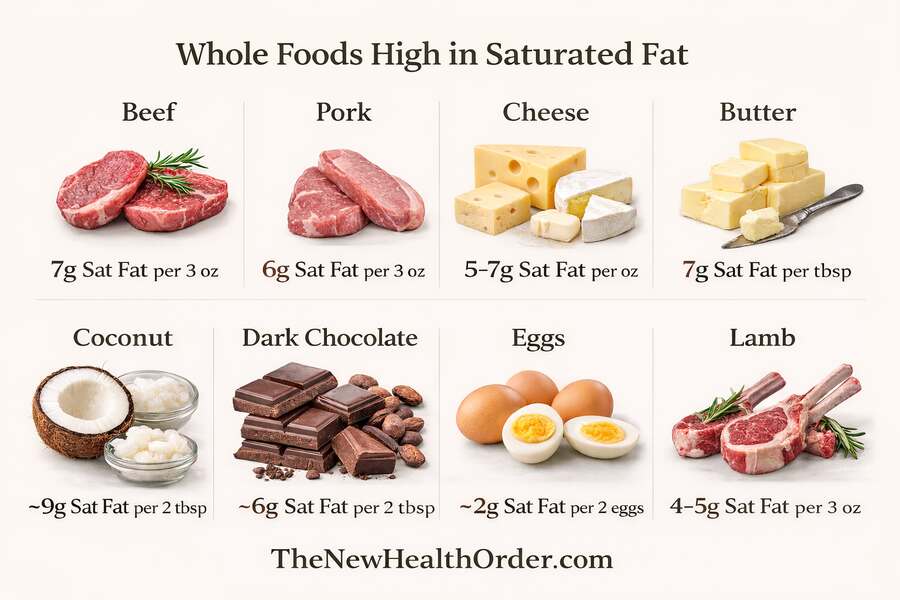
Saturated fat is most concentrated in animal fats (especially dairy fat and ruminant fat) and in a few tropical plant fats. But it’s also present in smaller amounts across many whole foods because most foods contain a mixture of fatty acids.
A key misunderstanding about animal foods is that they are not pure saturated fat. Many animal fats contain a lot of monounsaturated fat as well.
Some common sources of saturated fat include:
- Steak (ribeye): ~45% SFA / 49% MUFA / 6% PUFA.
- Eggs : ~34% SFA / 39% MUFA / 19% PUFA (remainder is other minor fats).
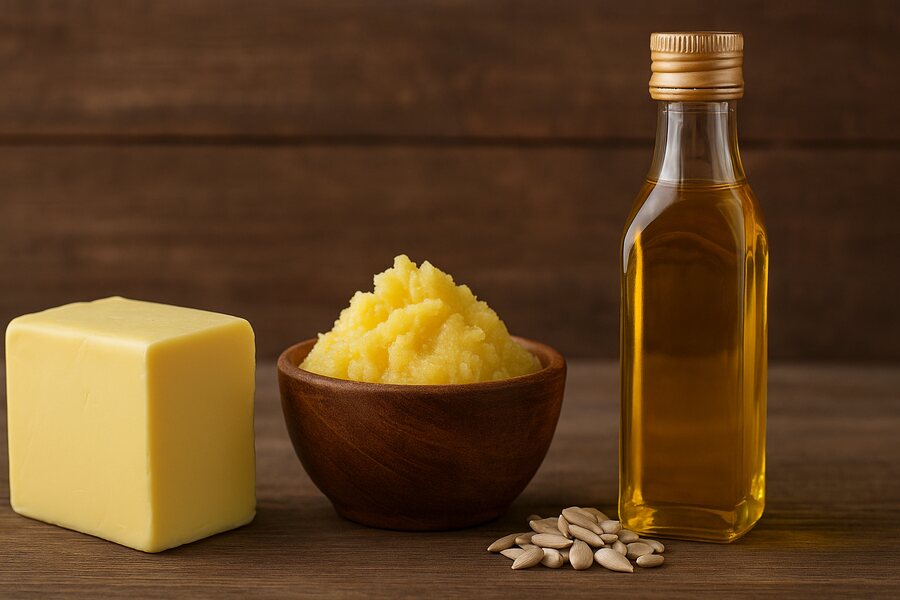
- Butter: ~66% SFA / 30% MUFA / 4% PUFA.
- Coconut oil: ~82% SFA / 6% MUFA / 2% PUFA.
- Olive oil: ~17% SFA / 72% MUFA / 11% PUFA.
Animal foods tend to be higher in saturated fats partly because animals store energy in adipose tissue as triglycerides that need to be semi-stable across temperatures and time, and partly because animal fats are usually a mix of saturated and monounsaturated fatty acids that pack well and resist oxidation compared with high-PUFA oils.
Plants have their own constraints – some produce fats that are more saturated because it helps with energy storage stability and physical properties of the fat within the plant tissue. In coconut and palm kernel oil specifically, the fat profile is heavy in lauric/myristic, which pushes the overall saturation high.
What does Saturated Fat do in the Body?
Saturated fat can be used for energy, but it isn’t just fuel. The saturated fatty acids you eat (and the ones your body makes) also get used as raw material for normal maintenance work—building, repairing, and storing.
For example, saturated fatty acids are incorporated into cell membranes, where they help determine how firm or fluid a membrane is. They’re also built into triglycerides, the storage form of fat that sits in adipose tissue and can be pulled back out for energy when needed.
For those interested in saturated fat’s role as energy storage, see this article here for a deeper dive into why the body stores fat (and why fat loss can feel hard).
In fact, saturated fat is so important for health that our body can make it when it needs to. That’s one reason saturated fat isn’t considered “essential” in the same way omega-3 and omega-6 are, because even if you don’t consume any dietary saturated fat, your body will still make its own.
Essential fats, on the other hand, have to come from the diet because humans can’t manufacture them from scratch; saturated fat is different because the body can produce it as needed, then convert some of it into other fat types.
The key point is that saturated fat is not foreign to human biology. It’s a normal, expected component of human tissue, and it appears in people regardless of whether they eat a high-saturated-fat diet or avoid animal foods altogether.
Stability and Cooking
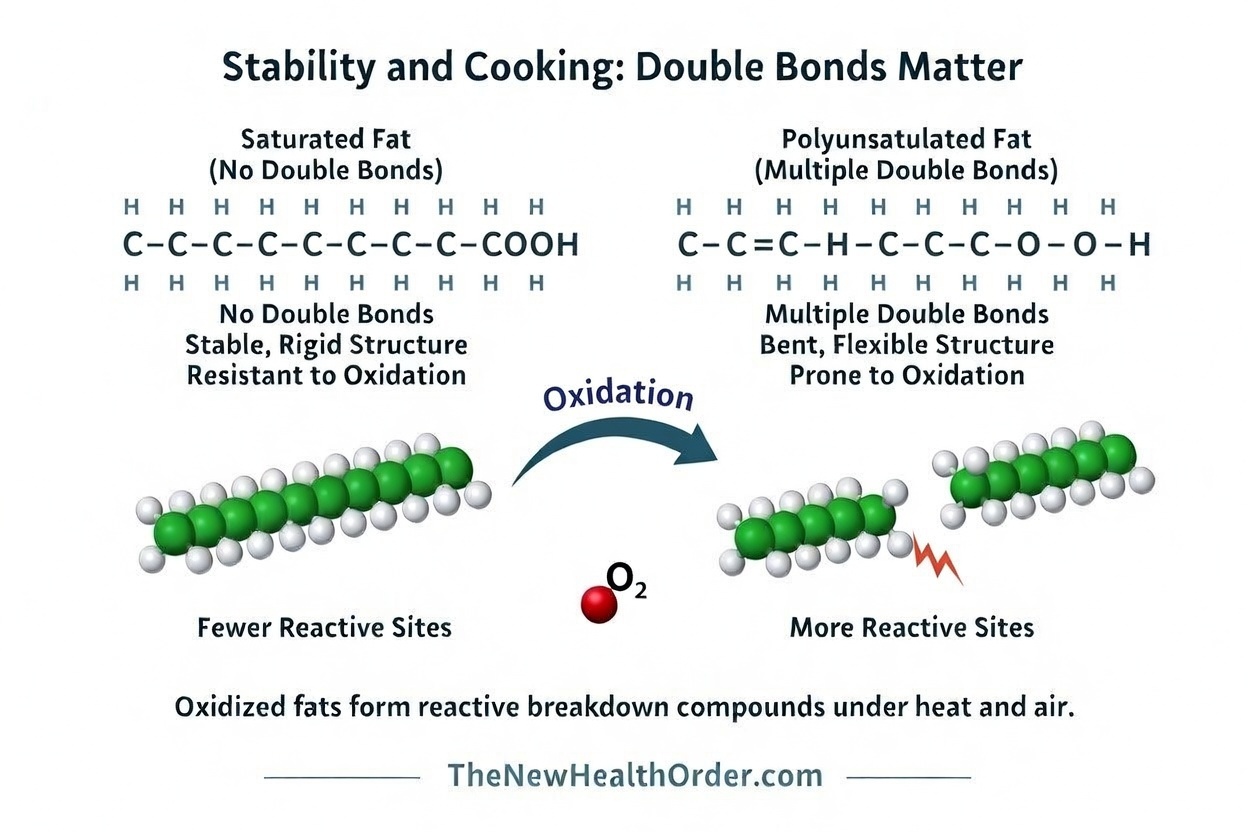
When fats oxidize, they form breakdown compounds that are part of what people mean by “degraded oil,” and repeated high-heat use (like fryer conditions or reheating the same oil) is the worst-case scenario for this. For example, in a study of 10 healthy men, brachial artery flow-mediated dilation fell from 5.9% to 0.8% four hours after a meal made with fat previously used for commercial deep-frying, while there was no significant change after the same meal made with unused fat.
From a health perspective, the reason stability matters is that oxidized fats aren’t biologically neutral. Oxidation byproducts are more chemically reactive than the original fat, and the body has to process and clear them—something that can add to oxidative and inflammatory stress, especially in a metabolically stressed environment.
Saturated fats tend to be the most stable type of fat during cooking because they contain no double bonds. Double bonds aren’t weak in themselves, but they do create weak spots in the molecule where reactions with oxygen can start more easily. The more double bonds a fat has, the more opportunities it has to oxidize when exposed to heat, air, and light.
Common Misconceptions
The biggest misconception is that saturated fat is automatically “heart-clogging” by definition. The reality is more nuanced: saturated fat can raise LDL cholesterol in many people, but LDL alone doesn’t tell you the whole story about cardiovascular risk, and outcomes depend on what saturated fat replaces in the diet and the person’s overall metabolic health.
For example, across 15 long-term RCTs with about 59,000 participants, reducing saturated fat lowered combined cardiovascular events by 21%, but had little or no effect on all-cause mortality or cardiovascular mortality.
Another misconception is treating “saturated fat” as a single uniform thing. Different saturated fatty acids behave differently, and foods that contain saturated fat are not interchangeable. Butter, cheese, yogurt, beef, and coconut don’t act like identical inputs just because they share a macronutrient label.
For a deeper dive into why saturated fats are not the health villain the media has made them out to be, see this article here.
Monounsaturated Fat (MUFAs)
What are Monounsaturated Fats (MUFAs)?
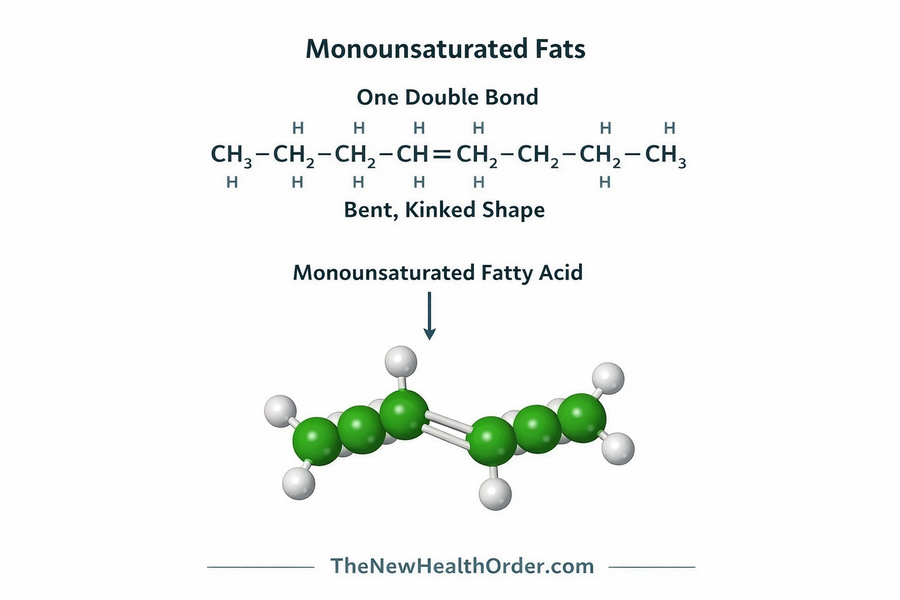
Monounsaturated fat means the fatty-acid chain contains one double bond (“mono” = one). That single double bond usually introduces a slight bend in the chain, which is why MUFA-rich fats are often liquid at room temperature but can thicken when chilled. Structurally, MUFAs sit between saturated fats (no double bonds) and PUFAs (multiple double bonds).
Like saturated fats, MUFAs aren’t one specific fat—it’s a category. The most common MUFA in the human diet is oleic acid, the one olive oil is famous for, and it’s also a major fat in many animal foods. Most “saturated-fat foods” like beef and eggs often contain substantial amounts of MUFA as well.
Where is Monounsaturated Fat Found?
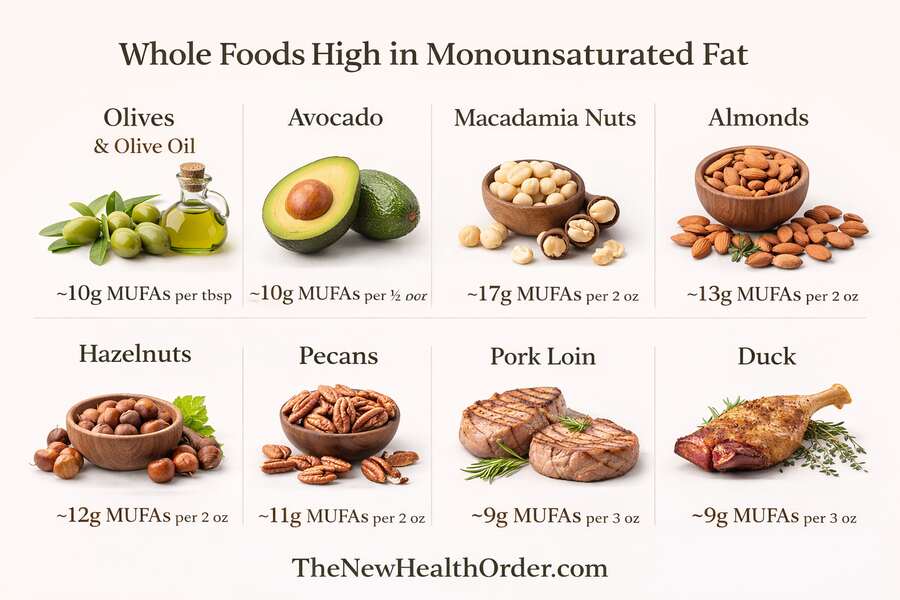
MUFAs show up in both plant and animal foods, and they’re more common than most people realize. A lot of foods people mentally file under “saturated fat” are actually a blend—often with a large MUFA share—because most natural fats are mixed.
On the plant side, the classic MUFA staples are olive oil and avocados, along with certain nuts that are especially MUFA-heavy like macadamias, hazelnuts, almonds, and pecans. Even within nuts and seeds, the mix varies—some lean more MUFA, others lean more PUFA—so it’s not one uniform category.
On the animal side, MUFAs are a major component of beef fat, pork fat, and egg yolk fat, which helps explain why many animal fats are softer and more spreadable than you’d expect if they were mostly saturated. In other words, “animal fat” isn’t synonymous with “pure saturated fat”—it often contains a meaningful amount of oleic acid, the same MUFA that olive oil is known for.
What Does Monounsaturated Fat Do in the Body?
MUFA is used the same basic ways other fats are: it can be burned for energy, stored in adipose tissue (body fat), and incorporated into cell structures. In cell membranes, MUFAs tend to support a more flexible, fluid membrane than fully saturated fats do, important because they’re active surfaces where transport and signaling happen, which requires flexibility.
MUFAs also tend to be “metabolically compatible” in the sense that the body can readily make MUFA from saturated fat by inserting a double bond. So, like saturated fat, MUFA is not classed as “essential” in the strict dietary sense, since your body can make it, but that doesn’t mean intake is irrelevant. It just means your biology is already built to use it.
Stability and Cooking
MUFAs are generally fairly stable, especially compared with PUFAs, because they only have one double bond. That single double bond is still a potential oxidation site, so MUFAs aren’t as stable as saturated fat under extreme heat, but it’s usually much more resistant than oils that are high in PUFA.
Practically, this is why MUFA-heavy oils—especially those that are relatively low in PUFA—often perform well for everyday cooking. The main caveat is that processing and repeated heating matter: even a MUFA-rich oil can degrade if it’s overheated or reused many times.
Common Misconceptions
One misconception is that “MUFA = olive oil = automatically healthy in all forms.” Olive oil, for example, is a mixture of fats, and its benefits depend on quality, processing, and what it replaces in the diet. A refined MUFA-rich oil used in ultra-processed foods is not the same lifestyle exposure as extra virgin olive oil used in a whole-food pattern.
Another misconception is thinking MUFAs are only found in plant foods. In reality, many animal fats are rich in MUFA too, which is why “animal fat” and “saturated fat” aren’t synonyms.
A third misconception is focusing only on the fat type and ignoring the context of heat. People sometimes assume that because olive oil is “heart healthy,” it must be ideal for any cooking method. In practice, stability still matters, and the better question is: how much heat exposure and oxidation are you creating with the way you’re using the oil?
Polyunsaturated Fat (PUFAs)
What are Polyunsaturated Fats (PUFA)?
Polyunsaturated fat means the fatty-acid chain contains two or more double bonds (“poly” = many). Those extra double bonds change the shape and behavior of the fat. PUFAs tend to stay more fluid, and they’re also more chemically reactive than saturated fats or MUFAs because there are more double-bond sites where oxidation can begin.
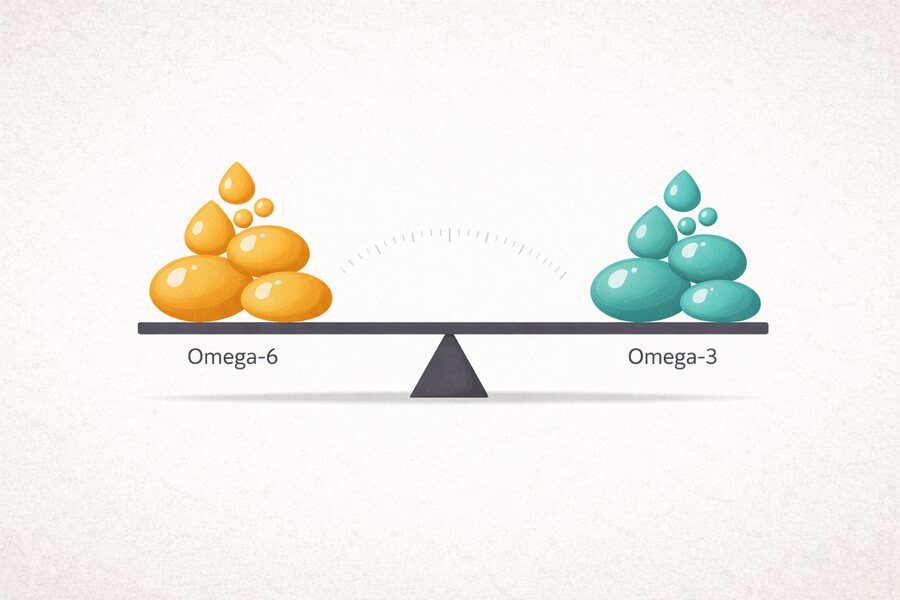
Like the other categories, PUFA isn’t just one molecule. It’s a broad family of fatty acids, and the most important distinction inside that family is omega-6 versus omega-3.
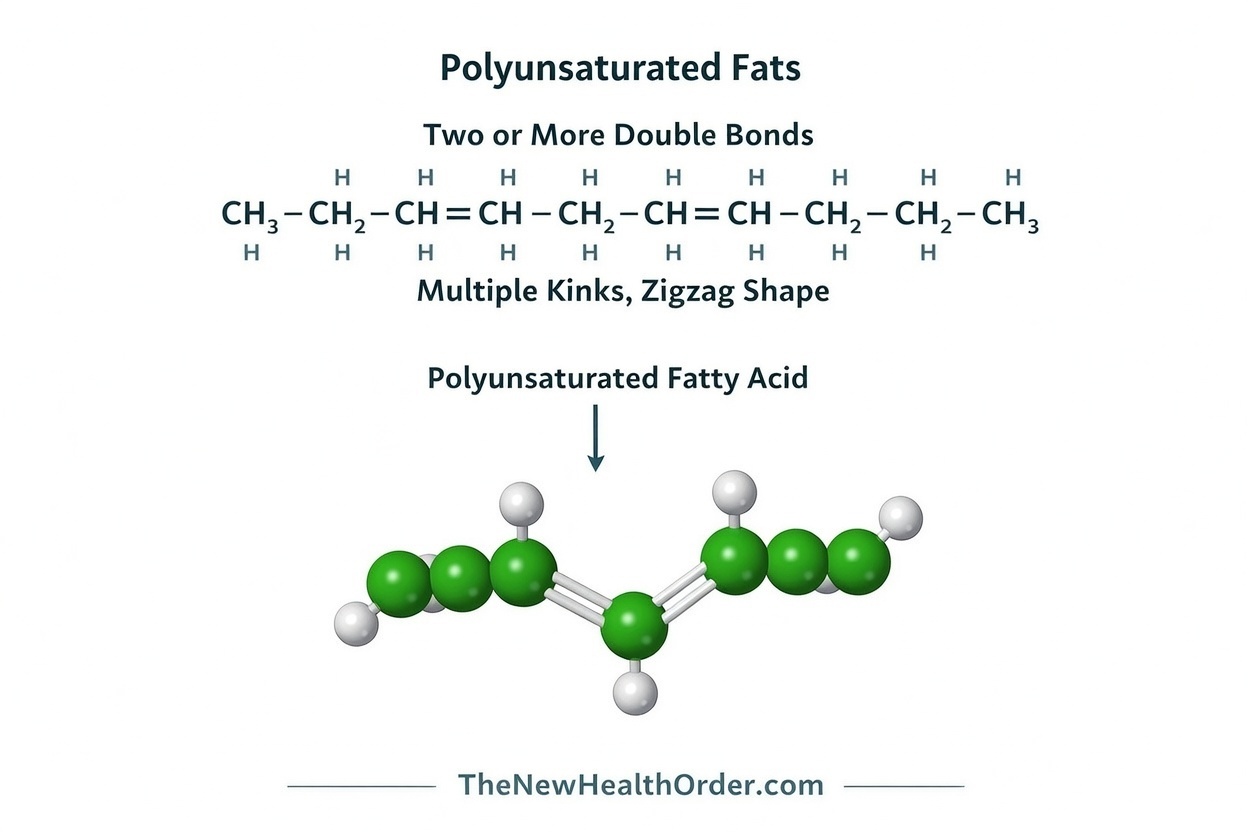
PUFAs: Omega-6 and Omega-3
Omega-6 and omega-3 are two branches of polyunsaturated fat. “Omega” just refers to where the first double bond sits on the chain, but the practical point is simpler: these two families aren’t interchangeable, and the body uses them for different jobs.
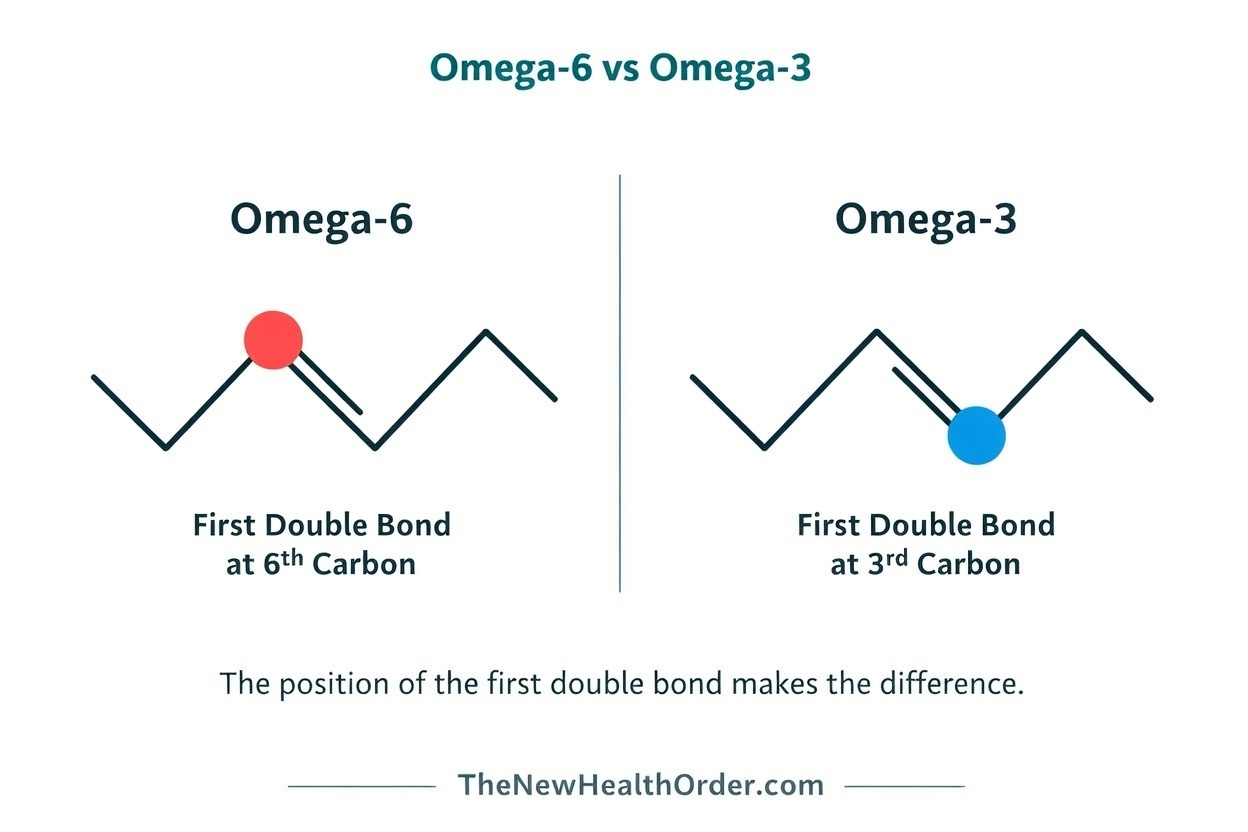
Both omega-6 and omega-3 fats get built into cell membranes and can be converted into signaling molecules that help control inflammation, immunity, and repair.
Omega-6 is mostly represented in modern diets by linoleic acid, which can be converted into arachidonic acid and used to make signals that are useful for normal immune responses but can amplify inflammation when the overall environment is already inflammatory. This is why excess intake of omega-6 is said to be inflammatory, even though it is an essential fat when in appropriate amounts.
Omega-3 includes ALA (plant-based) and EPA/DHA (from seafood), which are more directly used for membrane function and for signals involved in balancing and resolving inflammation.
Omega-6 and omega-3 both feed into the body’s signaling system, including inflammation and repair. Contrary to what a lot of influencers claim, there isn’t one magic omega-6:omega-3 ratio that you can hit and suddenly “solve” inflammation. The body is more nuanced than that. It has real ways of buffering ups and downs—storing fats, burning them for fuel, and regulating how much of each family gets converted into signaling molecules. So one meal, or one food with a lopsided ratio, isn’t automatically a problem.
At the same time, modern diets can push the pattern so far in one direction that the body’s normal balancing acts get overwhelmed over the long term. When omega-6 intake is consistently high (often through refined oils in packaged foods and restaurant meals) while omega-3—especially EPA/DHA from seafood—is consistently low, the overall mix of fats your tissues are built from can drift, and the signaling system can tilt toward a more inflammatory baseline, particularly in people who are already metabolically stressed.
Where Polyunsaturated Fats are Found
PUFAs show up in two very different dietary contexts, and separating them prevents a lot of confusion.
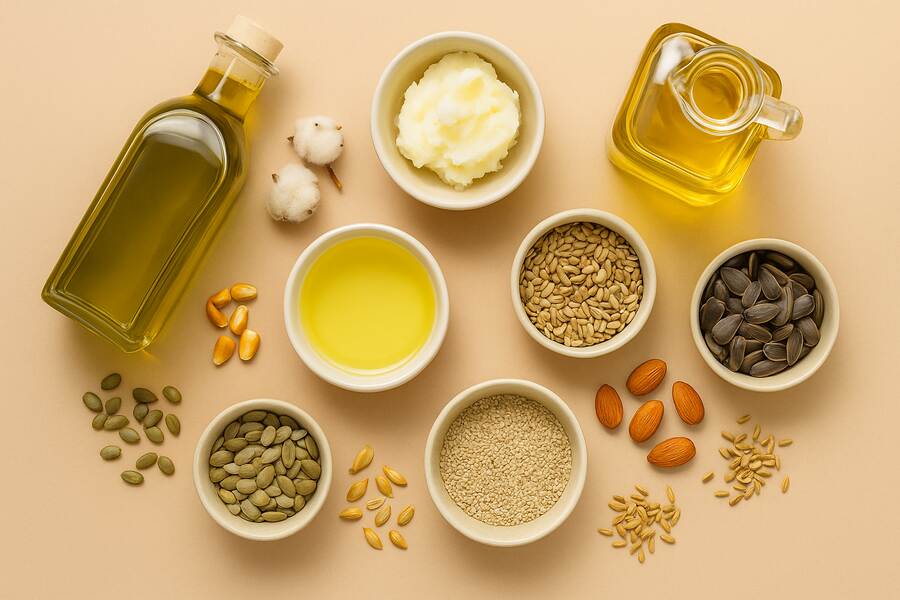
In whole foods, PUFA is “diluted” inside a larger food matrix (protein, minerals, other fats). The PUFA content can still be high, but the dose tends to rise with the food itself, not invisibly through added oils. For example, here’s roughly how much of the total fat is PUFA in common whole foods (per 100g entries):
- Salmon: ~37% PUFA.
- Whole egg (raw): ~20% PUFA.
- Walnuts: ~72% PUFA.
- Sunflower seeds (kernels, dried): ~45% PUFA.
- Chia seeds (dried): ~77% PUFA.
- Flaxseed: ~68% PUFA.
In extracted oils, PUFA is concentrated and easy to consume in large amounts because it’s removed from the rest of the food. Typical PUFA levels (as a share of total fatty acids) look like this:
- Soybean oil: ~61% PUFA.
- Canola oil: ~32% PUFA.
- Sunflower oil (regular): ~60–75% PUFA.
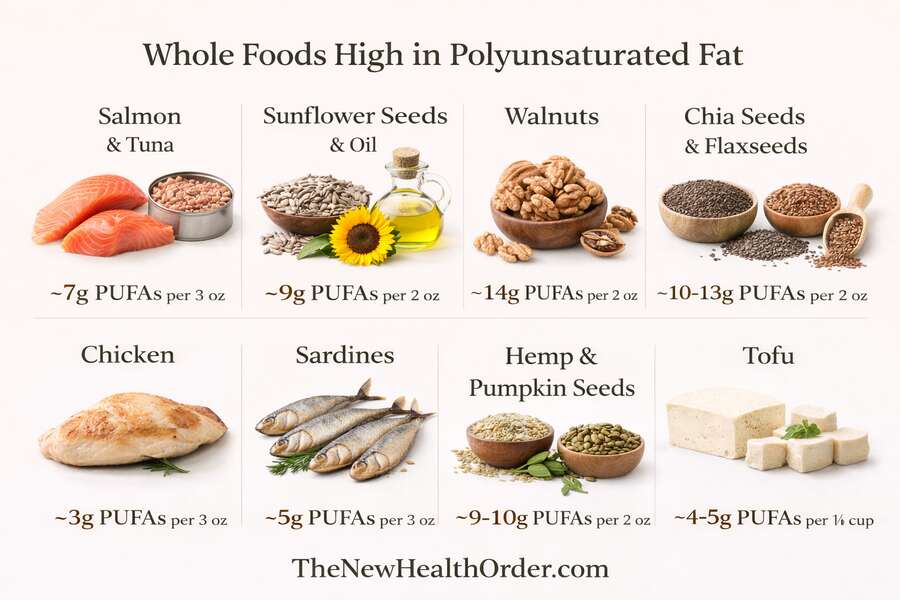
The important thing to note is that while whole foods can be high in PUFAs, industrial oils concentrate fat into a very small volume. A tablespoon of oil is almost pure fat, so it adds a lot of PUFA (and calories) quickly without really changing how “full” a meal feels. That’s why PUFA intake can climb without noticing—especially through packaged foods, sauces, dressings, and restaurant cooking where oils are used generously and often repeatedly.
For a deeper look at industrial seed oils and their effects on health, see this article here.
Stability and Cooking
PUFAs are more oxidation-prone than saturated fats or MUFAs because they contain more double bonds. Double bonds create more reactive points where oxygen-driven reactions can start, and heat speeds those reactions up. As a rule of thumb: more double bonds + more heat + more time + more air exposure = more oxidation and more breakdown byproducts.
That doesn’t mean “PUFA is poison.” Context matters. The type of PUFA matters (omega-3 is generally more delicate than omega-6), how it’s handled matters (fresh and cold vs heated and reused), and your baseline metabolic/inflammatory environment matters too. PUFA in whole foods eaten fresh is a very different exposure from concentrated refined oils used in industrial cooking.
Where things get problematic is high heat and reuse. Deep-frying typically runs around 150–180°C (302–356°F), and repeated heat/cool cycles plus oxygen exposure accelerate oil degradation over time. That “fryer-style” environment is essentially the worst case for PUFA-rich oils because it maximizes the conditions that drive oxidation.
Finally, PUFAs are still important because some are essential—you need them in the diet—but in sensible amounts and from sensible sources. The practical takeaway isn’t “avoid PUFA,” it’s: get essential PUFAs primarily from whole foods, and be cautious about the modern pattern of large PUFA loads coming from refined oils that are frequently heated or reused.
Common Misconceptions
The biggest misunderstanding with PUFAs is treating the word “polyunsaturated” like a health stamp. It’s just a chemistry category. A PUFA from salmon or walnuts comes packaged in a whole food with protein, minerals, and a natural dose. A PUFA from refined oils in packaged snacks or restaurant frying is a concentrated, processed dose that’s far more likely to be exposed to heat and oxidation. Same label. Very different real-world exposure.
Another trap is the internet’s favorite storyline: omega-6 is “bad,” omega-3 is “good.” It’s not that simple. Both families are normal parts of human biology. They both end up in cell membranes and they both feed into signaling pathways. The better question is always source and balance: are you getting omega-6 mostly from whole foods, or is it quietly piling up through industrial oils? And are you getting any meaningful omega-3 in the form people tend to be missing—EPA and DHA from seafood?
That leads to a third misconception: assuming “omega-3” is one thing. Plant omega-3 (ALA) is real, but it isn’t the same as marine omega-3s (EPA and DHA). The body can convert ALA into EPA/DHA, but usually not very efficiently, so someone can be “eating omega-3” and still be low in the forms most tied to brain and cell-membrane function.
Finally, people often think the only question is whether omega-6 is inflammatory. A more useful frame is: PUFAs are essential in the right amounts, but they’re also the most fragile fats. So the modern issue isn’t that PUFAs exist, it’s when PUFAs become high-dose, highly processed, and frequently heated—because that’s when you start creating a very different set of inputs than nature packaged in whole foods.
Trans Fat (TFAs)
What are Trans Fats?
Trans fat is an unsaturated fat, but with a twist. The word “trans” refers to the shape around a double bond. Most natural unsaturated fats have a bent shape (often called “cis”), which keeps the fatty acid slightly kinked. Trans fats have a straighter shape, which makes them behave differently—more like a rigid fat than you’d expect from something technically “unsaturated.”
That shape difference matters because biology is picky. Enzymes, cell membranes, and transport systems respond not just to what a molecule is made of, but to what it looks like in three dimensions.
The Two Kinds People Confuse
There are two sources of trans fats, and mixing them up creates a lot of noise.
One is naturally occurring trans fat found in small amounts in ruminant foods like beef and dairy. These come from the way microbes in a cow’s stomach process fats. The doses are usually low, and the mix of trans-fat isomers is different from the industrial kind.
The other is industrially produced trans fat, created mainly when manufacturers partially hydrogenate oils to make them more solid, spreadable, and shelf-stable. This is the version that became a major problem in the food supply because it could show up in large amounts across margarines, shortenings, packaged snacks, and deep-fried foods.
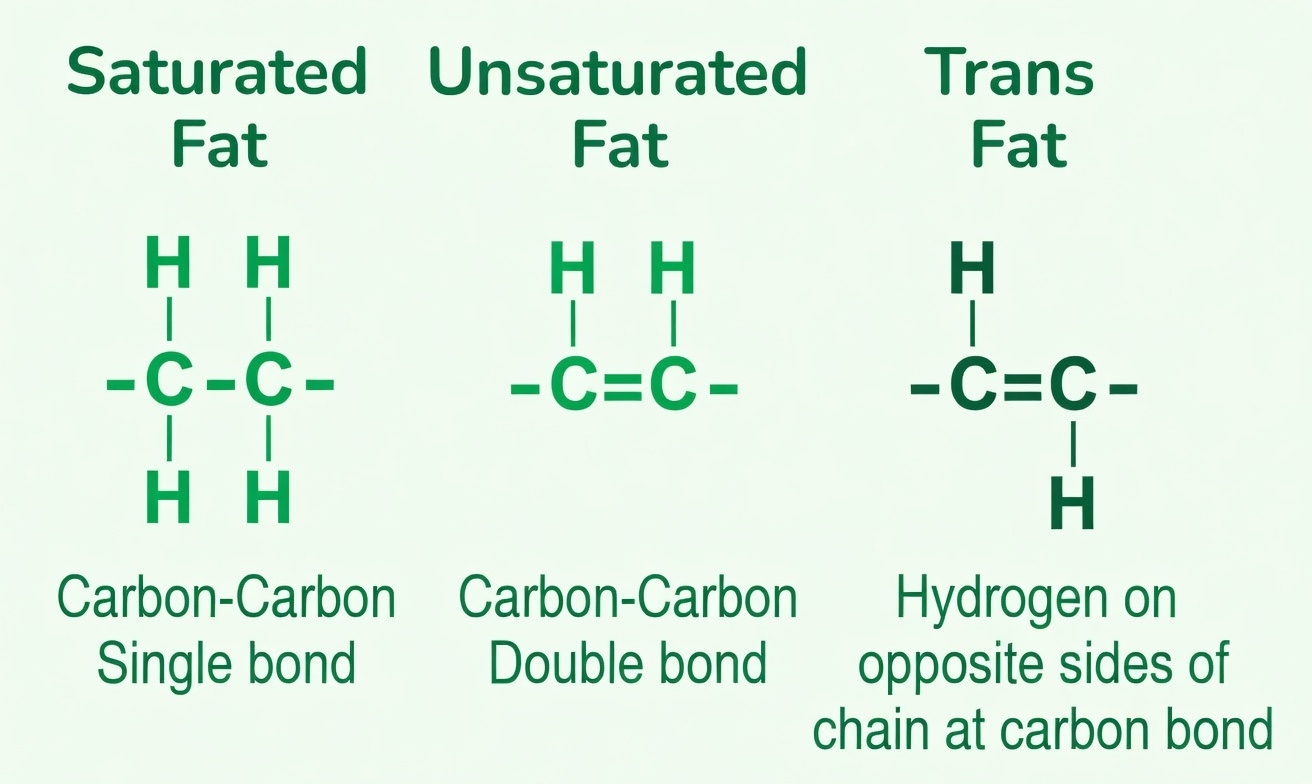
Why Industrial Trans Fats were Uniquely Problematic
Trans fats are one of the rare topics in nutrition where the evidence got unusually consistent. It wasn’t just “a little worse” in one study and “fine” in another. Industrial trans fats tended to push multiple risk signals in the wrong direction at once, especially compared with other fats.
They commonly raised LDL, lowered HDL, and worsened the overall lipid picture. But the bigger issue is that the harm didn’t rest on any single marker. Large observational evidence linked higher trans fat intake to higher coronary risk, and biomarker studies using trans fats measured in blood or tissues showed similar associations. In other words, it wasn’t just people reporting what they ate—it showed up in objective measurements too.
This is why public health bodies didn’t just say to limit it, but they have now moved toward removing them entirely because industrial trans fats provided no real nutritional upside and were mostly in foods that existed for texture and shelf life, not nourishment.
Where it’s Still Found Today
In many countries, industrial trans fats have been dramatically reduced, but they aren’t always completely gone. You can still encounter them in a few ways.
First, natural trans fats still exist in ruminant meat and dairy at low levels, but they’re not the main concern. The real issue was industrial trans fat from partially hydrogenated oils, which delivered far higher doses across processed foods and contained a different mix of trans-fat isomers than ruminant foods.
Second, in places where enforcement is weaker or regulations vary, partially hydrogenated oils can still show up in some packaged foods—especially certain imported or older-style processed products. In the US, Canada, the UK, and much of Europe they’ve largely been phased out or tightly restricted.
And third, labels can be misleading: a product can sometimes claim “0g trans fat” per serving if the amount per serving is below a small cutoff—so the ingredient list matters more than the front label. If you see “partially hydrogenated” in the ingredients, that’s the red flag.
What This Means in Real Life
If you take one thing from this whole guide, it’s that fats aren’t simply “good” or “bad” because of a label. They behave differently because they’re built differently, and the real impact comes down to source, processing, and how the fat is used.
Saturated fats tend to be more heat-stable and are common in animal foods and a few tropical fats. MUFAs sit in a nice middle ground—common in olive oil, avocados, and many animal fats, and generally fairly stable for everyday cooking. PUFAs matter because some are essential, but they’re also the most fragile, which is why context matters so much: PUFA in whole foods is not the same thing as large amounts of refined PUFA oils that are repeatedly heated. Trans fats are the exception category—especially industrial trans fats—because they were a manufacturing byproduct that showed consistent harm without offering a meaningful nutritional upside.
So what do you do with that, without turning your kitchen into a chemistry lab?
Start by thinking in three simple filters. First, favor fats that come from real foods most of the time—meat, fish, eggs, dairy, olives, avocados, nuts—rather than getting most of your fat from industrial formulations. Second, match the fat to the heat: keep delicate oils for cold or low-heat use, and use more stable fats when cooking hot. Third, minimize the “worst case” exposure: ultra-processed foods and restaurant deep-frying, where refined oils are often used hard and reused.
None of this requires perfection. The goal is just to stop being fooled by simplistic slogans. When you understand the categories, you can make calmer decisions: choose better sources, avoid the obvious landmines, and stop obsessing over single nutrients in isolation.
FAQs
What is the main difference between saturated, monounsaturated, and polyunsaturated fats?
The main difference is the number of double bonds in their fatty-acid chains. Saturated fats have none, monounsaturated fats have one, and polyunsaturated fats have two or more. That structural difference affects how solid, stable, and oxidation-prone they are.
Is saturated fat bad for you?
Not automatically. Saturated fat has often been treated as inherently harmful, but the reality is more nuanced. It can raise LDL in many people, yet cardiovascular risk depends on much more than LDL alone, including metabolic health, inflammation, and what saturated fat replaces in the diet.
Are trans fats the same as the natural fats found in meat and dairy?
No. Small amounts of natural trans fats occur in ruminant foods like beef and dairy, but industrial trans fats came mainly from partially hydrogenated oils. Those industrial forms are the real concern because they showed unusually consistent harm and offered no meaningful nutritional benefit.